
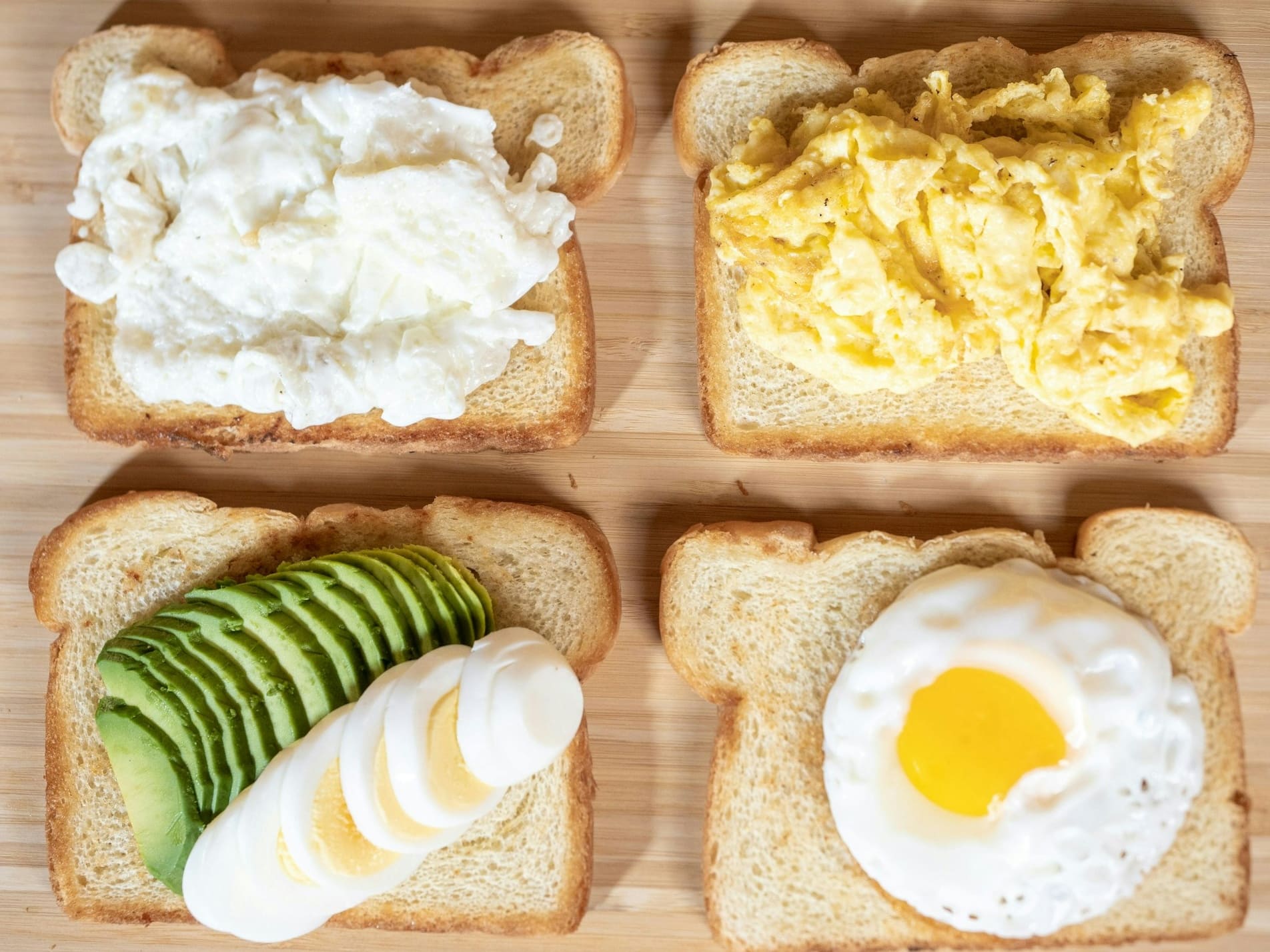
Eggs can become a completely different breakfast depending on how you cook them. The same basic ingredient can give you soft scrambled eggs, crisp-edged fried eggs, a vegetable-packed omelet, a portable breakfast wrap, or a hearty potato hash.
Instead of treating every morning the same, choose your egg breakfast based on the time you have and what you’re hungry for. Some of these recipes take about five minutes, while others work better for weekends or meal prep.
Which Egg Breakfast Should You Make?
| If You Want… | Try This |
|---|---|
| Something ready fast | Scrambled eggs |
| Eggs with toast | Fried eggs |
| A softer, elegant option | Poached eggs |
| Make-ahead breakfast | Hard-cooked eggs |
| Vegetables + cheese | Omelet |
| Breakfast on the go | Egg sandwich or wrap |
| Something hearty | Egg and potato hash |
| Crispy and cheesy | Breakfast quesadilla |
| Batch preparation | Egg muffins |
| A slower weekend breakfast | Shakshuka-style eggs |
1. Creamy Scrambled Eggs
Scrambled eggs are one of the simplest breakfasts to learn, but temperature makes a noticeable difference.
Ingredients
- 2–3 eggs
- 1 teaspoon butter
- Salt, to taste
- Black pepper, to taste
- 1 tablespoon milk or cream, optional
How to Make Them
Crack the eggs into a bowl and whisk until the yolks and whites are thoroughly combined.
Melt the butter in a skillet over medium-low heat.
Add the eggs and gently move them around the pan as they cook, folding the cooked portions into the softer egg.
Remove them from the heat when they’re set to your preferred consistency rather than continuing until they’re dry.
Season and serve immediately.
The important part
Control the heat.
Very high heat can make scrambled eggs set quickly and leave you with a firmer, drier texture.
2. Fried Eggs
Fried eggs work when you want breakfast in minutes without much preparation.
Ingredients
- 2 eggs
- 1–2 teaspoons oil or butter
- Salt
- Black pepper
Heat a skillet and add the oil or butter.
Carefully crack in the eggs.
Cook until the whites reach your preferred doneness.
From there, you can choose the style you prefer:
| Style | What Happens |
|---|---|
| Sunny-side up | Egg stays unflipped |
| Over-easy | Flipped briefly |
| Over-medium | Flipped and cooked longer |
| Over-hard | Cooked until the yolk is firm |
For a simple breakfast, serve fried eggs with toast, tomatoes, avocado, potatoes, or sautéed vegetables.
3. Poached Eggs
Poaching cooks the egg directly in water without requiring frying fat.
Ingredients
- 2 eggs
- 4–6 cups water
- 1 teaspoon vinegar, optional
- Salt, for serving
Bring the water to a gentle simmer, not a violent boil.
Crack one egg into a small bowl or cup.
Carefully lower the egg into the water.
Cook until it reaches the appropriate doneness for your intended preparation, then lift it out with a slotted spoon and drain excess water before serving.
Poached eggs pair especially well with toast, avocado, sautéed spinach, or roasted vegetables.
4. Hard-Cooked Eggs
Hard-cooked eggs are useful when you want to prepare several breakfasts at once.
Place eggs in a saucepan and cover them with water.
USDA guidance for hard-cooked eggs recommends bringing the water to a boil, removing the pan from the heat, covering it, and allowing large eggs to stand in the hot water for about 18 minutes for hard-cooked eggs, with timing varying by egg size. Cool them promptly after cooking.
Once chilled, use them for:
- Breakfast toast
- Sandwiches
- Breakfast bowls
- Salads
- A quick grab-and-go breakfast
Keep cooked eggs properly refrigerated.