There is nothing quite as disappointing as sitting down to a meal and discovering that your meat is still undercooked in the middle. On the other hand, leaving it on the heat too long can turn a juicy steak, tender chicken breast, or pork chop into something dry and difficult to enjoy.
If you have ever wondered how to tell when meat is cooked, you do not have to rely on guesswork. A few simple habits can help you cook meat safely while keeping the texture and flavor you want. The most important tool is a food thermometer, but color, texture, and cooking method can also help you understand what is happening inside your food.
How to Tell When Meat Is Cooked Safely
The most dependable way to know whether meat is safely cooked is to check its internal temperature. The outside of meat can brown quickly while the center remains below a safe temperature.
According to FoodSafety.gov, whole cuts of beef, pork, lamb, veal, goat, and similar meats should reach 145°F (63°C) and rest for at least three minutes. Ground meat should reach 160°F (71°C), while poultry should reach 165°F (74°C).
| Meat | Safe Minimum Internal Temperature |
|---|---|
| Beef, lamb, veal, goat — steaks, chops, roasts | 145°F / 63°C |
| Pork — steaks, chops, roasts | 145°F / 63°C |
| Ground meat | 160°F / 71°C |
| Chicken and turkey | 165°F / 74°C |
| Leftovers | 165°F / 74°C |
These temperatures are about food safety, not necessarily your preferred level of doneness.
Why You Should Use a Meat Thermometer
A meat thermometer takes the guesswork out of cooking. Insert the probe into the thickest part of the meat without touching bone, fat, or the cooking surface. This gives you a much more useful reading than simply looking at the outside.
Cooking time can vary depending on the thickness of the meat, its starting temperature, your oven or grill, and the cooking method. For that reason, time alone should not be your only test.
How to Tell When Beef Is Cooked
Beef is one of the meats where personal preference plays a major role. You may prefer a steak rare, medium-rare, medium, or well done.
For a steak, you can use temperature as your primary guide and appearance and texture as secondary clues.
Rare and Medium-Rare Steak
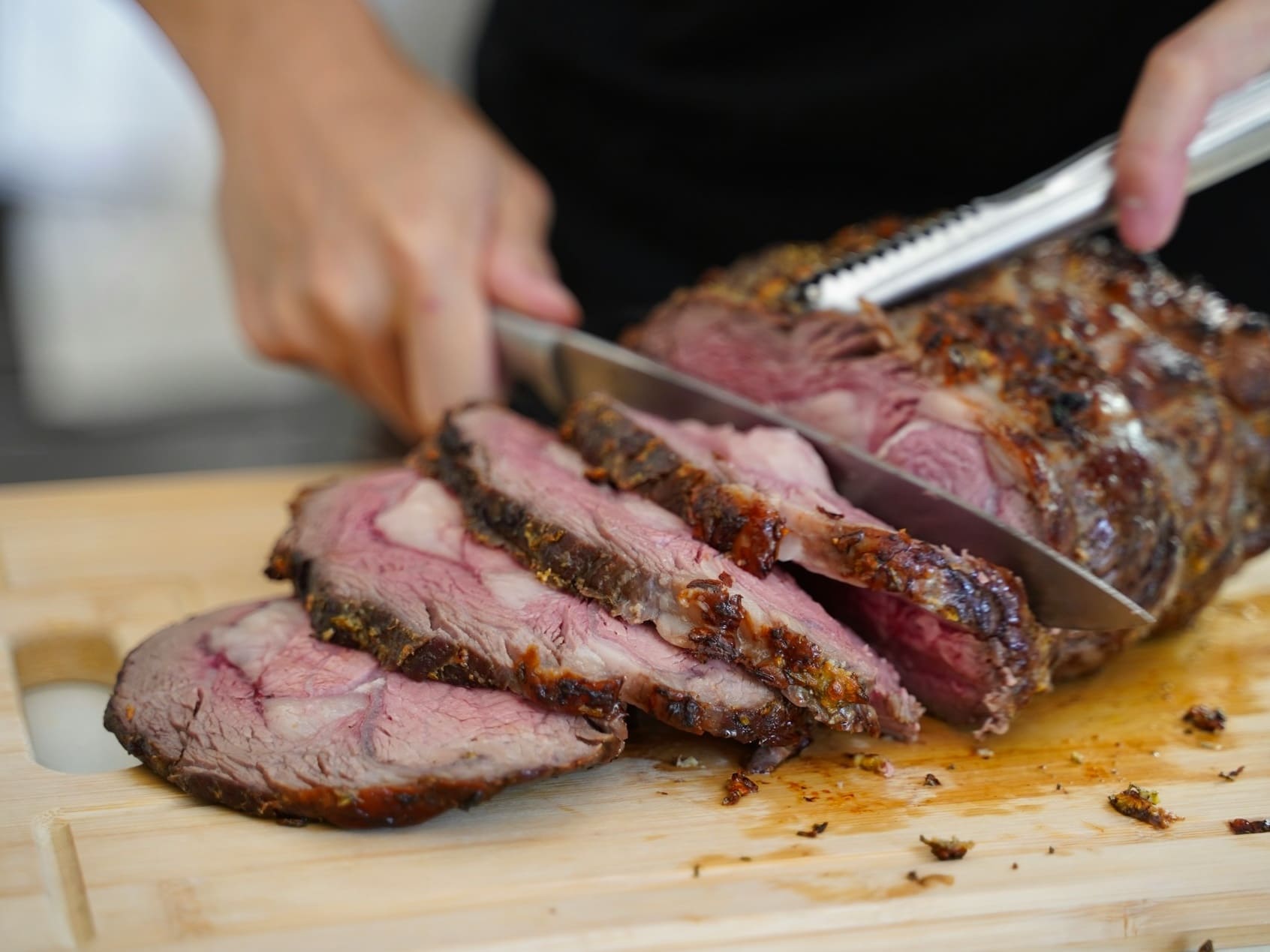
A rare steak generally has a very red center and a softer texture. Medium-rare has a warm red or pink center and is somewhat firmer.
If you prefer these levels of doneness, a thermometer is still useful because you can distinguish your preferred texture from the minimum safety guidance.
Medium and Well-Done Steak
A medium steak has a more pronounced pink center and a firmer bite. A well-done steak has little or no visible pinkness and is considerably firmer.
Remember that color is not a reliable safety test. USDA guidance specifically notes that appearance and texture should not be relied upon to determine whether harmful bacteria have been destroyed.
How to Tell When Ground Meat Is Cooked
Ground meat needs extra attention because grinding can distribute bacteria throughout the meat rather than leaving them primarily on the surface.
Ground Beef, Pork, and Lamb
Cook ground meat to 160°F (71°C) and check the center with a food thermometer.
This applies to foods such as:
- Burgers
- Meatballs
- Meatloaf
- Ground beef tacos
- Sausage made from ground meat
Do not assume a burger is safe simply because the outside has developed a dark crust. The center may need additional cooking.
How to Tell When Pork Is Cooked
Modern pork does not have to be completely white inside to be safely cooked. A properly cooked pork chop or roast can retain some pinkness.
For whole cuts of pork, the recommended minimum internal temperature is 145°F (63°C), followed by at least three minutes of rest. Ground pork should reach 160°F (71°C).
To check a pork chop or roast:
- Insert your thermometer into the thickest section.
- Avoid touching the bone.
- Wait for the reading to stabilize.
- Remove the meat from the heat when it reaches the appropriate temperature.
- Let whole cuts rest for at least three minutes.
How to Tell When Chicken and Turkey Are Cooked
Poultry deserves particular attention because undercooked chicken or turkey can carry harmful bacteria.
All poultry should reach 165°F (74°C) internally. This includes chicken breasts, thighs, wings, drumsticks, whole birds, ground poultry, and turkey.
Checking Chicken
Insert your thermometer into the thickest part of the meat. With bone-in pieces, avoid touching the bone because it can affect the reading.
You may notice that cooked chicken becomes firmer and its juices may appear clearer, but these are only visual clues. Do not use clear juices or the absence of pink color as your only safety test.
For a whole chicken or turkey, FoodSafety.gov recommends checking the innermost part of the thigh and wing as well as the thickest part of the breast.
Can You Tell If Meat Is Cooked Without a Thermometer?
You can look for signs of doneness, but they should not replace a thermometer when food safety matters.
Color
Color can give you an idea of how meat is progressing, but it is not dependable enough to confirm safety. Meat can brown on the outside before the center is properly cooked.
Texture
Raw meat is generally softer and less firm. As it cooks, proteins change and the meat becomes firmer. However, texture varies significantly between cuts, so it is difficult to use touch as an exact measurement.
Juices
You may have heard that clear juices mean chicken is cooked. This is not a reliable rule. A thermometer provides a much better indication of whether the center has reached a safe temperature.
How to Use a Meat Thermometer Correctly
Using a thermometer is simple once you know where to place it.
Follow These Steps
- Insert the probe into the thickest part of the meat.
- Avoid bones, fat, and gristle.
- For thin foods, position the probe carefully so the tip remains inside the meat.
- Check more than one location when cooking a large roast or whole bird.
- Clean the thermometer after checking raw meat.
FoodSafety.gov recommends placing the thermometer in the thickest portion while avoiding bone, fat, or gristle.
How to Tell When Meat Is Cooked on a Grill
Grilling can make meat particularly difficult to judge. High heat creates attractive grill marks and a browned exterior, but those marks do not tell you what is happening in the center.
Check the thickest portion with your thermometer near the end of cooking.
Common grilling mistakes include:
- Judging meat only by grill marks
- Guessing based entirely on cooking time
- Cutting meat open repeatedly
- Measuring too close to a bone
- Using the same plate for raw and cooked meat
- Forgetting to clean utensils that touched raw meat
FoodSafety.gov also warns against using the same plate or utensils for cooked food unless they have been properly washed and sanitized.
Meat Doneness vs. Meat Safety
It is useful to understand the difference between doneness and safety.
Doneness describes characteristics such as:
- Color
- Texture
- Juiciness
- Flavor
- Personal preference
Safety, meanwhile, depends on reaching the appropriate internal temperature.
That distinction matters because you may prefer a steak cooked to a particular level, while poultry must still reach the recommended safe temperature. USDA guidance explains that appearance, texture, and flavor are subjective indicators and should not be used as the sole way to determine bacterial destruction.
Common Mistakes When Checking Meat
If you want more consistent results, avoid these common habits:
- Relying on color alone: Brown does not always mean fully cooked.
- Using cooking time as your only test: Cooking conditions vary.
- Cutting meat open repeatedly: You lose juices and still may not accurately judge temperature.
- Checking the wrong spot: The thickest portion is usually the most important.
- Ignoring resting time: Certain whole cuts need a three-minute rest after reaching 145°F (63°C).
- Forgetting cross-contamination: Keep raw-meat utensils and plates separate from cooked food.
Frequently Asked Questions About How to Tell When Meat Is Cooked
How can you tell when meat is cooked without a thermometer?
You can examine its color, texture, and juices, but these signs are not reliable enough to confirm food safety. A food thermometer is the best option.
How do you know when meat is fully cooked?
Check the internal temperature at the thickest part of the meat. Beef, pork, lamb, veal, and goat steaks, chops, and roasts should reach 145°F (63°C), ground meat should reach 160°F (71°C), and poultry should reach 165°F (74°C).
Can meat be pink and still be cooked?
Yes. Pink color does not automatically mean meat is unsafe, and brown color does not automatically mean it has reached a safe temperature.
How do you tell when chicken is cooked?
Use a food thermometer and check the thickest part. Chicken and other poultry should reach 165°F (74°C) internally.
How do you tell when steak is done?
Use a thermometer to check its internal temperature, then consider the color and texture according to your preferred level of doneness.
Final Thoughts on How to Tell When Meat Is Cooked
Once you know how to tell when meat is cooked, you can approach everything from a quick weeknight chicken dinner to a weekend barbecue with much more confidence.
Instead of cutting into your meat and hoping for the best, make a food thermometer part of your regular kitchen routine. Check the thickest portion, use the correct temperature for the type of meat you are preparing, and give whole cuts the recommended resting time.
Ready to cook with more confidence? Save this temperature guide and keep it nearby the next time you grill, roast, or pan-cook your favorite meat.