Your cutting board is one of the kitchen tools you use most. Every chopped onion, tomato, chicken breast, and loaf of bread passes across it. Yet it is easy to buy the first board you see without considering whether it suits your cooking habits. The right board can give you more workspace, protect your knives, stay stable while you chop, and make food preparation easier.
What Should You Look for When Choosing a Cutting Board?
When choosing a cutting board, focus on material, size, thickness, stability, and ease of cleaning.
Material
Material affects durability, maintenance, knife performance, and cleaning.
- Wood: Attractive, durable, and comfortable for knife work.
- Plastic: Lightweight, practical, and usually easy to clean.
- Bamboo: Hard and durable, although quality varies.
- Composite: Durable with relatively simple maintenance.
- Rubber: Stable and popular in professional kitchens.
- Glass or stone: Very hard surfaces that are generally poor choices for everyday chopping.
There is no single best material for everyone. Your cooking style guides your choice.
Size and Thickness
Choose a board large enough for comfortable preparation. Thickness affects stability and weight: heavier boards tend to move less, while thinner boards are easier to store.
Wood vs. Plastic Cutting Boards
If you are comparing wood vs. plastic cutting boards, think about how you cook.
Wood boards offer a natural appearance and pleasant cutting surface. They can last for years when properly maintained. Plastic boards are lighter and convenient, particularly when you want a board that is easy to clean.
The FDA Food Code recognizes hard maple and equivalently hard, close-grained wood as suitable materials for cutting boards under specified food-service conditions. It also emphasizes food-contact surfaces that are durable, smooth, and easily cleanable.
Choosing a Cutting Board for Different Foods
Your food preparation habits should influence your setup.
Best Cutting Board for Meat
For raw meat and poultry, choose a stable, thoroughly cleanable board. A separate board can help reduce cross-contamination.
How Big Should a Cutting Board Be?
Think about your normal meals rather than buying based only on dimensions.
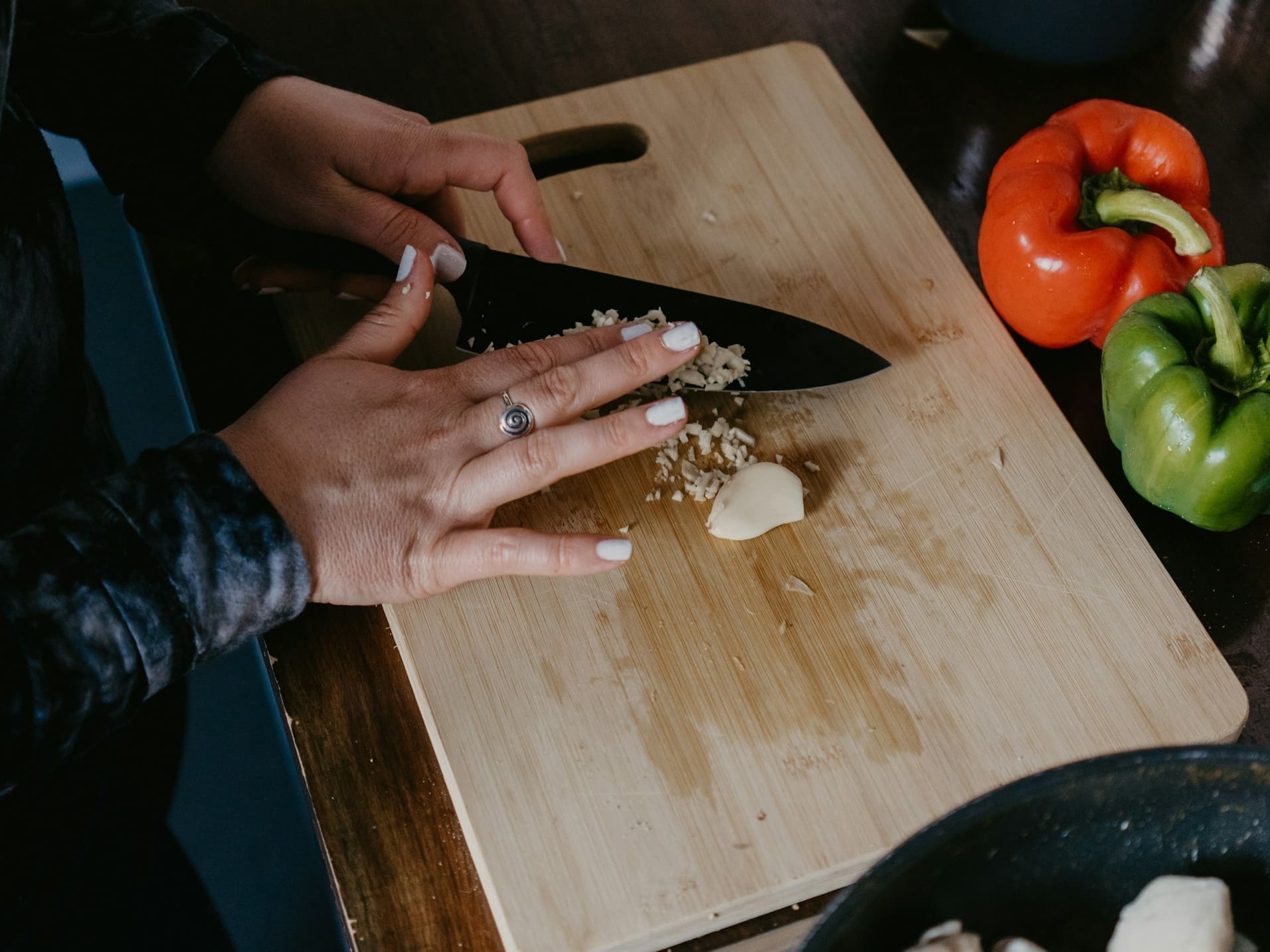
- Small: Good for garlic, herbs, fruit, and small portions.
- Medium: A versatile choice for everyday cooking.
- Large: Useful for batch preparation, large vegetables, and meat.
Food Safety When Choosing a Cutting Board
A cutting board should remain smooth, durable, and easy to clean. Deep knife grooves, cracks, splits, and severe warping can make a board harder to clean effectively.
To reduce cross-contamination, clean your board after preparing raw meat, poultry, or seafood before using it for ready-to-eat foods. If you prepare different food types, separate boards can simplify your routine.
When Should You Replace a Cutting Board?
Inspect its condition and replace it when you notice:
- Deep grooves that are difficult to clean
- Cracks or splits
- Serious warping
- A surface that remains difficult to clean
- Damage that affects stability
How to Clean and Maintain Your Cutting Board
Always follow the manufacturer’s care instructions.
For plastic boards, wash them promptly after use and dry them thoroughly. For wooden boards, avoid prolonged soaking and allow them to dry completely. If the manufacturer recommends conditioning or oiling, follow those instructions.
Common Cutting Board Mistakes to Avoid
Avoid these common mistakes:
- Buying a board that is too small.
- Choosing a surface that slides while you cut.
- Continuing to use a severely damaged board.
- Using one board carelessly for raw and ready-to-eat foods.
- Choosing a glass board because it looks modern.
- Ignoring the manufacturer’s cleaning instructions.
How to Choose the Right Cutting Board for Your Kitchen
If you want a simple setup, start with one medium-to-large board that matches your cooking style. If you regularly prepare raw meat, adding a second easy-to-clean board is a practical upgrade.
The best cutting board is not necessarily the most expensive. It is the one that gives you enough workspace, stays stable, suits your knives, and fits your cleaning routine.
Final Buying Checklist
Before you buy, ask yourself:
- Is the material suitable for my cooking?
- Is the board large enough?
- Will it stay stable?
- Can I clean and maintain it easily?
- Do I need a separate board for raw meat?
FAQ About Choosing a Cutting Board
What is the best material when choosing a cutting board?
There is no universal winner. Wood, plastic, composite, and rubber can all be useful when selected and maintained appropriately.
Is wood or plastic better when choosing a cutting board?
Wood is attractive and comfortable for knife work, while plastic is lightweight and practical. Many kitchens benefit from having both.
What size cutting board should you buy?
A medium-to-large board is versatile for many home cooks, provided you have enough counter and storage space.
Conclusion
Choosing a cutting board becomes easier when you focus on how you cook. Consider material, size, stability, knife compatibility, food safety, and maintenance before buying. A good choice can make preparation safer and more comfortable.
Now look at the boards in your kitchen. If one is too small, unstable, or heavily damaged, it may be time for an upgrade. Choose a board that fits your routine, and you will notice the difference every time you prepare a meal.