
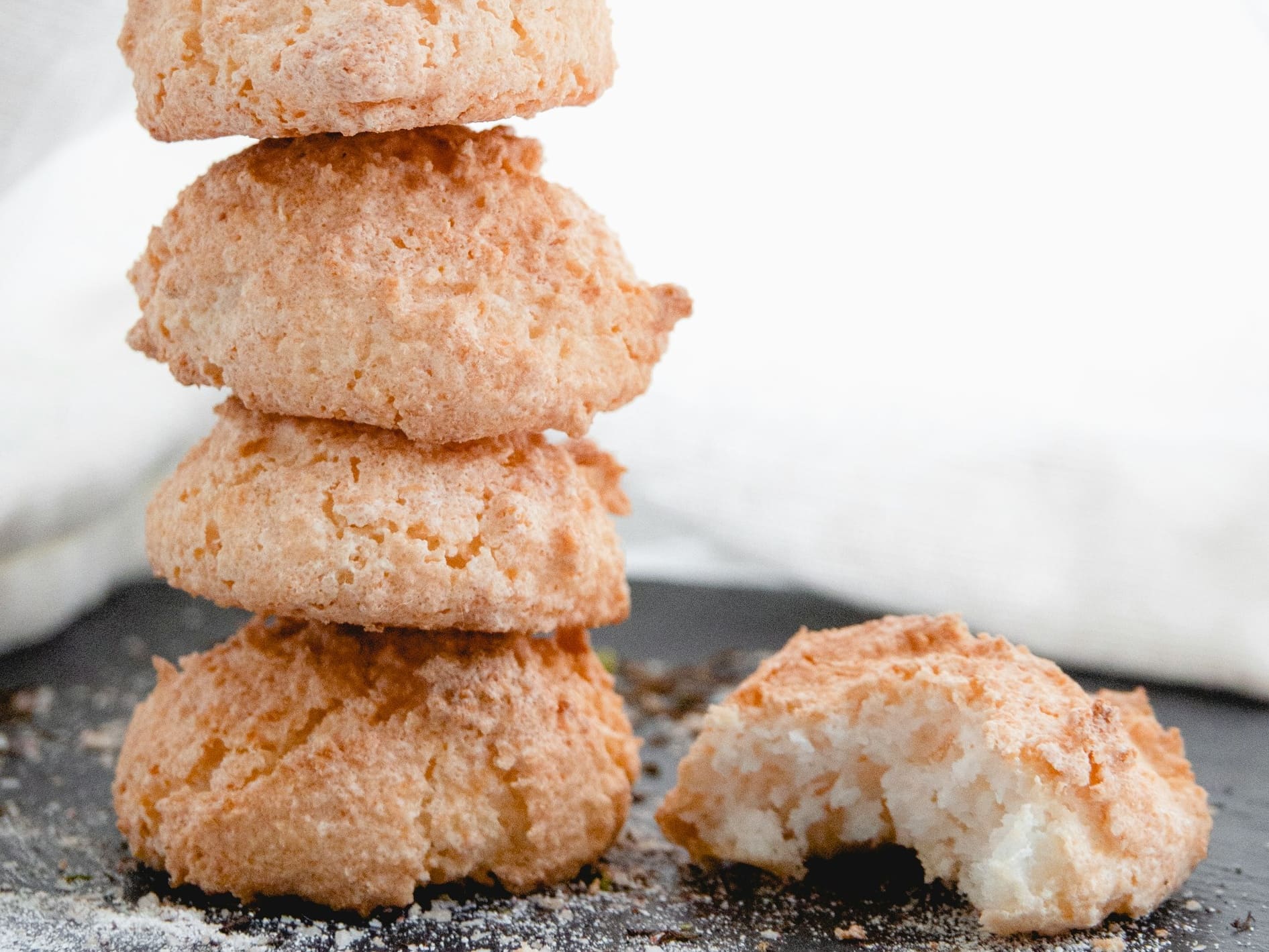
The Secret to Chewy Coconut Macaroons
The difference between chewy and dry macaroons is largely about moisture and baking time.
Measure the Condensed Milk
Don’t pour directly from the container until the mixture “looks right.”
Too much liquid can encourage spreading, while changing the amount substantially in the other direction can leave the mixture too dry.
Use the measured ¾ cup.
Make the Mounds Similar in Size
A tray containing tiny macaroons beside very large ones won’t bake evenly.
By the time the large cookies are ready, the small ones may be overbaked.
A cookie scoop makes consistent portions easier.
Watch the Color, Not Just the Timer
Eighteen to twenty-two minutes is a guide.
If the edges are already becoming deeply browned, don’t keep baking simply because the timer hasn’t reached 22 minutes.
Likewise, if your macaroons are larger, they may behave differently.
Don’t Bake Until the Centers Feel Dry
The goal is a toasted exterior with a chewy interior.
Waiting for the entire macaroon to become dry and firm while it’s still in the oven can push it beyond the texture you’re trying to achieve.
Why Did My Coconut Macaroons Spread?
Macaroons should hold recognizable mounds rather than melting into flat coconut cookies.
If yours spread significantly, check these areas.
The mixture contained too much liquid
Measure the condensed milk accurately.
The coconut was different
Changing from the specified sweetened shredded coconut to a substantially finer or differently hydrated product can change the mixture.
The mounds couldn’t hold themselves before baking
Before the tray enters the oven, a scoop of macaroon mixture should already resemble a mound.
If it immediately slumps apart, that’s a warning that the mixture isn’t behaving as expected.
Why Are My Macaroons Falling Apart?
First, don’t judge them while they’re still very hot.
Macaroons become firmer as they cool.
If cooled macaroons still crumble apart, possible causes include:
- Mixture was too dry
- Coconut wasn’t evenly coated
- Egg whites weren’t incorporated evenly
- Mounds were extremely loose
- Cookies were moved too soon
Lightly compacting each mound before baking helps the strands of coconut stay together.
Why Are the Bottoms Browning Too Fast?
If the bottoms become dark before the rest of the cookie looks ready, your oven or pan setup may be transferring too much heat to the base.
Check:
- Oven temperature
- Rack position
- Baking sheet
- Macaroon size
- Actual baking time
Keep the tray around the central area of the oven unless your particular oven or recipe requires otherwise.
If your oven regularly browns baked goods much faster than expected, an oven thermometer can help you determine whether its actual temperature matches the setting.
How to Get Golden Tops Without Dry Centers
The visual target isn’t a uniformly dark-brown cookie.
Look for toasted tips and golden edges while much of the coconut remains lighter.
Once they’re approaching that stage, check frequently.
The exterior will continue to firm as the cookies cool.