
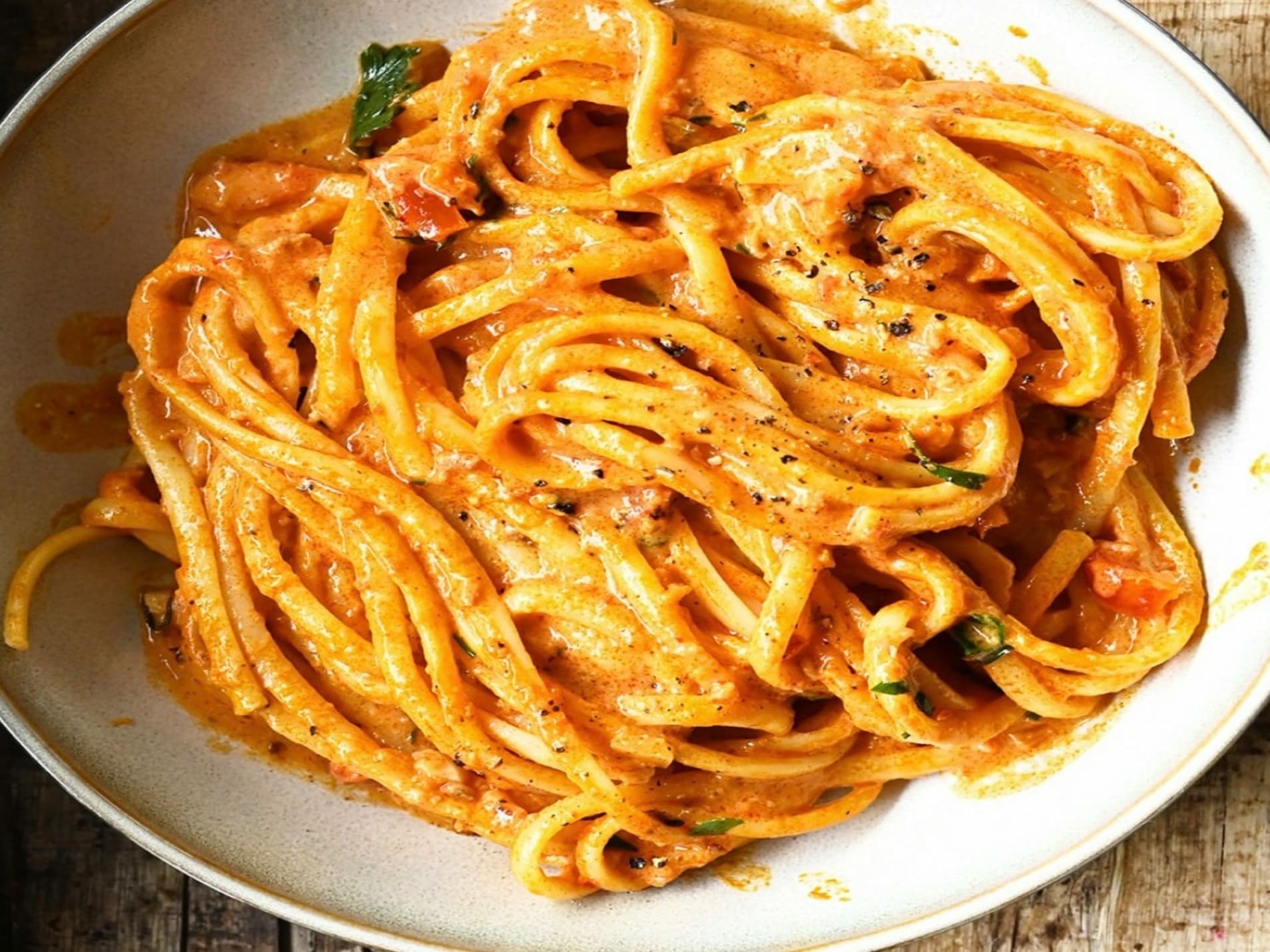
Four Easy Ways to Change the Pasta
The basic tomato-cream-spinach combination gives you a useful base for several dinners.
Creamy Tomato Chicken Pasta
Cook sliced or cubed chicken separately and stir it into the sauce before the final toss.
Chicken turns the pasta into a more substantial meal without requiring major changes to the sauce.
When preparing raw poultry, use a food thermometer to verify doneness rather than relying on color. FoodSafety.gov lists 165°F (74°C) as the safe minimum internal temperature for poultry.
FoodSafety.gov Safe Minimum Internal Temperature Chart
Creamy Tomato Shrimp Pasta
Cook the shrimp separately and combine it with the finished sauce.
Because shrimp cooks quickly, prepare the rest of the meal first rather than leaving the shrimp on the heat while you wait for the pasta.
Spicy Tomato Spinach Pasta
Add red pepper flakes with the tomatoes.
Start with a modest amount, let the sauce simmer, then taste before increasing the heat.
You can always add more.
Extra-Vegetable Pasta
Spinach doesn’t have to be the only vegetable.
Depending on what you have available, the sauce can work with additions such as:
- Mushrooms
- Zucchini
- Roasted bell peppers
- Broccoli
Cook vegetables according to what they require rather than adding everything to the sauce at the same moment.
How to Turn It Into a Complete Dinner
Because the pasta is creamy, the easiest sides provide freshness or contrasting texture.
Try:
- Green salad
- Cucumber salad
- Roasted vegetables
- Steamed broccoli
- Bruschetta
- Garlic bread
- Crusty bread
You don’t need several sides.
A particularly simple weeknight combination is:
CREAMY TOMATO PASTA + GREEN SALAD + GARLIC BREAD
How to Make the Recipe More Efficient
This dinner becomes much faster when the pasta and sauce happen at the same time.
Pot
Boil water → cook pasta → reserve water → drain.
Skillet
Onion → garlic → tomatoes → seasoning → cream → Parmesan → spinach.
Finish
Pasta → sauce → pasta water if needed → final seasoning.
There’s no reason to wait until the pasta is completely cooked before starting the sauce.
If you begin the skillet while the pasta water heats or the pasta cooks, both components should be ready around the same time.
Common Problems and How to Fix Them
| Problem | Likely Cause | What to Do |
|---|---|---|
| Sauce is too thick | Reduced too far or pasta absorbed sauce | Add reserved pasta water gradually |
| Sauce is watery | Too much pasta water or wet spinach | Simmer gently and add liquid more carefully |
| Pasta is mushy | Overcooked before final toss | Cook only until al dente |
| Sauce tastes flat | Seasoning needs adjustment | Check salt, Parmesan, pepper and herbs |
| Sauce tastes very sharp | Tomato base needs development | Let tomatoes simmer before judging finished sauce |
| Garlic tastes bitter | Garlic browned too far | Cook briefly over controlled heat |
| Frozen spinach waters down sauce | Excess moisture wasn’t removed | Thaw and squeeze before adding |
| Cheese isn’t incorporating well | Excessive heat | Lower heat and add Parmesan gradually |