
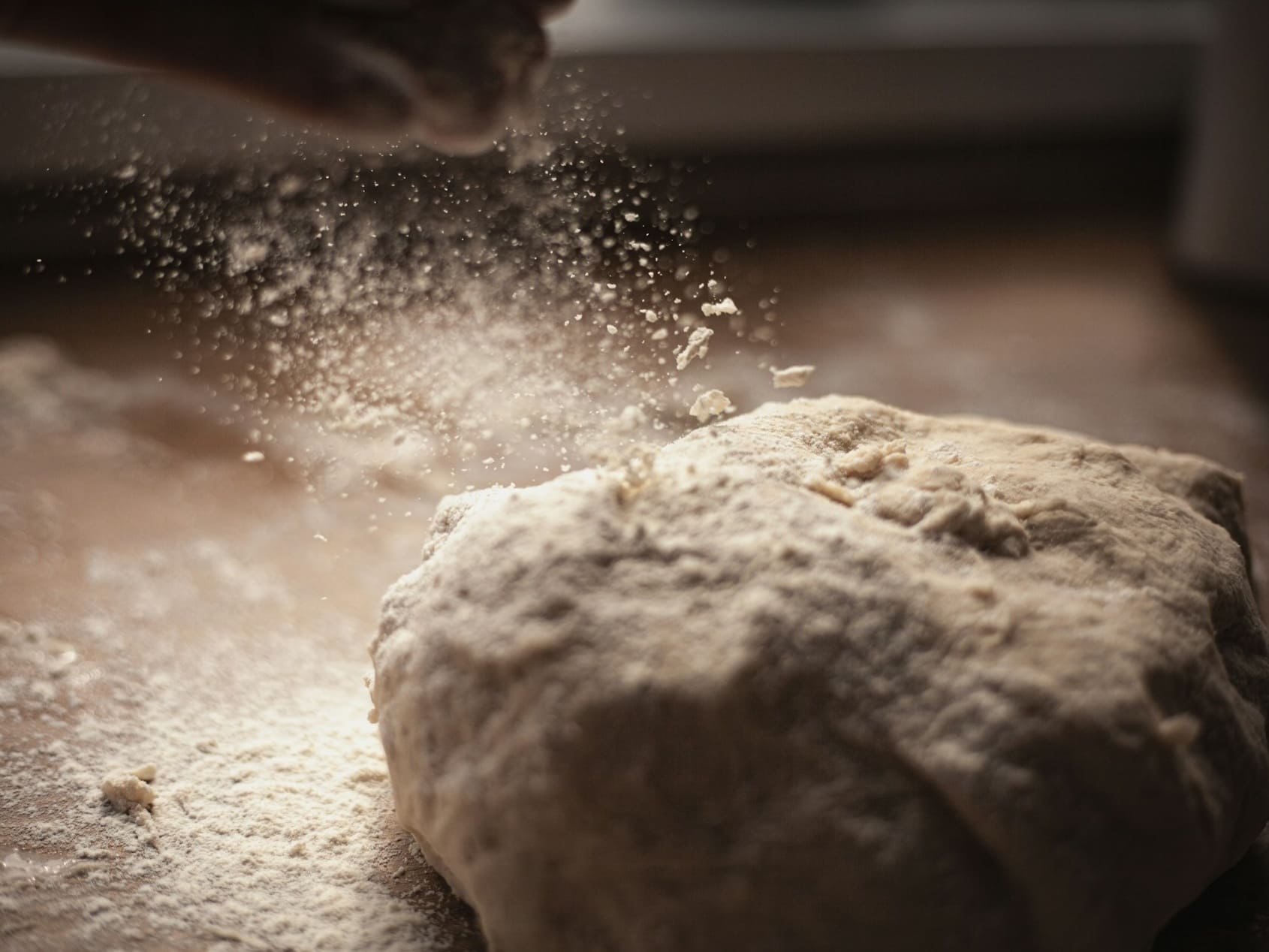
5. Whole Wheat Flour
Whole wheat flour contains the bran, germ, and endosperm of the wheat kernel.
That gives it different flavor, color, nutritional composition, and baking behavior compared with refined white wheat flour.
Best uses
- Whole wheat bread
- Rolls
- Muffins
- Pancakes
- Crackers
One important detail is that protein percentage alone doesn’t tell you everything about baking performance.
Whole wheat flour may contain substantial protein, but the bran can interfere with the gluten network. That’s one reason a 100% whole-wheat loaf can behave differently from a loaf made primarily with refined bread flour.
Whole wheat flour can also change a recipe’s hydration requirements.
If you’re converting a recipe originally developed for white flour, replacing all of it with whole wheat isn’t always as simple as a one-for-one swap.
6. Self-Rising Flour
Self-rising flour combines flour with leavening ingredients and salt.
That makes it convenient for certain quick recipes.
Common uses
- Biscuits
- Pancakes
- Scones
- Quick breads
The important point isn’t simply what you can make with it—it’s remembering what’s already inside the bag.
If a recipe was developed for self-rising flour, don’t automatically add the same amount of baking powder and salt that you’d use with plain flour.
Likewise, don’t replace all-purpose flour with self-rising flour without considering the recipe’s existing leavening and salt.
7. Semolina Flour
Semolina is traditionally produced from durum wheat and has a coarser texture than typical all-purpose flour.
It’s strongly associated with pasta making.
Common uses
- Pasta
- Couscous
- Certain breads
- Traditional desserts
Its characteristics make it useful when you want a firm pasta texture.
However, not every pasta recipe uses semolina exclusively. Some recipes combine it with other flours, while others use different wheat flours entirely.
8. 00 Flour
This flour is commonly misunderstood.
The “00” designation primarily describes the fineness of the milling, not one universal protein percentage or guaranteed baking behavior.
That means two bags labeled 00 can still have different characteristics.
Common uses
- Pizza
- Fresh pasta
- Italian-style baked goods
When buying 00 flour for pizza, don’t choose it solely because the front of the bag says “00.”
Check what the manufacturer designed the flour for and, where provided, its protein specifications.
00 doesn’t automatically mean “pizza flour,” and it doesn’t automatically mean “high protein.”