
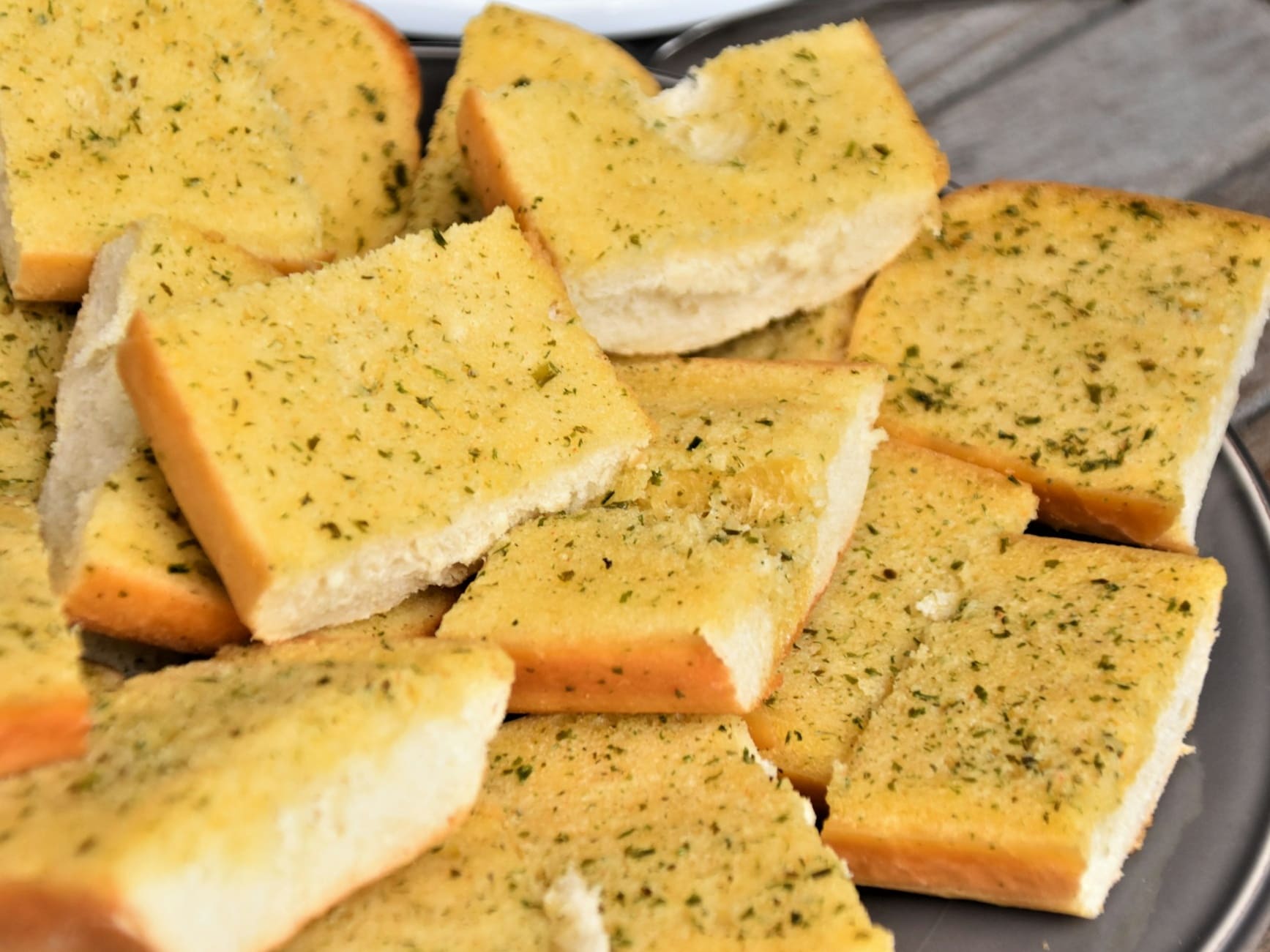
How to Make Garlic Bread Crispy Without Drying It Out
Crispy garlic bread doesn’t need to be hard all the way through.
The ideal result has a crisp exterior and edges while retaining some softness inside.
Focus on four things.
Start With a Crusty Loaf
A baguette, French loaf, or ciabatta gives you a better starting structure than very soft sandwich bread.
Fully Preheat the Oven
Put the bread into an oven that has already reached the required temperature.
Bake It Uncovered
Leaving the cut surface exposed encourages browning rather than trapping steam around it.
Stop When the Texture Is Right
Don’t keep baking simply because the center still feels soft.
That’s the contrast you’re looking for.
For additional surface browning, a short broiler finish is more useful than leaving the entire loaf in the oven until it’s dry.
Soft vs. Crispy Garlic Bread
You can modify the method slightly depending on the texture you prefer.
| You Want | Try This |
|---|---|
| Very crisp edges | Use baguette or ciabatta |
| Softer center | Use a thicker French or Italian loaf |
| More browning | Finish briefly under the broiler |
| Less greasy bread | Use a thinner, even butter layer |
| Cheesy top | Add mozzarella and Parmesan |
| More garlic throughout | Finely grate the garlic |
The bread itself matters just as much as the baking time.
Why Is My Garlic Bread Soggy?
Usually, the problem is a combination of bread choice, butter quantity, and baking.
Too much garlic butter
A thick pool of butter doesn’t automatically create stronger flavor.
It can simply saturate the bread.
Spread enough to coat the surface evenly.
The bread is extremely soft
Very soft bread absorbs fat differently from a crusty loaf.
Try French bread, baguette, Italian bread, or ciabatta.
It needs more surface browning
If the bread is hot but still too soft on top, additional uncovered baking or a carefully monitored broiler finish can help.
Why Does the Garlic Taste Burnt?
Fresh garlic can brown quickly when directly exposed to high heat.
Three things help:
Chop or grate it evenly. Large pieces can cook differently from tiny ones.
Mix it into the butter. Don’t scatter large pieces of raw garlic over the surface.
Watch the broiler. This is where garlic bread can burn particularly quickly.
If the surface is already dark enough, don’t keep broiling just to make the edges slightly crispier.
How Much Garlic Should You Use?
This recipe starts with 4–6 cloves for one loaf.
Use four for a milder result or move toward six if you prefer a stronger garlic presence.
Clove size varies, so don’t treat the number as an absolute measurement.
If you’re unsure, start moderately. You can increase the garlic in your next batch much more easily than you can remove an overpowering garlic flavor from bread that’s already baked.