Few kitchen disappointments are as annoying as lifting the lid and finding rice that is crunchy, soggy, or stuck to the bottom of the pan. When you learn how to cook rice properly, however, you can turn a basic ingredient into a side dish for almost any meal.
Understanding Rice Before You Start
Before you cook, check which type of rice you have. Different varieties absorb water differently, so one ratio does not work perfectly for every grain.
| Rice type | Starting water ratio | Approx. cooking time |
|---|---|---|
| Long-grain white | 1½ cups per 1 cup rice | 15–20 minutes |
| Basmati | 1½ cups per 1 cup rice | 15–20 minutes |
| Jasmine | 1¼ cups per 1 cup rice | 12–15 minutes |
| Brown rice | 2 cups per 1 cup rice | 40–50 minutes |
These figures are useful starting points, but you should also check your package instructions. Rice processing, cookware, altitude, and rinsing can change the result.
What You Need to Cook Rice
For a simple pot of white rice, you need only a few ingredients:
| Ingredient | Amount |
|---|---|
| Rice | 1 cup |
| Water | 1½ cups |
| Salt | ½ teaspoon |
| Butter or oil | 1 teaspoon, optional |
You also need a saucepan with a tight-fitting lid, a measuring cup, a fine-mesh strainer, and a fork for fluffing.
How to Cook Rice on the Stove
1. Measure the Rice
Measure your rice carefully. Use the same measuring cup for the rice and water so your proportions stay consistent.
2. Rinse the Rice
Place the rice in a fine-mesh strainer and rinse it under cool water. Rinsing removes some surface starch and can help you achieve more separated grains. Some rice dishes intentionally use the extra starch, so follow the preparation method suited to your recipe.
3. Add Water and Seasonings
Put the rice and measured water into your saucepan. Add salt and, if you like, a small amount of butter or oil for extra flavor.
4. Bring Everything to a Boil
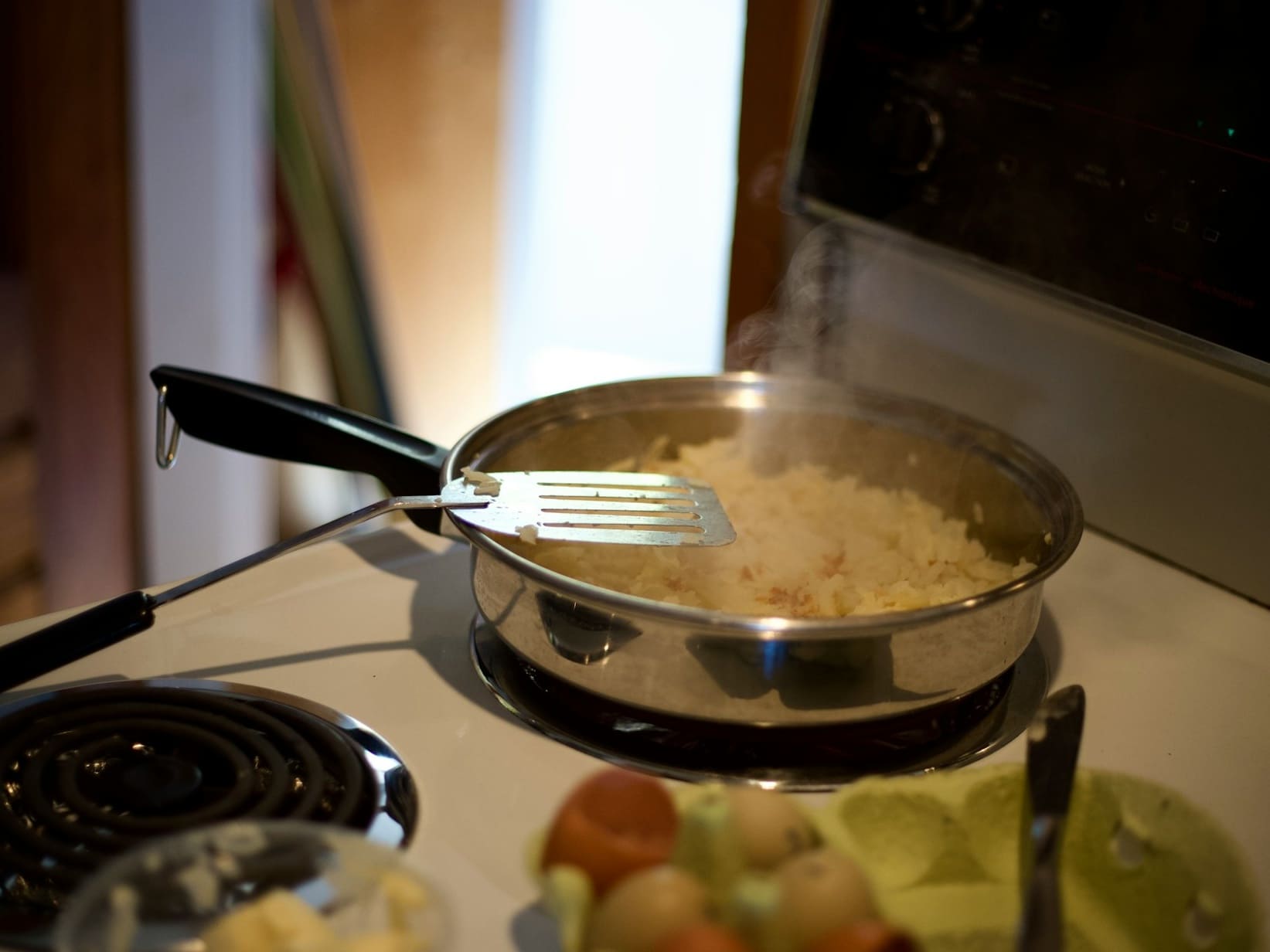
Set the pan over medium-high heat. Wait until the water reaches a steady boil. You do not need to stir the rice repeatedly.
5. Cover and Reduce the Heat
As soon as it boils, reduce the heat to low and cover the saucepan tightly. This step matters because the rice cooks through the combination of gentle heat and trapped steam.
6. Cook Without Lifting the Lid
Let the rice cook according to its variety. White rice usually takes around 15–20 minutes, while brown rice can take 40–50 minutes. Avoid opening the lid every few minutes because escaping steam can interfere with cooking.
7. Let the Rice Rest
Turn off the heat when the rice is tender and the cooking liquid has been absorbed. Keep the lid on and let the rice rest for about 5–10 minutes. The resting period allows moisture to distribute more evenly through the grains.
8. Fluff and Serve
Remove the lid and gently fluff the rice with a fork. Do not mash or aggressively stir it. Your rice is now ready to serve.
How to Make Rice Fluffy Instead of Mushy
If your rice regularly turns out mushy, you are probably using too much water, cooking it too long, or stirring it excessively. Start by measuring your water accurately and using a ratio appropriate for your rice.
For fluffier rice, remember these habits:
- Use the correct rice-to-water ratio.
- Keep the lid closed during cooking.
- Maintain low heat after boiling.
- Avoid unnecessary stirring.
- Rest the rice before fluffing.
If your rice is hard, it may need more water or additional cooking time. Add a small amount of water, cover the pan, and continue cooking gently until the grains become tender.
How to Cook Different Types of Rice
White rice is usually the easiest place to start. Basmati rice benefits from careful rinsing and gentle cooking when you want distinct, fluffy grains. Jasmine rice naturally has a softer, slightly sticky texture, so do not assume that every soft grain means you made a mistake.
Brown rice needs more water and significantly more cooking time. Its finished texture is usually firmer and chewier than white rice. Always use the instructions for your specific variety as your primary reference.
How to Cook Rice in a Rice Cooker
A rice cooker can make the process more convenient. Measure your rice, rinse it if appropriate, add the recommended amount of water, and select the suitable cooking setting. Once the cycle finishes, let the rice sit briefly before fluffing it.
A rice cooker is useful if you prepare rice frequently, while stovetop cooking gives you more direct control over heat and timing.
Common Rice-Cooking Mistakes
Several small mistakes can change your results:
- Using one water ratio for every rice variety.
- Opening the lid repeatedly.
- Cooking at high heat after the water begins boiling.
- Stirring constantly.
- Skipping the resting period.
- Guessing measurements instead of measuring them.
Fixing Rice That Did Not Cook Properly
If your rice is still hard but the pan is dry, add a little water, cover it, and continue cooking over low heat. If it is too wet, leave it uncovered over low heat briefly so excess moisture can evaporate.
If the bottom is burnt, transfer the usable rice to another container without scraping the scorched layer into it. That can save the rest of your meal.
How to Store and Reheat Cooked Rice
Cooked rice should be handled carefully. Refrigerate leftovers promptly in a clean, covered container and keep your refrigerator at 40°F (4°C) or below. When reheating, make sure the rice is thoroughly hot. Avoid repeatedly cooling and reheating the same batch.
Frequently Asked Questions About How to Cook Rice
How do you cook rice perfectly every time?
Measure accurately, use the appropriate water ratio, simmer covered over low heat, and let the rice rest before fluffing.
What is the best rice-to-water ratio?
It depends on the variety. A common starting point for long-grain white rice is 1 cup of rice to 1½ cups of water.
Should you rinse rice before cooking?
Rinsing can remove excess surface starch and may produce more separated grains. However, the best approach depends on the rice and recipe.
How long does it take to cook rice?
White rice commonly takes 15–20 minutes, while brown rice often needs 40–50 minutes.
Can you cook rice without a rice cooker?
Yes. A saucepan with a tight-fitting lid is enough to cook rice on your stovetop.
Conclusion
Learning how to cook rice does not have to feel complicated. Once you understand your rice variety and control the water, heat, steam, and resting time, the process becomes predictable.
Start with a simple one-cup batch, follow the measurements carefully, and pay attention to the texture. Then experiment with different varieties, herbs, stocks, and seasonings to create rice that fits your meals.
Try this method with your next dinner, and save this guide so you can return to the rice-to-water ratios whenever you need them.