
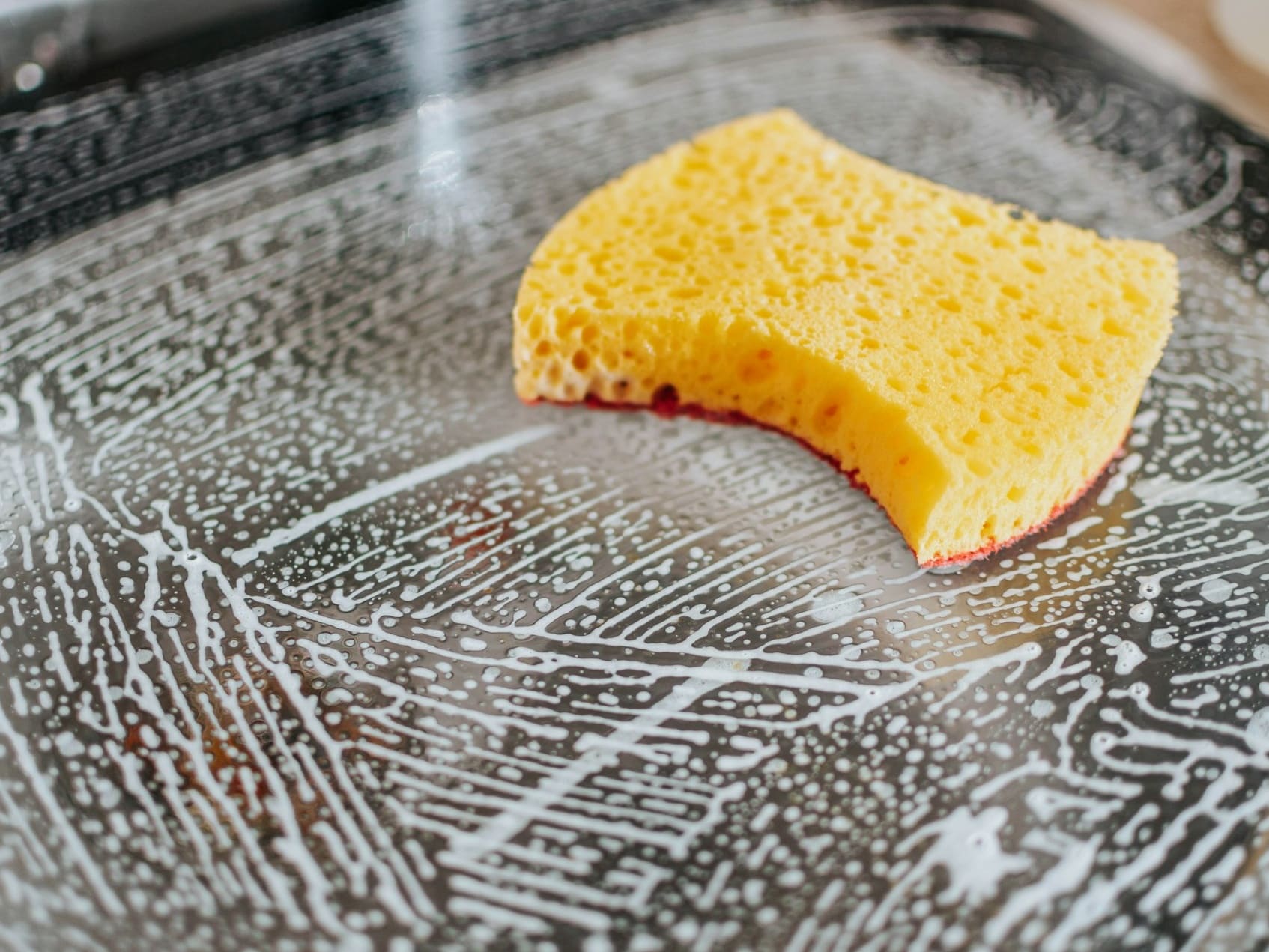
5. Wash or Load Tools During Natural Waiting Time
Don’t interrupt an active cooking step just to wash a spoon.
Instead, use the quiet periods built into recipes.
If something needs to:
- Simmer for 10 minutes
- Bake for 30 minutes
- Come to a boil
- Rest briefly
use part of that time for cleanup.
Rinse or wash the tools you no longer need, or load dishwasher-safe items directly into the dishwasher.
This is much more efficient than allowing every used item to accumulate in the sink.
6. Soak Stubborn Cookware Instead of Fighting It Immediately
A pan with stuck-on food doesn’t necessarily need your attention while dinner is still cooking.
If soaking is appropriate for that particular cookware, deal with it later rather than spending ten minutes scrubbing while other food needs attention.
For specialty cookware—including some nonstick, cast-iron, carbon-steel, or otherwise specially finished pans—follow the manufacturer’s cleaning instructions rather than assuming every pan should be soaked or scrubbed the same way.
The goal is to use inactive time intelligently, not damage cookware in the name of faster cleanup.
7. Use Fewer Bowls—But Don’t Create Cross-Contamination
Reusing equipment can reduce dishes, but only when it makes sense.
A measuring cup used for water may be easy to reuse for another compatible ingredient.
A plate that held raw chicken is different.
FDA guidance recommends keeping raw meat, poultry, seafood, and eggs separate from other foods. Cutting boards, dishes, utensils, and countertops should be washed appropriately after contact with raw foods before they’re used for ready-to-eat or cooked foods. (U.S. Food and Drug Administration)
So use fewer dishes where practical—but never reduce dishes at the expense of food safety.
8. Use Separate Cutting Boards When Possible
One of the most important distinctions in a working kitchen is between raw animal foods and foods that are already cooked or ready to eat.
FDA guidance recommends using separate cutting boards for fresh produce and raw meat, poultry, and seafood when possible. If you don’t have separate boards, prepare fruits and vegetables first, move them safely out of the way, thoroughly wash the board, and then prepare the raw animal food. (U.S. Food and Drug Administration)
The same principle applies to plates.
Don’t put cooked chicken back onto the unwashed plate that held it raw.
RAW PLATE ≠ COOKED-FOOD PLATE
Use a clean plate or wash the original appropriately first.
9. Wash Your Hands at the Right Moments
Clean-looking hands aren’t necessarily clean hands.
FDA recommends washing hands with soap and water for at least 20 seconds before and after handling food. Handwashing is particularly important after handling raw meat, poultry, seafood, or eggs. (U.S. Food and Drug Administration)
Wash your hands instead of simply wiping them on a kitchen towel.
And don’t use the same cloth indiscriminately for raw-food spills, clean dishes, countertops, and your hands.
10. Don’t Wash Raw Meat or Poultry
This is one cleaning habit that can make the kitchen less safe.
Washing raw poultry isn’t recommended because splashing water can spread bacteria from raw juices onto the sink, countertops, utensils, and nearby food. USDA specifically advises against washing poultry before cooking. (Ask USDA)
USDA: Should I Wash Chicken or Other Poultry Before Cooking?
Instead:
DON’T RINSE → HANDLE CAREFULLY → WASH HANDS/SURFACES → COOK PROPERLY
Cooking to the appropriate safe internal temperature—not rinsing—is what addresses harmful bacteria in raw meat and poultry. (Ask USDA)