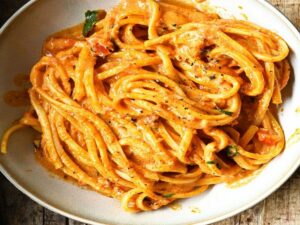
Easy Garlic and Olive Oil Pasta
This simple recipe puts the technique into practice.
Ingredients
| Ingredient | Amount |
|---|---|
| Spaghetti | 225 g / 8 oz |
| Olive oil | 3 tbsp |
| Garlic | 3 cloves |
| Red pepper flakes | ¼ tsp |
| Reserved pasta water | Up to ½ cup |
| Parmesan | ¼ cup |
| Fresh parsley | 1 tbsp |
| Salt | To taste |
Method
Cook the spaghetti in boiling salted water according to its package directions.
Stir immediately after adding it and continue stirring occasionally.
Meanwhile, slice the garlic and gently cook it in the olive oil. Add the red pepper flakes without allowing the garlic to burn.
Before draining the spaghetti, reserve about ½ cup of its cooking water.
Transfer the pasta directly into the garlic and olive oil mixture.
Toss thoroughly.
Add the pasta water gradually until the noodles are evenly coated and the mixture reaches the consistency you want.
Finish with Parmesan and parsley.
The important part isn’t simply the recipe—it’s the workflow:
The spaghetti goes from cooking water directly into its prepared sauce.
What to Do If Your Pasta Is Already Sticking
If the noodles have only just begun clumping, don’t panic.
Transfer them into the warm sauce and gently toss.
Add a small splash of reserved pasta water if the sauce needs additional moisture.
Avoid aggressively pulling delicate noodles apart, which can damage them.
If pasta has been sitting for a long time and has formed a dense cold mass, it will be harder to restore perfectly. Prevention is much easier than trying to separate it later.
What About Pasta Salad?
Pasta salad requires a different strategy because the noodles aren’t moving directly into a hot sauce for immediate serving.
Follow the cooling method specified by your pasta-salad recipe.
Spreading the pasta rather than leaving it piled deeply can help it cool more evenly. Some pasta-salad methods also use a small amount of oil during the cooling or dressing process.
Don’t automatically apply the rules for hot spaghetti to a cold pasta salad.
What About Meal Prep?
If you’re preparing pasta for later, consider the final dish before deciding how to handle it.
For a hot meal, storing pasta with an appropriate amount of sauce can be more practical than refrigerating a large mass of plain noodles.
When reheating, a little additional sauce or water may help restore moisture, depending on the dish.
For pasta salad, use the cooling and storage method designed for that particular recipe.
Sticky Pasta Troubleshooting
| Problem | Likely Cause | Try This |
|---|---|---|
| Spaghetti sticks during cooking | Not enough early stirring | Stir immediately and separate strands |
| Pasta clumps after draining | It sat too long | Transfer directly to sauce |
| Sauce slides off pasta | Pasta was rinsed or heavily oiled | Skip routine rinsing/oiling for hot dishes |
| Pasta feels very soft | Overcooking | Taste before the package time ends |
| Sauce becomes too thick | Not enough liquid | Add reserved pasta water gradually |
| Noodles clump while sauce cooks | Poor timing | Prepare sauce first |
The Five Rules Worth Remembering
If you forget everything else, remember these:
1. Stir immediately.
Don’t wait until the pasta has already begun sticking.
2. Skip oil in the cooking water.
Use proper stirring instead.
3. Prepare the sauce first.
Your pasta shouldn’t be waiting for the sauce.
4. Save some pasta water.
It’s useful for adjusting and bringing the sauce together.
5. Move hot pasta directly into its sauce.
Don’t leave it sitting in a colander.
Perfect pasta isn’t about eliminating starch. That starch can actually be useful. The better approach is to keep the noodles moving while they cook, avoid unnecessary rinsing or oiling, reserve some cooking water, and minimize the time between draining and saucing. Once that sequence becomes automatic, preventing clumped spaghetti or sticky noodles becomes much easier.