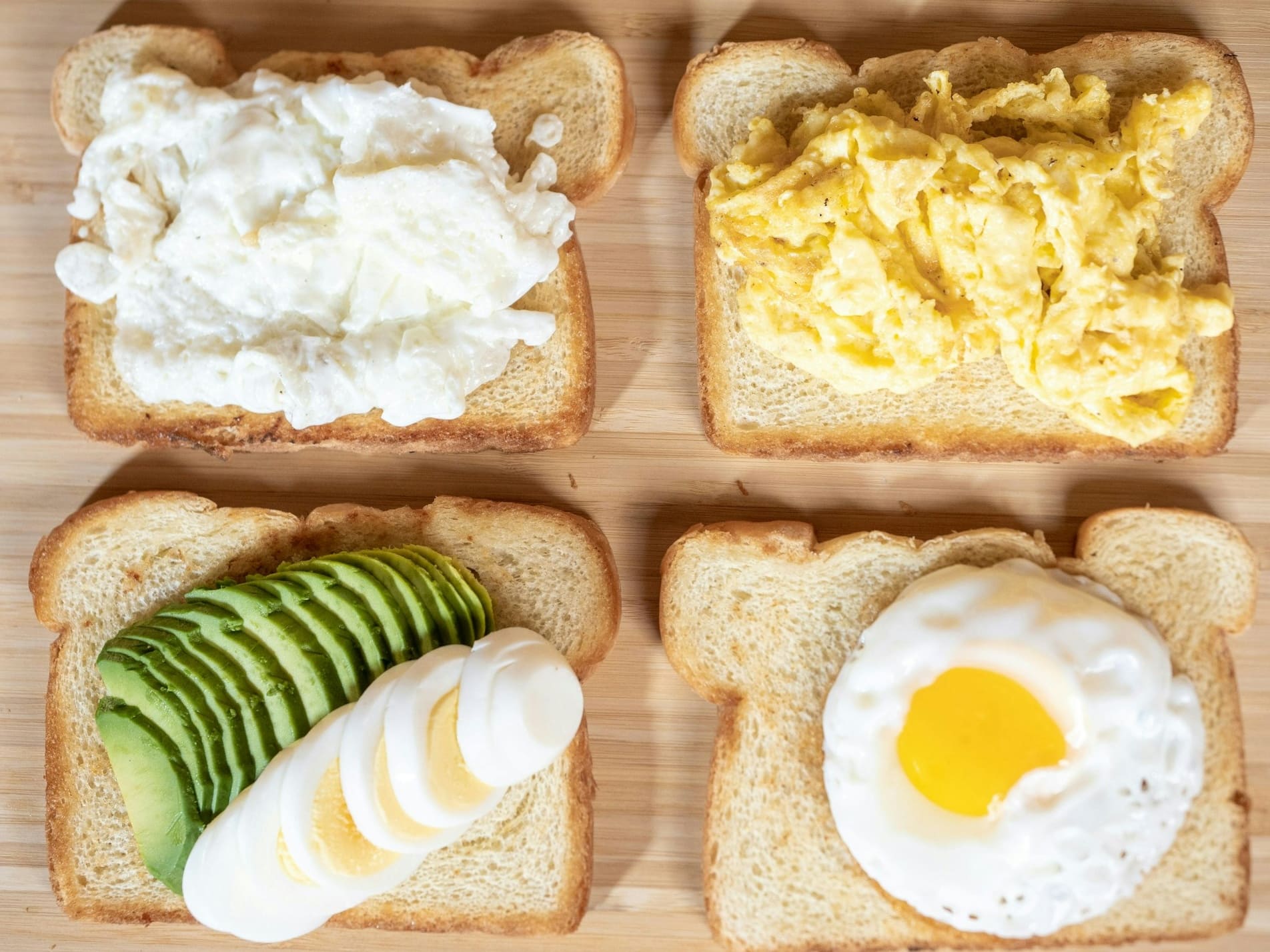
Which Egg Cooking Method Fits Your Morning?
| Method | Approx. Time | Skill Level | Good For |
|---|---|---|---|
| Scrambled | ~5 min | Easy | Busy mornings |
| Fried | ~5 min | Easy | Toast and sandwiches |
| Poached | ~5–10 min | Moderate | Toast and bowls |
| Hard-cooked | Longer + cooling | Easy | Meal prep |
| Omelet | ~10 min | Moderate | Using vegetables and cheese |
| Quesadilla | ~10 min | Easy | Filling breakfast |
| Baked eggs | ~15–20 min | Easy | Multiple servings |
| Shakshuka-style | ~20–30 min | Moderate | Relaxed breakfast |
The times are approximate because pan size, cooking temperature, quantity, and the particular recipe all affect cooking time.
How to Make Better Scrambled Eggs and Omelets
Don’t Start With Excessive Heat
Medium or medium-low heat gives you more control over how quickly the eggs set.
Prepare Fillings First
An omelet cooks quickly.
Don’t wait until the eggs are nearly finished before you start chopping peppers or grating cheese.
Pre-Cook Ingredients When Necessary
Raw potatoes, some meats, and certain vegetables need more cooking than eggs.
Cook those first rather than expecting the egg-cooking time to finish them.
Don’t Overfill
More filling doesn’t automatically make a better omelet, wrap, or quesadilla.
Leave enough room to fold and handle it comfortably.
Build an Egg Breakfast Instead of Another Plain Plate
Use a simple four-part formula:
EGGS + VEGETABLE/FRUIT + BASE + OPTIONAL EXTRA
For example:
Scrambled eggs + spinach + toast + feta
Poached eggs + avocado + whole-grain toast + tomato
Fried eggs + peppers + potatoes + beans
Hard-cooked eggs + fruit + toast + avocado
Eggs + tomato sauce + bread + herbs
This approach gives you variety without needing a completely new recipe every morning.
Egg Doneness and Food Safety
Because eggs can carry Salmonella, food safety is particularly important when recipes call for runny or undercooked eggs.
The USDA advises cooking egg dishes to an internal temperature of 160°F (71°C). Eggs cooked for immediate serving should generally be cooked until the white and yolk are firm.
For recipes intentionally using raw or undercooked eggs, USDA guidance recommends using pasteurized eggs or pasteurized egg products.
Cooked eggs and egg-containing dishes should also be refrigerated promptly rather than being left at room temperature for extended periods.
Make-Ahead Egg Breakfasts
Not every egg recipe is equally suited to meal prep.
Better choices for advance preparation
Hard-cooked eggs: Cook several together, chill, and refrigerate.
Egg muffins: Bake a batch and refrigerate appropriate portions.
Breakfast wraps: Prepare components ahead and assemble or reheat appropriately.
Better freshly cooked
Poached eggs: Best when texture is the priority.
Fried eggs: Quick enough that cooking fresh usually makes sense.
Soft scrambled eggs: Their texture is generally best directly from the pan.
Five Breakfast Combinations for the Week
If you don’t want to choose every morning, rotate the cooking method.
Monday: Scrambled eggs + spinach + toast
Tuesday: Avocado toast + egg
Wednesday: Egg and potato hash
Thursday: Breakfast wrap with eggs, peppers, and cheese
Friday: Vegetable omelet
That gives you five noticeably different breakfasts from many of the same basic groceries.
The easiest way to get more variety from eggs isn’t buying dozens of special ingredients—it’s changing the cooking method and what you build around them. Scramble them when you have five minutes, hard-cook a batch for meal prep, use an omelet to clear out vegetables, make a quesadilla when you want something crisp and filling, or cook them in tomato sauce when you have more time.