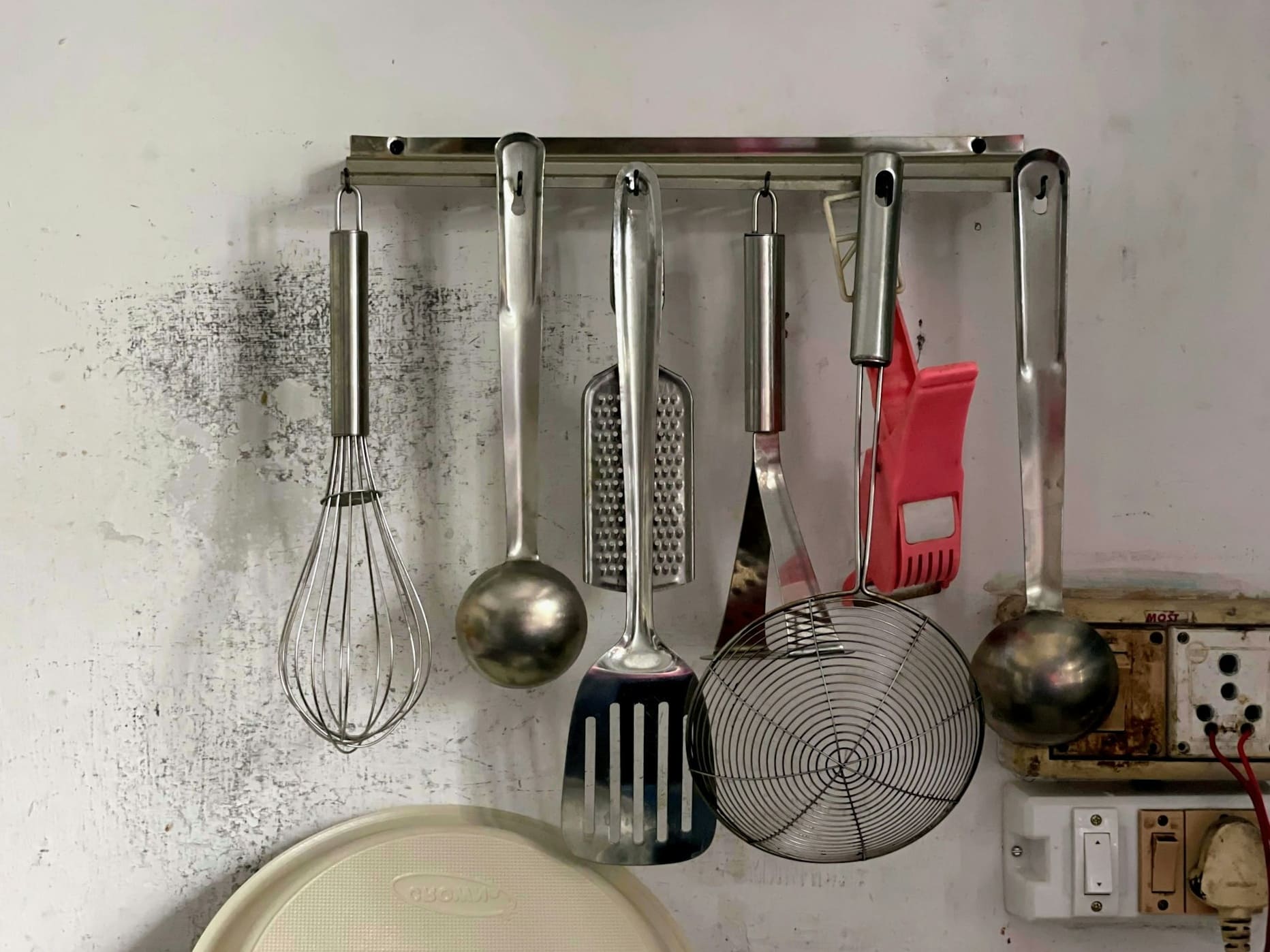
Starting to cook can feel harder than it should. You open a drawer and see gadgets you have never used, then discover that the recipe requires three things you do not own. The good news? You do not need a professional kitchen to make satisfying meals. With the right essential kitchen tools, you can prepare breakfast, dinner, simple baked dishes, and meal-prep staples without filling every cabinet.
The goal is not to buy everything at once. Your goal is to build a small collection of reliable tools that you will actually use. Here are the kitchen essentials that give you the best starting point.
What Are the Essential Kitchen Tools for Beginners?
When choosing kitchen tools, prioritize versatility, comfort, durability, easy cleaning, and value. A tool that performs several useful jobs is usually a better first purchase than a gadget designed for one recipe.
Start with these basics:
- Chef’s knife
- Cutting board
- Measuring cups and spoons
- Mixing bowls
- Frying pan
- Saucepan
- Large pot
- Spatula and wooden spoon
- Whisk
- Tongs
- Colander
- Baking sheet
- Oven mitts
- Food storage containers
You can add specialty equipment later as your cooking habits develop.
1. Chef’s Knife
A chef’s knife is one of the most important essential kitchen tools you can own. You can use it to chop onions, slice vegetables, mince garlic, cut herbs, and prepare meat.
For a beginner, look for a comfortable handle, a sharp blade, and good balance. An approximately 8-inch chef’s knife is a versatile choice for everyday preparation.
Knife safety matters just as much as the knife itself. Keep your cutting surface stable, keep your fingers away from the blade, and store the knife where it will not be knocked into a drawer.
2. Cutting Board
Your knife needs a stable surface, making a cutting board another kitchen essential. A large board gives you enough room to prepare ingredients without constantly moving them around.
You can choose wood or plastic depending on your preferences and cleaning routine. For food safety, consider using separate boards for raw meat and foods that will be eaten without cooking. The FDA recommends keeping raw meat, poultry, and seafood separate from ready-to-eat foods and washing food-contact surfaces thoroughly between uses.
3. Measuring Cups and Spoons
If you are new to cooking, measuring tools remove much of the guesswork. They are especially useful when following recipes for baking, sauces, marinades, rice, or desserts.
A practical beginner set should include:
- Dry measuring cups
- A liquid measuring cup
- Measuring spoons
Once you learn how ingredients behave, you may start measuring by eye. Until then, accurate measurements help you reproduce recipes more consistently.
4. Mixing Bowls
A set of mixing bowls can handle far more than cake batter. You can use them to whisk eggs, prepare salads, mix pancake batter, marinate ingredients, combine sauces, or organize chopped ingredients before cooking.
Three sizes are usually enough to begin:
- Small
- Medium
- Large
Choose bowls that are easy to clean and stable on your countertop.
5. Frying Pan
A frying pan will probably become one of the most frequently used pieces of cookware in your kitchen. You can make eggs, vegetables, chicken, fish, pancakes, grilled sandwiches, and quick stir-fries in one pan.
Nonstick cookware is convenient for beginners because food is less likely to stick and cleanup is generally simple. Stainless steel is another useful option, particularly if you want to learn techniques such as browning and searing. Follow the manufacturer’s care instructions for whichever material you choose.
6. Saucepan
A saucepan fills the gap between a frying pan and a large pot. It is ideal for oatmeal, boiled eggs, smaller quantities of rice, sauces, soup, and reheating food.
Look for a sturdy handle and a well-fitting lid. A medium-sized saucepan is usually more useful to a beginner than several specialized pots.
7. Large Pot
If you like pasta, soup, stew, or batch cooking, you will quickly appreciate having a large pot. It gives you enough capacity to cook several servings at once.
Choose a pot that feels comfortable when full and has secure handles. A lid is also useful for simmering, boiling, and keeping food warm while you finish other parts of a meal.
8. Spatula, Wooden Spoon, and Whisk
These inexpensive utensils do a lot of work.
A spatula helps you flip eggs, pancakes, burgers, and vegetables. A silicone spatula is also useful for scraping bowls.
A wooden spoon is excellent for stirring soups, sauces, pasta, and vegetables.
A whisk is useful when beating eggs, mixing pancake batter, preparing dressings, or making smooth sauces.
You do not need a huge utensil collection. Start with tools that match the meals you cook most often.
9. Tongs
Tongs give you control when handling hot food. Use them to turn chicken, move vegetables, toss pasta, serve salad, or remove ingredients from a pan.
Choose a pair that opens comfortably and has enough grip to hold food securely. A locking mechanism can also make storage easier.
10. Colander
A colander is a simple tool that saves you from awkward kitchen improvisation. Use it to drain pasta, rinse canned beans, wash vegetables, or drain fruit.
A medium-sized colander is a good starting point. If your sink or storage space is limited, choose a collapsible design.
11. Baking Sheet
Do not assume a baking sheet is only for cookies. You can use it for roasted vegetables, chicken and potatoes, baked fish, sausages, and simple one-pan meals.
A sheet pan can turn basic ingredients into a complete dinner with little preparation. Line it when appropriate to make cleanup easier.
12. Oven Mitts and Kitchen Towels
Never underestimate basic kitchen safety. Oven mitts protect your hands when handling hot pans and baking trays, while kitchen towels help with spills, drying, and general cleanup.
Keep heat-resistant equipment dry and easy to reach. Avoid grabbing a hot pan with a damp cloth because steam can increase the risk of burns.
13. Food Storage Containers
Once you start cooking, leftovers become part of your routine. Food storage containers help you organize meals, protect ingredients, and make meal preparation easier.
Choose several sizes with secure lids. Stackable containers are particularly useful if you have limited refrigerator space.
Food safety matters here. The FDA recommends the basic approach of clean, separate, cook, and chill, including washing food-contact surfaces and keeping raw foods separate from ready-to-eat foods.
Essential Kitchen Tools vs. Kitchen Gadgets
It is easy to spend money on gadgets that look useful online but rarely leave the drawer. Your first purchases should solve everyday problems.
Essential tools include:
- Chef’s knife
- Cutting board
- Frying pan
- Saucepan
- Large pot
- Mixing bowls
- Measuring tools
- Spatula
- Wooden spoon
- Whisk
- Tongs
- Colander
Nice-to-have gadgets can wait. Garlic presses, spiralizers, specialty slicers, and single-purpose tools may be convenient, but they are not necessary for learning the fundamentals.
Easy Recipes You Can Make With Basic Kitchen Tools
Your new equipment becomes more useful when you put it to work. Here are three beginner-friendly ideas.
Simple Scrambled Eggs
| Ingredient | Amount |
|---|---|
| Eggs | 2–3 |
| Butter or oil | 1 tsp |
| Salt | To taste |
| Black pepper | To taste |
Tools: Mixing bowl, whisk, frying pan, and spatula.
Basic Vegetable Stir-Fry
| Ingredient | Amount |
|---|---|
| Mixed vegetables | 2 cups |
| Cooking oil | 1 tbsp |
| Soy sauce | 1–2 tbsp |
| Garlic | 1 clove |
| Cooked rice | 1 cup |
Tools: Chef’s knife, cutting board, frying pan, and spatula.
Simple Tomato Pasta
| Ingredient | Amount |
|---|---|
| Pasta | 200 g |
| Tomato sauce | 1–2 cups |
| Garlic | 1–2 cloves |
| Olive oil | 1 tbsp |
| Salt | To taste |
| Parmesan | Optional |
Tools: Large pot, colander, saucepan, knife, and wooden spoon.
How to Build Your Kitchen Step by Step
You do not have to buy everything during one shopping trip.
First: Buy the Absolute Essentials
Start with the tools that let you prepare everyday meals:
- Chef’s knife
- Cutting board
- Frying pan
- Saucepan
- Spatula
- Wooden spoon
- Measuring tools
Second: Add Convenience
Next, add mixing bowls, tongs, a colander, baking sheet, oven mitts, and storage containers.
Third: Buy Specialty Equipment
Finally, buy equipment based on what you enjoy cooking. If you love baking, invest in baking tools. If you make soup every week, prioritize better pots. Your kitchen should grow around your habits, not around trendy gadgets.
How to Keep Your Essential Kitchen Tools Clean and Safe
Clean tools after use, especially when they touch raw meat, poultry, seafood, eggs, or other potentially contaminated foods. The FDA recommends washing cutting boards, dishes, utensils, and countertops with hot, soapy water and keeping raw foods separate from ready-to-eat foods.
For safer food preparation:
- Wash your hands before and after handling food.
- Clean cutting boards and utensils between different foods.
- Use separate cutting boards for raw animal foods and fresh produce when possible.
- Use a food thermometer when checking whether meat, poultry, seafood, or egg products have reached a safe internal temperature.
Good habits matter as much as good equipment.
Common Beginner Mistakes
Buying too many gadgets is one of the biggest mistakes. You may end up with crowded drawers and tools you rarely use.
Another mistake is choosing equipment only because it is cheap. The least expensive option is not always the best value if it breaks quickly or makes cooking uncomfortable.
Finally, do not buy equipment before considering your space. A small kitchen benefits from versatile tools that stack, store easily, and perform multiple jobs.
Frequently Asked Questions About Essential Kitchen Tools
What are the most essential kitchen tools for beginners?
Start with a chef’s knife, cutting board, frying pan, saucepan, mixing bowls, measuring tools, spatula, wooden spoon, whisk, tongs, and colander. Add a large pot and baking sheet as you cook more often.
What kitchen tools should you buy first?
Buy the tools you will use almost every day. A chef’s knife, cutting board, frying pan, saucepan, and basic utensils are a strong starting point.
Do you need expensive essential kitchen tools?
No. You need reliable tools, not necessarily expensive ones. Focus on comfort, durability, ease of cleaning, and whether the tool suits your cooking style.
What kitchen tools can beginners skip?
You can skip most single-purpose gadgets at first. Learn what you actually cook, then buy specialty tools when they solve a recurring problem.
Conclusion
Building your first kitchen does not need to be expensive or complicated. With a handful of essential kitchen tools, you can prepare everyday meals, learn new techniques, and gradually become more confident at the stove.
Start with the basics, choose tools you will genuinely use, and let your collection grow naturally. Your next great meal does not require a drawer full of gadgets—it starts with a few dependable tools and the willingness to use them.
Ready to build your kitchen? Start with the essentials today, choose your first five tools, and cook one simple meal with them this week. The fastest way to become comfortable in the kitchen is to start cooking.