
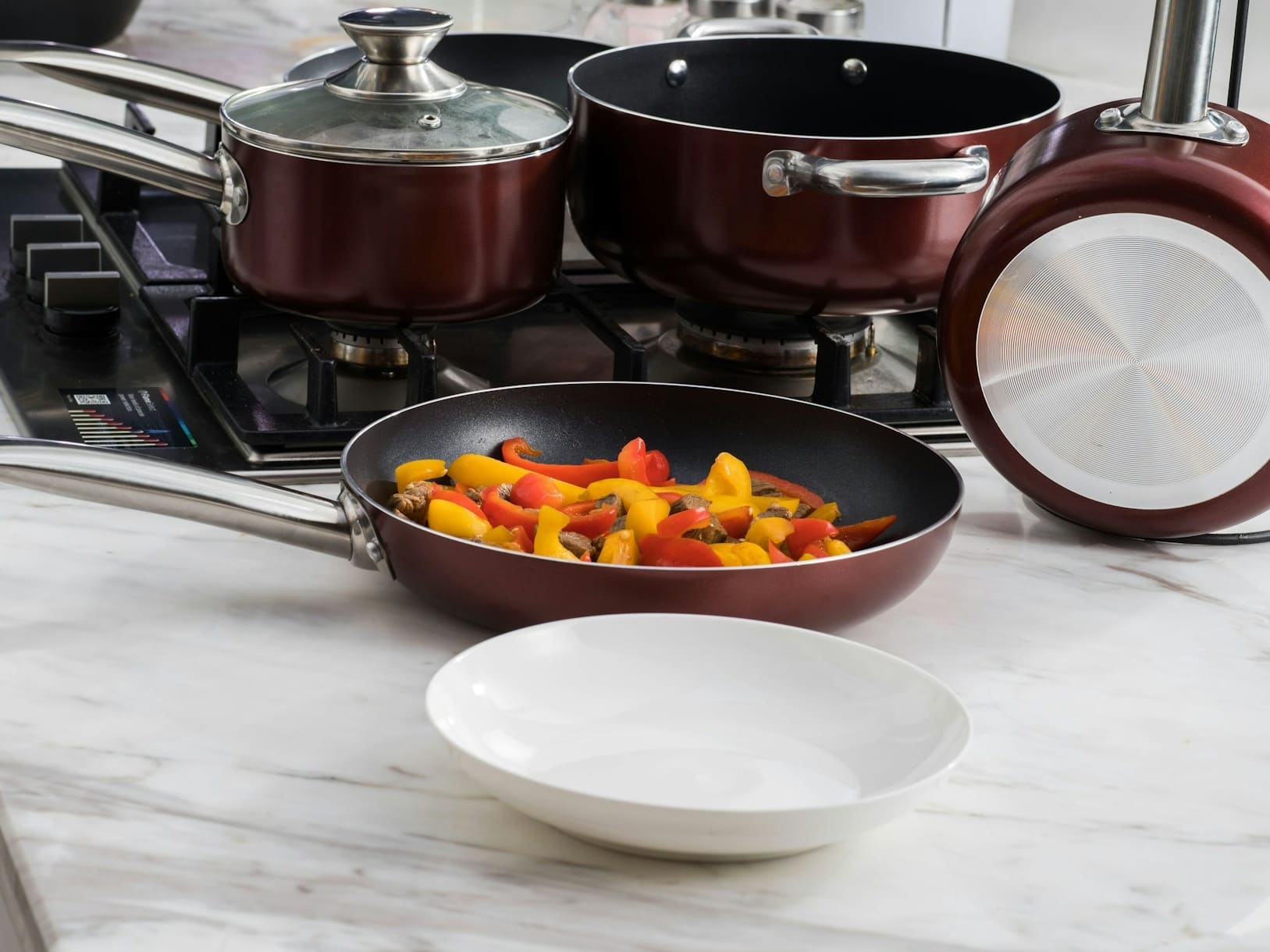
Choosing cookware becomes much easier when you stop thinking about matching sets and start thinking about jobs.
A skillet needs to handle frying, browning, and quick meals. A saucepan needs enough depth for rice, sauces, and liquids. A Dutch oven needs to hold heat well for slower cooking. The material then determines characteristics such as heat response, weight, maintenance, and how the cooking surface behaves.
You don’t need every type of cookware. For most kitchens, a few versatile pieces chosen around the foods you actually cook are more useful than a large set filled with pans you rarely touch.
Cookware Has Two Important Characteristics
When comparing cookware, separate these two questions:
1. What is it made from?
Stainless steel, cast iron, carbon steel, aluminum, copper, nonstick-coated material, ceramic, or another construction.
2. What shape is it?
Skillet, saucepan, sauté pan, stockpot, Dutch oven, wok, roasting pan, and so on.
Material affects how the cookware performs.
Shape determines which cooking tasks are comfortable.
A stainless steel skillet and stainless steel saucepan, for example, use the same general material category but serve different purposes.
Cookware Materials Compared
| Material | Main Strength | Maintenance | Particularly Useful For |
|---|---|---|---|
| Stainless steel | Versatile and durable | Low–moderate | Searing, sauces, everyday cooking |
| Cast iron | Excellent heat retention | Moderate | Searing, frying, roasting |
| Carbon steel | High-heat cooking with less weight than many cast-iron pans | Moderate | Searing, stir-frying |
| Aluminum | Lightweight and fast heating | Varies | Everyday cooking |
| Copper | Highly responsive to temperature changes | Higher | Precise heat control |
| Nonstick | Easy food release | Coating requires care | Eggs, pancakes, delicate foods |
| Ceramic | Smooth cooking surface, depending on construction | Varies | General cooking according to manufacturer guidance |
Construction matters too. Thickness, layers, coatings, handles, lids, and manufacturing quality can all change how cookware performs, so material alone doesn’t tell you everything.
Stainless Steel Cookware
Stainless steel is one of the most versatile choices for a general-purpose kitchen.
It’s commonly used for:
- Searing meat
- Browning vegetables
- Making pan sauces
- Boiling
- Pasta
- Soups
- Everyday cooking
A stainless steel skillet is particularly useful when you want food to brown.
The main learning curve is sticking.
Proper preheating, temperature control, and an appropriate amount of cooking fat can make stainless steel much easier to use.
Good choice if:
You want durable cookware that can perform several different cooking jobs and don’t mind learning some temperature control.
Cast Iron Cookware
Cast iron is known for heat retention.
Once a cast-iron pan becomes properly heated, it can hold that heat well, making it useful for cooking methods where maintaining a strong cooking surface matters.
Common uses include:
- Steak
- Burgers
- Fried foods
- Roasted vegetables
- Skillet dishes
- Some oven recipes
Many cast-iron pieces can move between stovetop and oven when their construction allows it.
Traditional uncoated cast iron does require maintenance. It should be dried properly and its seasoned surface maintained according to appropriate care instructions.
The trade-off
Cast iron is heavy.
That’s not automatically a disadvantage, but it’s worth considering before buying a large pan you’ll need to lift, wash, and move frequently.