
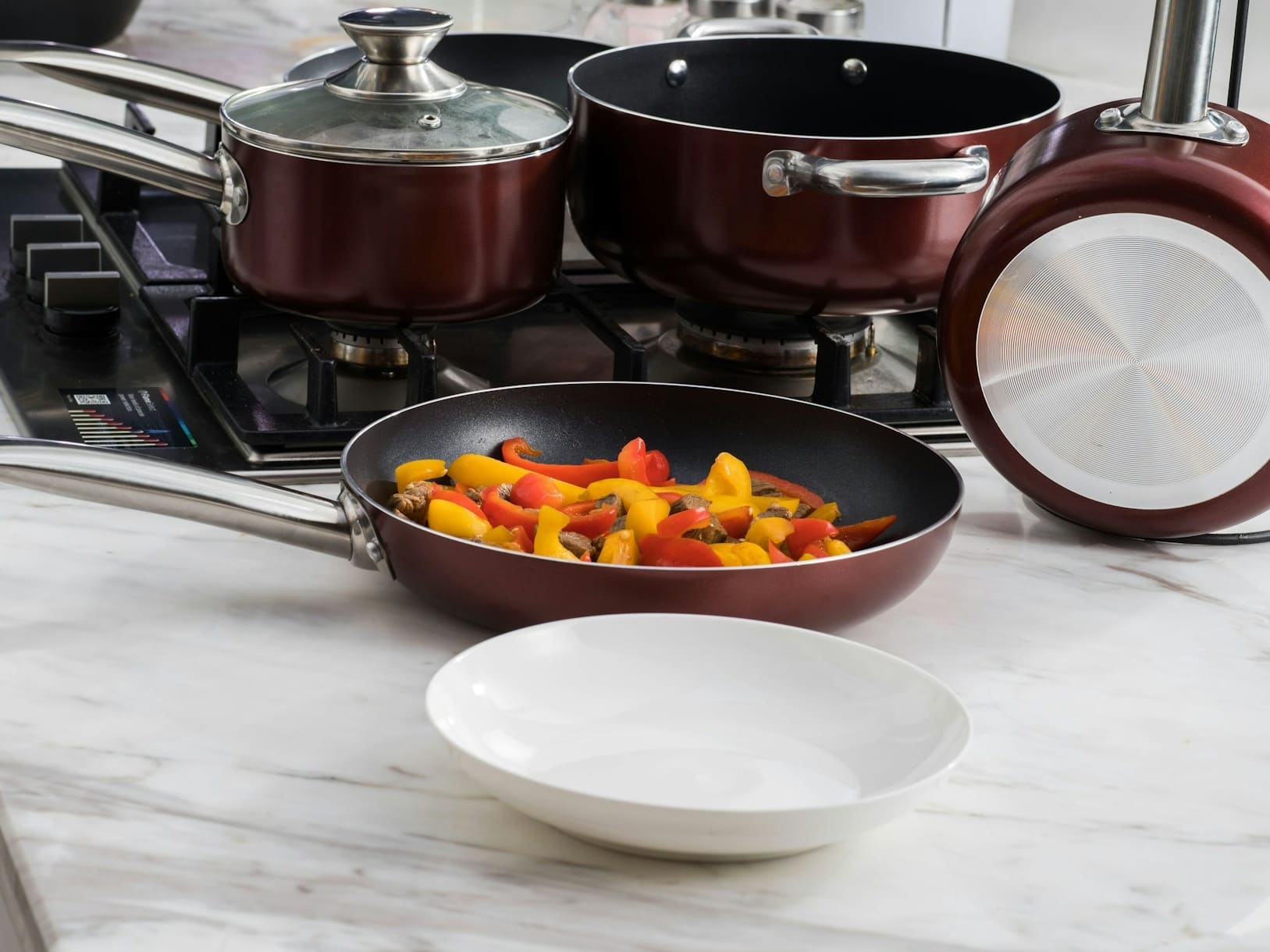
Carbon Steel Cookware
Carbon steel shares some characteristics with traditional cast iron but is generally thinner and lighter.
It can handle high-heat cooking and develop a seasoned cooking surface with proper use and maintenance.
It’s particularly useful for:
- Searing
- Stir-frying
- Quick high-heat cooking
- Browning
Traditional uncoated carbon steel still needs attention to seasoning and moisture.
Choose carbon steel if:
You like some of the cooking characteristics associated with cast iron but want a pan that’s generally easier to move and more responsive to heat changes.
Aluminum Cookware
Aluminum conducts heat efficiently and is relatively lightweight.
You’ll frequently find it incorporated into cookware rather than exposed as the only cooking surface. For example, cookware may use aluminum within a multilayer construction or underneath a coating.
Hard-anodized aluminum is another common category.
Good choice if:
You value cookware that’s relatively easy to handle and heats efficiently for everyday cooking.
Because aluminum cookware comes in many different constructions, check the specifications of the individual product rather than assuming every aluminum pan will perform identically.
Copper Cookware
Copper stands out for its responsiveness.
It heats quickly and responds rapidly when you change the burner temperature, giving cooks precise control.
That’s useful for cooking where temperature adjustments matter.
However, copper also comes with trade-offs:
- Quality pieces can be expensive
- Maintenance may be greater
- Many copper pans use another material as the interior cooking surface
Choose copper if:
Precise temperature control matters enough to you to justify the price and maintenance.
It’s usually not the first cookware material a beginner needs.
Nonstick Cookware
Nonstick cookware is designed to make releasing food from the cooking surface easier.
It’s particularly convenient for:
- Eggs
- Omelets
- Pancakes
- Delicate fish
- Other foods prone to sticking
It’s also popular because cleanup can be straightforward.
The important limitation is that not all nonstick cookware has identical temperature, utensil, cleaning, or oven-use specifications.
Always follow the manufacturer’s instructions for your particular pan.
Good choice if:
You frequently cook eggs, pancakes, or delicate foods and prioritize easy release and cleanup.
Ceramic Cookware
“Ceramic cookware” can describe different products, including ceramic-coated cookware and pieces constructed from ceramic materials.
That distinction matters.
Ceramic-coated cookware can provide a smooth cooking surface, but—as with other coated pans—its care requirements depend on the specific product.
Check manufacturer guidance for:
- Maximum heat
- Oven use
- Suitable utensils
- Cleaning
- Dishwasher use
- Storage
Don’t assume every product labeled “ceramic” has identical characteristics.