
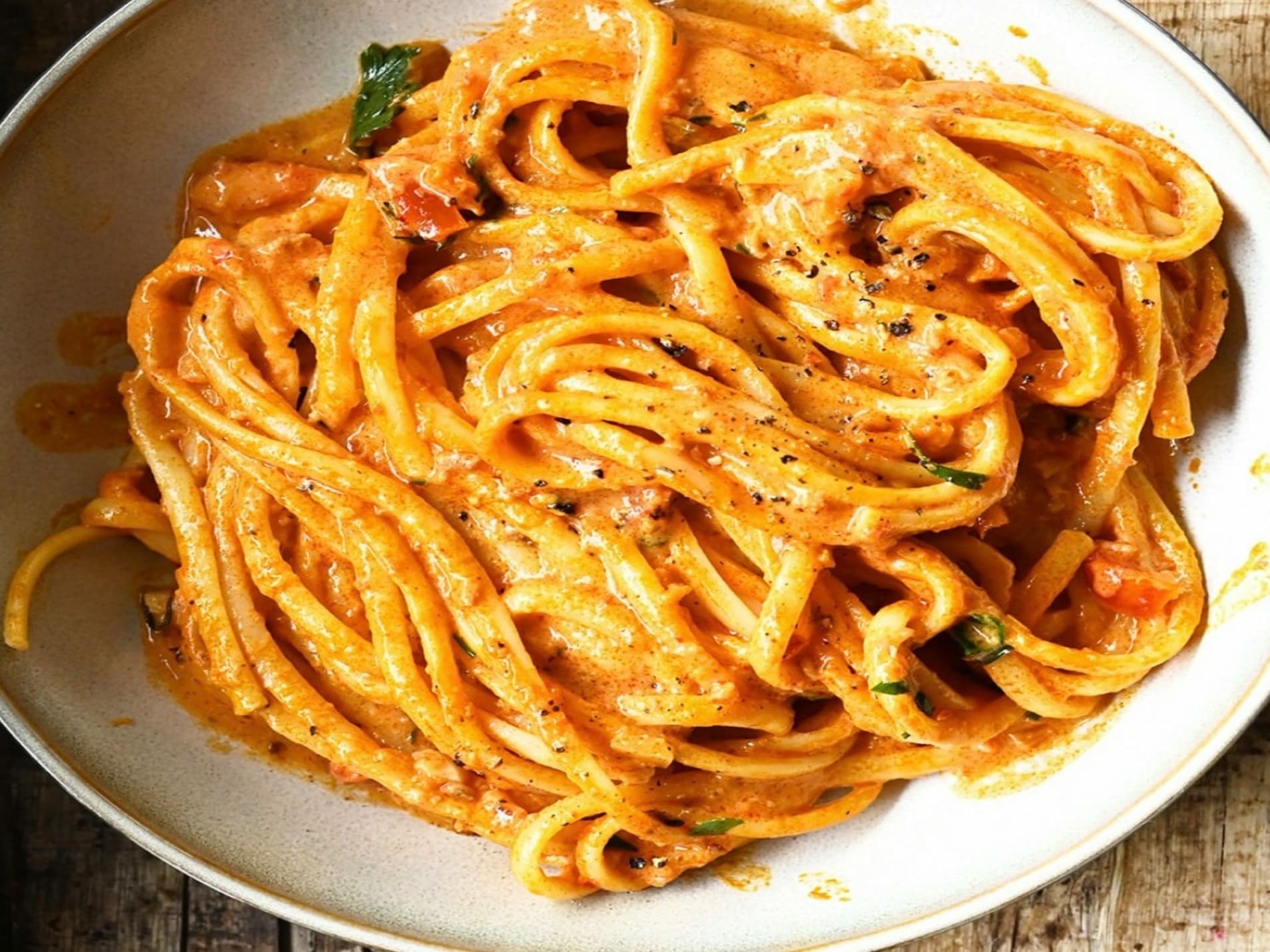
Why Pasta Water Makes a Difference
The cloudy water left after cooking pasta contains starch released during cooking.
That makes it useful for adjusting a sauce at the end.
But pasta water isn’t an ingredient you need to dump into the skillet by the cupful.
Think of it as a consistency adjustment:
SAUCE TOO THICK → SMALL SPLASH → TOSS → CHECK → REPEAT IF NEEDED
Adding it gradually gives you control.
Adding too much at once can turn a creamy sauce into a thin one.
How Thick Should the Sauce Be?
Before the pasta goes in, the sauce can look slightly looser than you ultimately want.
Once you add:
- Parmesan
- Spinach
- Pasta
the consistency changes.
The finished sauce should cling to the pasta while remaining creamy enough that the noodles move easily when tossed.
If you drag a spoon through the skillet and the sauce looks extremely stiff, add a little pasta water.
If liquid immediately runs away from the pasta and collects at the bottom, don’t add more.
What If the Tomato Sauce Tastes Too Acidic?
Don’t automatically reach for sugar.
First, let the crushed tomatoes simmer for several minutes.
Then add the cream and Parmesan as directed and taste the finished sauce.
The cream changes how you perceive the tomato acidity, while Parmesan contributes saltiness and savory depth.
Only after those ingredients are incorporated should you decide whether the seasoning needs adjustment.
Fresh vs. Frozen Spinach
Both can work, but they need different preparation.
Fresh Spinach
Add it directly to the sauce.
It wilts quickly and doesn’t require separate cooking.
Frozen Spinach
Thaw it first and squeeze out as much excess water as practical.
Adding a block of watery frozen spinach directly to the skillet can dilute the sauce you’ve just spent time building.
Because frozen spinach is much more compact than fresh leaves, don’t assume the same volume will behave identically.
Heavy Cream vs. Half-and-Half
Heavy cream gives this recipe its richest, smoothest result.
Half-and-half can be used for a lighter sauce, but the final consistency won’t be identical.
If substituting, keep the heat controlled and judge the sauce by its actual consistency rather than trying to force it to look exactly like a heavy-cream version.
When to Add Parmesan
Parmesan belongs toward the later part of the sauce-making process.
Once the tomato base has simmered:
LOWER HEAT → ADD CREAM → STIR → ADD PARMESAN GRADUALLY
Avoid throwing all the cheese into a violently boiling sauce.
Gradual incorporation over moderate heat gives you more control over the final texture.