
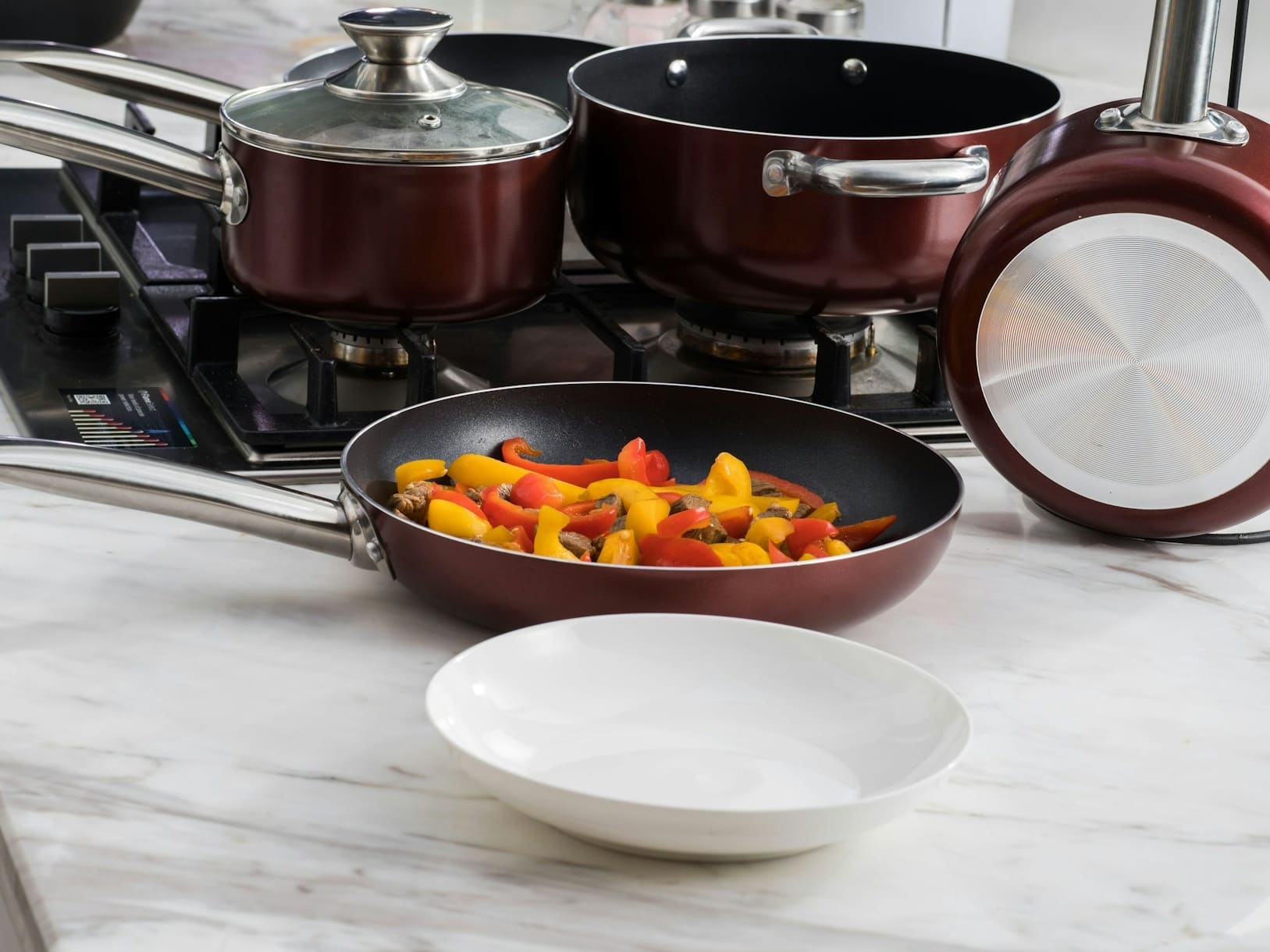
Types of Pots and Pans Explained
Material is only half the decision. You also need the right shape.
Frying Pan or Skillet
A skillet typically has a broad cooking surface with sloped or moderately raised sides.
Use it for:
- Frying
- Sautéing
- Browning
- Searing
- Eggs
- Quick one-pan meals
If you’re building a kitchen from scratch, a skillet is one of the most useful pieces to buy first.
Best all-purpose choice:
A medium-to-large skillet appropriate for your cooktop and the number of people you usually feed.
Saucepan
A saucepan has taller sides and is particularly useful when you’re cooking with liquid.
Use one for:
- Rice
- Sauces
- Oatmeal
- Soup
- Boiling vegetables
- Heating liquids
- Melting ingredients
A saucepan and skillet complement each other well because they handle very different jobs.
Sauté Pan
A sauté pan has a broad, flat base with relatively straight sides.
Compared with a skillet, those straight sides provide additional usable capacity and help contain liquids.
It’s useful for:
- Meat
- Vegetables
- Braised dishes
- Sauces
- One-pan meals
Skillet vs Sauté Pan
| Skillet | Sauté Pan |
|---|---|
| Sloped sides | Straighter sides |
| Easy tossing and turning | More contained cooking area |
| Great general-purpose pan | Useful for sauces and larger one-pan dishes |
| Usually easier to maneuver | Often offers more capacity |
You don’t necessarily need both when you’re starting.
Stockpot
A stockpot is a tall, large-capacity pot.
It’s particularly useful for:
- Pasta
- Soup
- Stock
- Large batches
- Stews
- Boiling foods
If you cook for several people or regularly batch-cook, a stockpot can be much more useful than a collection of smaller specialty pans.
Dutch Oven
A Dutch oven is a heavy, deep pot designed to retain heat well.
Depending on its construction and manufacturer specifications, it may work on the stovetop and in the oven.
It’s particularly useful for:
- Beef stew
- Braised dishes
- Soup
- Slow-cooked vegetables
- One-pot meals
- Some breads
A Dutch oven makes sense when you frequently cook dishes that begin with browning and continue with slower cooking in the same vessel.
Wok
A wok has high, curved sides designed for cooking and tossing ingredients efficiently.
It’s especially useful for:
- Stir-fries
- Fried rice
- Noodles
- Vegetables
- Quick high-heat meals
Carbon steel is a common wok material because of its high-heat capabilities and ability to develop a seasoned surface.
If stir-frying is something you rarely do, however, don’t buy a wok simply because it appears on a standard cookware checklist.
Buy around your actual cooking habits.
Roasting Pan
A roasting pan provides space for larger oven-cooked foods.
It can be useful for:
- Roast chicken
- Larger cuts of meat
- Roasted vegetables
- Meals where you need additional oven capacity
If you rarely roast large foods, an appropriate oven-safe baking dish or other suitable cookware may cover your needs instead.