Three Ways to See the Difference in Your Own Kitchen
Fresh Herb Example: Simple Basil Pesto
Ingredients
- 2 cups fresh basil
- ½ cup Parmesan
- ¼ cup pine nuts
- 1–2 garlic cloves
- ½–¾ cup olive oil
- Salt, to taste
Blend the basil, Parmesan, pine nuts, garlic, and some of the olive oil.
Continue adding oil until you reach your preferred consistency.
Here, fresh basil isn’t merely seasoning. It’s one of the main ingredients, which is why dried basil isn’t an equivalent replacement.
Dried Herb Example: Mediterranean-Style Roasted Vegetables
Ingredients
- 4 cups mixed vegetables
- 2 tablespoons olive oil
- 1 teaspoon dried oregano
- ½ teaspoon dried thyme
- 2 garlic cloves
- Salt and black pepper, to taste
Toss everything together until the vegetables are evenly coated.
Roast according to the requirements of the vegetables you’re using until tender and browned.
This is the kind of preparation where dried herbs are especially convenient.
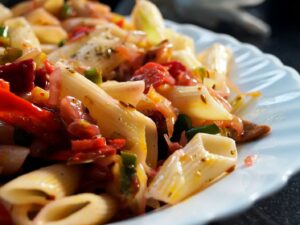
Fresh + Dried Example: Tomato Pasta Sauce
Ingredients
- 2 cups tomatoes
- 2 tablespoons olive oil
- 1 teaspoon dried oregano
- 2 garlic cloves
- ½ cup fresh basil
- Salt and black pepper, to taste
Cook the tomatoes with olive oil, garlic, and dried oregano.
Add the fresh basil toward the end.
Instead of asking fresh or dried, this recipe uses each form where it contributes most.
How to Store Fresh Herbs
Fresh herbs require more attention because they contain moisture and deteriorate relatively quickly.
Storage methods vary by herb, but a few principles are useful:
- Handle leaves gently
- Remove excess surface moisture after washing
- Avoid obviously damaged or decaying leaves
- Refrigerate herbs that require refrigeration
- Keep them away from conditions that accelerate wilting or spoilage
Before using stored herbs, inspect them.
Discard herbs showing obvious spoilage such as:
- Mold
- Sliminess
- Strong unpleasant odors
- Severe decay
How to Store Dried Herbs
Dried herbs are easier to maintain.
Keep them in:
- Airtight containers
- A cool place
- A dry pantry
- A dark area away from strong sunlight
- A location away from heat and steam
That last point matters in a kitchen.
The cabinet immediately exposed to heat and steam from your stove isn’t necessarily the best place for long-term herb storage simply because it’s convenient while cooking.
Do Dried Herbs Expire?
Dried herbs gradually lose aroma and flavor during storage.
Rather than assuming an old jar will season food exactly like a fresh one, smell it.
Crush a small amount between your fingers if appropriate and check the aroma.
If you can barely smell anything, the herb probably won’t contribute much to your recipe either.
5 Common Herb Mistakes
1. Substituting Equal Amounts
Replacing one tablespoon of fresh oregano with one tablespoon of dried oregano can make the dried herb disproportionately strong.
Start around the 3:1 fresh-to-dried guideline instead.
2. Adding Every Fresh Herb at the Beginning
Delicate fresh herbs may lose much of their fresh character during prolonged cooking.
When appropriate, reserve them for the final stages.
3. Assuming Dried Herbs Last Forever at Full Strength
They don’t maintain the same aroma indefinitely.
Check old jars before relying on them.
4. Treating the 3:1 Ratio as an Exact Formula
It’s a starting point.
The herb, recipe, brand, age of the dried herb, and desired flavor all matter.
5. Assuming You Must Choose One or the Other
Sometimes the best answer is both.
Dried herbs can season a dish during cooking while fresh herbs provide the final aromatic layer.
The easiest way to remember the difference is: fresh herbs are usually strongest as a source of brightness, aroma, color, and texture; dried herbs are particularly useful for concentrated pantry seasoning and longer cooking. Start with roughly one-third as much dried herb when replacing fresh, then adjust according to the herb and the dish rather than treating the conversion as an absolute rule.