
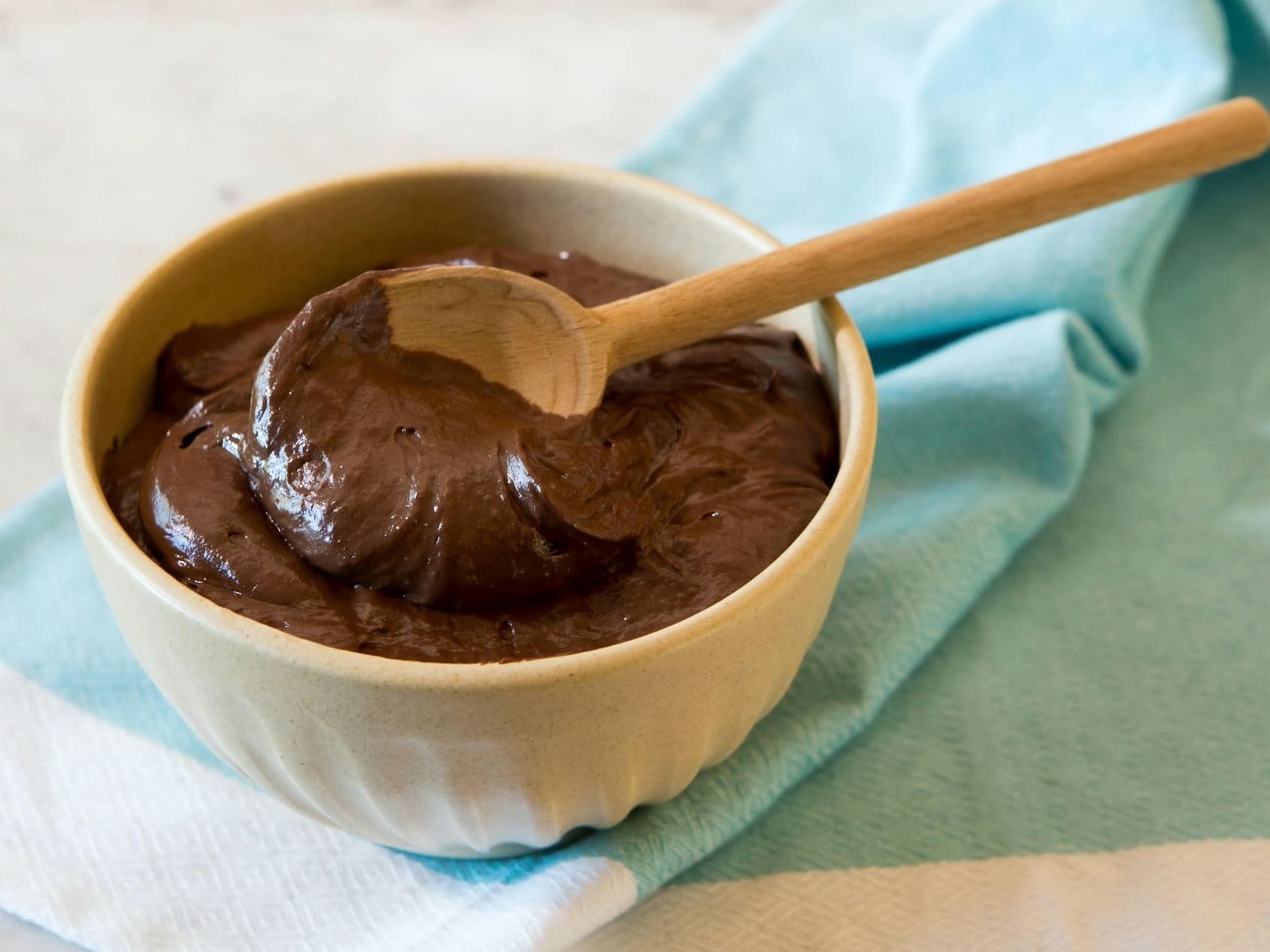
How Thick Should Chocolate Pudding Be Before Chilling?
Don’t wait for the pudding to become extremely stiff in the saucepan.
It should be clearly thickened and able to coat a spoon, but remember:
Hot pudding → cooling pudding → chilled pudding
The texture becomes firmer during refrigeration.
Trying to reach the final chilled consistency while the pudding is still on the stove can result in an overly thick dessert.
Should You Strain Chocolate Pudding?
You don’t have to strain a perfectly smooth batch.
But if you notice:
- Tiny lumps
- Small pieces of cooked egg
- Undissolved cocoa
- An uneven texture
pour the hot pudding through a fine-mesh strainer before chilling.
This is a useful rescue step rather than a sign that the entire batch has failed.
How to Chill Chocolate Pudding
Divide the pudding among individual serving dishes or transfer it to one larger container.
If you don’t want a skin to develop, place plastic wrap directly against the surface of the pudding.
Refrigerate until thoroughly chilled and set, usually around 2 hours.
Don’t add whipped cream or other delicate toppings until you’re ready to serve.
How to Prevent Lumpy Chocolate Pudding
Smooth pudding starts before the saucepan reaches the stove.
Follow this order:
MIX DRY → ADD MILK GRADUALLY → ADD YOLKS → WHISK → HEAT → KEEP WHISKING
Three habits make the biggest difference.
Mix the cornstarch thoroughly
Don’t dump cornstarch into an already-hot mixture.
Add the liquid gradually
This makes it easier to eliminate dry pockets before cooking.
Keep the mixture moving
Whisk while the pudding heats, paying particular attention to the bottom and corners of the saucepan.
If small lumps still appear, strain the pudding while it’s hot.
Why Is My Chocolate Pudding Too Thin?
Don’t immediately assume the recipe failed.
First ask: Is it still warm?
The pudding continues to set during cooling.
If it’s still thin after it has chilled completely, possible causes include:
- Too much milk
- Too little cornstarch
- Incorrect measuring
- Insufficient cooking
Accurate measurements matter more in pudding than they do in recipes where consistency can be adjusted casually at the end.
Why Is My Pudding Too Thick?
The opposite problem can come from:
- Too much cornstarch
- Incorrect liquid measurements
- Excessive cooking
If the pudding is still warm and clearly much too thick, whisking in a small amount of warm milk can help loosen it.
Add very little at a time.
Remember that it will become firmer as it cools.
Why Did My Pudding Scorch?
Milk-based mixtures can burn on the bottom before the entire saucepan looks overheated.
To reduce the risk:
- Don’t use unnecessarily high heat.
- Whisk regularly.
- Reach the corners of the saucepan.
- Don’t walk away while the pudding is thickening.
Once the mixture begins thickening, it needs more attention rather than less.