
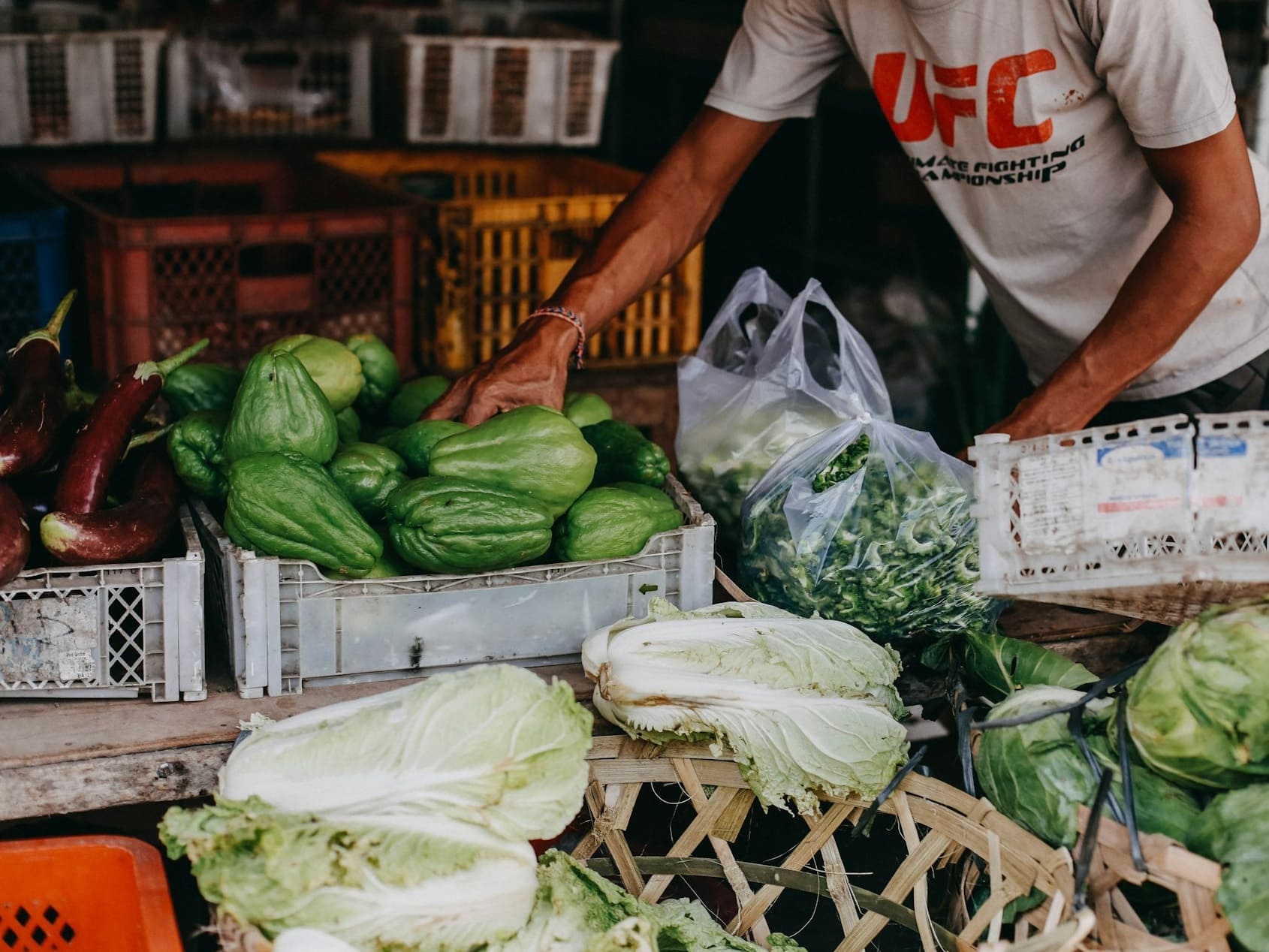
11. Look Closely at Broccoli, Cauliflower, and Cabbage
These vegetables have their own useful shopping cues.
Broccoli
Look for compact florets and firm stems.
Extensive yellowing and badly wilted florets are signs to compare it with another head.
Cauliflower
Look for a firm, compact head.
Avoid obvious mold, significant deterioration, and extensive damaged areas.
Cabbage
Pick up the cabbage.
A good head should feel firm and relatively heavy for its size.
Check the outer leaves for substantial drying, rot, or damage rather than worrying about one minor imperfect spot.
12. Keep Onions and Garlic Dry and Firm
Moisture and soft spots are more informative here than perfect appearance.
For onions, look for:
FIRM BODY + DRY, PAPERY OUTER SKIN
For garlic:
FIRM BULB + DRY OUTER SKIN
Visible mold, unusual softness, moisture, or substantial deterioration are reasons to choose another bulb.
13. Use Smell as a Final Check
Most of your decision will come from sight and touch, but smell can occasionally reveal a problem you haven’t noticed.
A strong unpleasant or rotten odor is a warning sign, particularly when paired with:
- Slime
- Leaking
- Mold
- Soft tissue
- Visible decay
Don’t rely on smell alone, however.
Use it as another clue alongside appearance and texture.
14. Buy for the Recipe You’re Actually Making
“Freshest” isn’t always enough information.
The best vegetable also needs to suit its job.
| You’re Making | Prioritize |
|---|---|
| Fresh salad | Crisp leaves and vegetables with good raw texture |
| Roasted vegetables | Firm, intact vegetables |
| Stir-fry | Crisp vegetables that will hold some texture |
| Soup or stew | Sound vegetables suited to longer cooking |
| Raw vegetable platter | Excellent texture and appearance |
| Sauce | Flavor and appropriate ripeness may matter more than perfect shape |
For example, the tomato you’d choose for a salad today may be riper than one you’re buying for later in the week.
Shopping with a recipe in mind also prevents buying attractive produce with no realistic plan for using it.
15. Buy an Amount You Can Actually Use
A huge bag isn’t a bargain if half of it spoils.
This is particularly important with delicate produce such as leafy greens.
Before buying, ask yourself:
What meals will I use this in?
How many portions do I actually need?
Which vegetables need to be eaten first?
A smaller amount that gets eaten can be more useful than a bulk purchase that ends up forgotten.