Seasonal Produce: Useful, but Don’t Make It a Rule
Seasonality can influence availability, quality, and price, but exact growing seasons vary with climate and location.
As a broad meal-planning guide, you may commonly associate:
| Season | Vegetables to Consider |
|---|---|
| Spring | Asparagus, peas, spinach, radishes |
| Summer | Tomatoes, zucchini, peppers, corn |
| Fall | Pumpkin, squash, cabbage, carrots |
| Winter | Potatoes, onions, carrots, Brussels sprouts |
Treat this as inspiration rather than a universal calendar.
What’s truly local and seasonal depends on where you live and how produce reaches your market.
Organic vs. Conventional: Freshness Still Matters
An organic label doesn’t eliminate the need to inspect produce.
Whether you’re buying organic or conventionally grown vegetables, you can still check:
- Condition
- Firmness
- Visible deterioration
- Quantity
- Suitability for your recipe
Your budget, preferences, and availability can determine which option makes more sense for your household.
For freshness, evaluate the vegetable itself.
Don’t Wash Produce With Soap
Once you bring your vegetables home, good handling matters too.
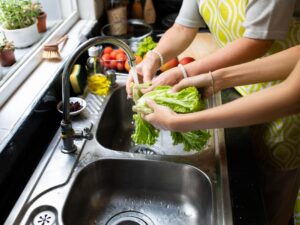
FDA guidance recommends washing produce thoroughly under running water before preparing or eating it and specifically says washing fruits and vegetables with soap, detergent, or commercial produce wash is not recommended.
Firm produce such as cucumbers can be scrubbed with a clean produce brush, and damaged or bruised areas should be cut away before preparation or eating.
FDA: Selecting and Serving Produce Safely
Wash your hands before and after handling fresh produce and keep produce that will be eaten raw separate from raw meat, poultry, and seafood.
What to Eat First After Shopping
A useful refrigerator strategy is to stop treating every vegetable as though it has the same urgency.
Use sooner
Leafy greens, ripe tomatoes, delicate vegetables, and anything already near peak ripeness.
Use later
Sound root vegetables and other produce that generally keeps its quality longer under appropriate storage conditions.
The exact storage life varies, so don’t rely on a single universal number.
Instead, inspect your produce during the week and move vegetables that are beginning to decline into your next meal.
Freshness vs. Food Safety
These concepts overlap, but they aren’t identical.
A vegetable with an odd shape or harmless cosmetic blemish isn’t automatically unsafe.
At the other extreme, produce with visible mold, slime, leaking areas, strong unpleasant odors, or significant decay deserves much more caution.
FDA advises consumers to choose produce that isn’t bruised or damaged and to keep pre-cut or packaged produce such as bagged salads refrigerated or surrounded by ice at the store.
Quick Produce-Aisle Decision Guide
Before putting a vegetable in your cart, run through this:
COLOR → Does it look normal for that vegetable?
TEXTURE → Does it feel appropriately firm or crisp?
SURFACE → Any mold, slime, leaking, rot, or major damage?
SMELL → Anything clearly unpleasant?
PACKAGE → What does the bottom look like?
PURPOSE → Does its ripeness suit the recipe and when I’ll use it?
QUANTITY → Will I realistically eat this amount?
The goal isn’t to find vegetables without a single mark. It’s to recognize the characteristics that actually matter. A slightly imperfect carrot can still be a great purchase; a beautiful-looking bag of greens hiding slimy leaves at the bottom is not.
Once you start combining appearance with firmness, surface condition, smell, intended use, and realistic quantities, choosing fresh vegetables becomes much faster—and much less dependent on guesswork.