
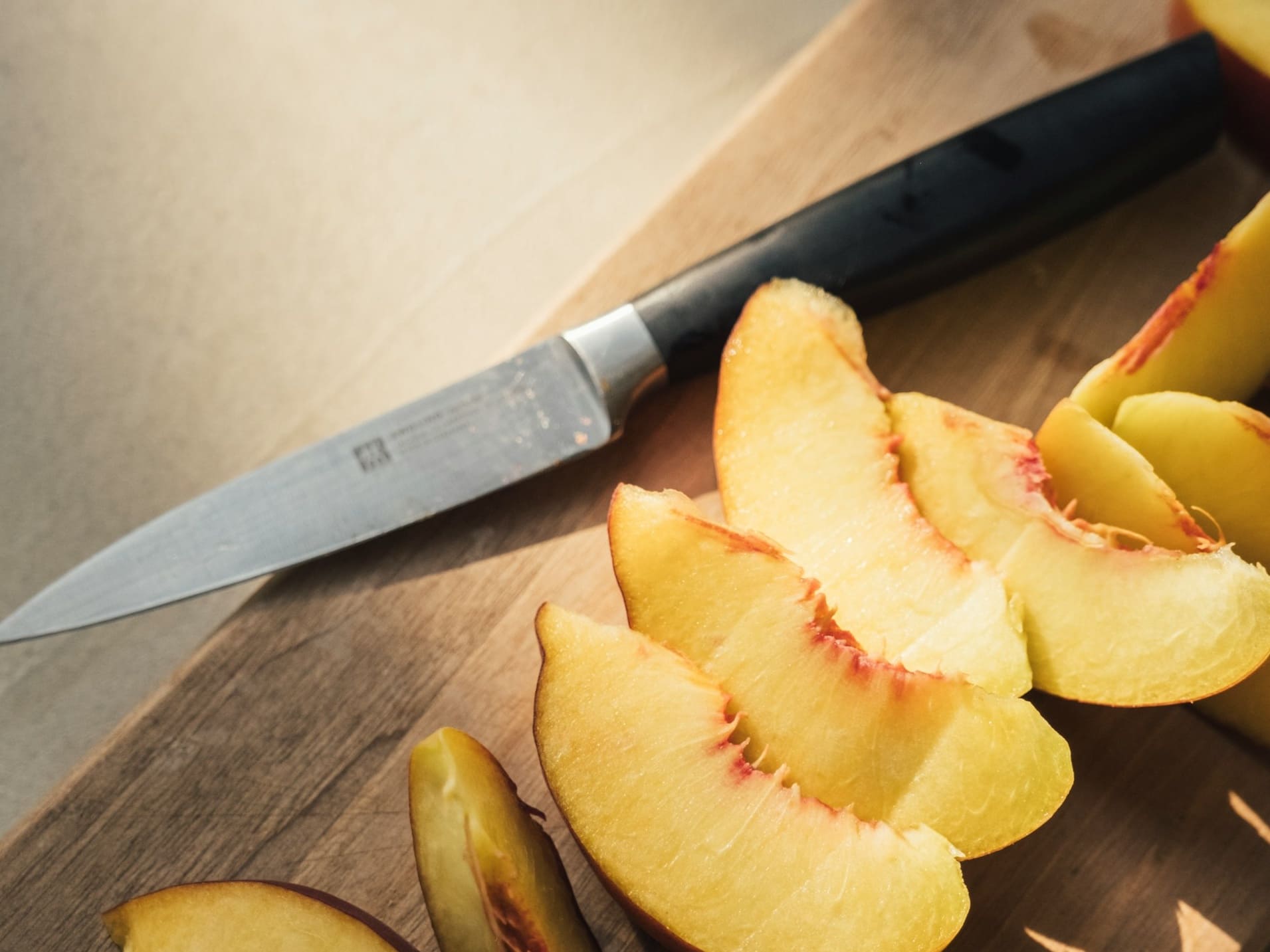
Cut fruit is convenient until crisp apple slices turn brown, strawberries become watery, or a carefully prepared fruit salad starts looking tired before it reaches the table.
Two different problems are usually involved. Quality declines as fruit is exposed to air, moisture, and time, while food safety depends heavily on clean preparation and proper refrigeration. Preventing browning can improve appearance, but it does not replace safe storage.
For most cut fruit, the practical strategy is simple:
WASH WHOLE FRUIT → CUT WITH CLEAN TOOLS → CONTROL MOISTURE → TREAT BROWNING-PRONE FRUIT → COVER → REFRIGERATE
Why Does Cut Fruit Turn Brown?
Apples, pears, bananas, avocados, and some other fruits can darken soon after they’re cut.
Cutting damages the fruit’s cells and exposes internal compounds and enzymes to oxygen. This triggers enzymatic browning, which produces the familiar brown surface.
That distinction matters because a brown apple slice isn’t automatically spoiled.
Browning is primarily a quality and appearance problem. Signs such as obvious mold, substantial decay, slime, or an unpleasant odor deserve much more attention when deciding whether fruit should be discarded.
1. Start With Fruit That’s in Good Condition
Storage tricks can’t restore fruit that was already well past its best when you sliced it.
For fruit you’re preparing ahead, choose pieces that are appropriately ripe and don’t have extensive damage or decay.
FDA recommends cutting away damaged or bruised areas before preparing or eating fresh produce and discarding produce that looks rotten. (U.S. Food and Drug Administration)
Fruit that’s very ripe can still be delicious, but it may be better eaten immediately rather than sliced for several days of meal prep.
2. Wash Fruit Before You Cut It
Wash whole fruit under running water before slicing it.
This includes fruits with skins or rinds you don’t intend to eat.
Why wash a melon rind if you’re only eating the inside?
Because your knife passes from the outside surface through to the edible flesh. FDA specifically recommends washing produce before peeling or cutting so dirt and bacteria aren’t transferred from the surface during preparation. (U.S. Food and Drug Administration)
Firm produce such as melons can be scrubbed with a clean produce brush.
3. Skip the Soap
More cleaning product doesn’t mean cleaner fruit.
FDA recommends washing fresh produce under plain running water and says soap, detergent, and commercial produce washes are not recommended. (U.S. Food and Drug Administration)
So your fruit-prep routine should be:
RUNNING WATER → GENTLE RUB/SCRUB WHEN APPROPRIATE → DRY → CUT
Not:
SOAP → FRUIT
4. Start With Clean Hands, Knives, and Cutting Boards
Cut fruit is usually eaten without another cooking step, making clean preparation especially important.
Wash your hands before preparing it and use clean:
- Knives
- Cutting boards
- Bowls
- Storage containers
- Utensils
Keep fruit that will be eaten raw separate from raw meat, poultry, and seafood and from utensils or surfaces contaminated by them. FDA recommends washing cutting boards, dishes, utensils, and countertops with hot, soapy water between those preparation tasks. (U.S. Food and Drug Administration)