
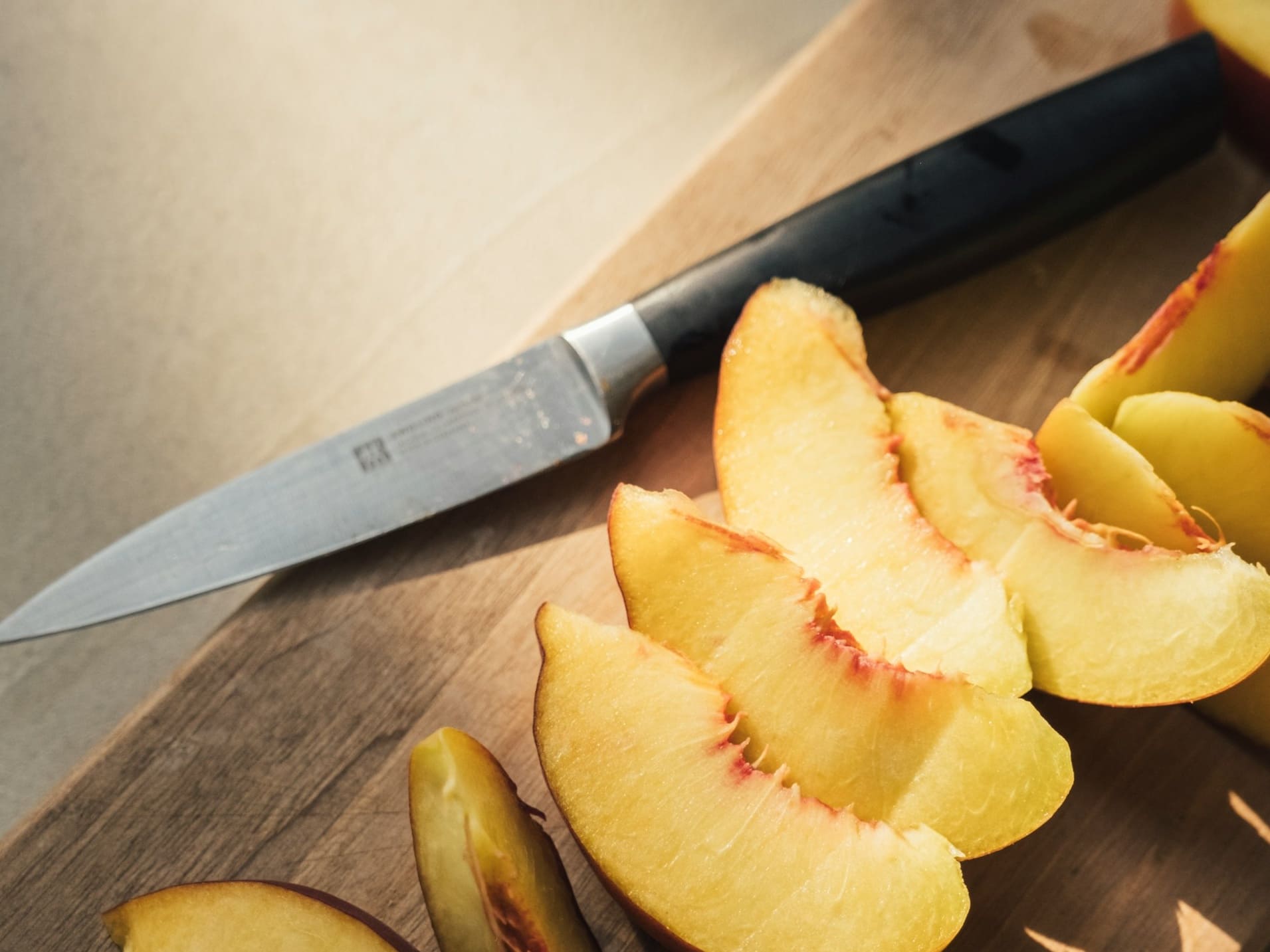
5. Dry Fruit Before Storing It
After washing, remove excess surface water with a clean cloth or paper towel.
FDA recommends drying washed produce as part of safe preparation. (U.S. Food and Drug Administration)
This is particularly useful for berries and fruit salads where you don’t want unnecessary water accumulating in the container.
Remember that some fruits naturally release juice after they’re cut. You can’t eliminate all moisture; the goal is to avoid adding unnecessary water before storage.
6. Refrigerate Cut Fruit Promptly
Once fruit is prepared, don’t leave it sitting on the counter for the afternoon.
FDA recommends keeping perishable produce refrigerated at 40°F (4°C) or below. Foods requiring refrigeration shouldn’t generally remain at room temperature for more than 2 hours, or 1 hour when the temperature is above 90°F (32°C). (U.S. Food and Drug Administration)
That makes refrigeration a safety step—not merely a way to stop fruit from becoming soft.
How to Prevent Cut Fruit From Browning
Cold storage alone doesn’t completely solve browning.
For fruits such as apples and pears, an anti-browning treatment can help preserve their appearance.
Ascorbic acid—vitamin C—is used to inhibit enzymatic browning, and USDA research has examined its effectiveness on cut apples. (USDA ARS)
For home use, several approaches are possible.
| Method | Useful For | Practical Approach |
|---|---|---|
| Diluted lemon juice | Apples, pears | Lightly coat or dip, then drain |
| Ascorbic acid/vitamin C preparation | Apples, pears | Prepare according to appropriate directions |
| Citrus/acidic juice | Fruit salads | Use lightly where the flavor suits the recipe |
| Commercial anti-browning product | Larger batches | Follow the manufacturer’s directions |
The objective isn’t to soak the fruit indefinitely. You’re trying to expose the cut surfaces to the treatment without turning your fruit salad into a bowl of lemon juice.
Lemon Juice vs. Ascorbic Acid
Both can be useful, but they aren’t identical.
Lemon Juice
Lemon juice is convenient because many kitchens already have it.
The drawback is flavor.
Use too much and a sweet apple can begin tasting primarily of lemon.
Ascorbic Acid
Ascorbic acid is vitamin C and can inhibit browning without necessarily introducing as much citrus flavor.
When using a commercial anti-browning or ascorbic-acid preparation, follow its directions rather than guessing the concentration.
Whichever method you choose, remember:
ANTI-BROWNING TREATMENT ≠ PRESERVATION AT ROOM TEMPERATURE
The fruit still needs appropriate refrigeration.
Best Storage Method by Fruit
Different fruits fail in different ways, so one technique isn’t ideal for every fruit bowl.
| Fruit | Main Quality Problem | Better Strategy |
|---|---|---|
| Apples | Rapid surface browning | Anti-browning treatment + refrigeration |
| Pears | Browning and softening | Treat cut surfaces + refrigerate |
| Bananas | Browning and softness | Cut close to serving |
| Avocado | Rapid surface discoloration | Limit air + acidic treatment where suitable |
| Strawberries | Moisture and deterioration | Keep cold and avoid excess moisture |
| Melon | Juice release | Cover and refrigerate promptly |
| Pineapple | Juice accumulation/softening | Covered refrigerated container |
| Grapes | Moisture | Refrigerate and avoid unnecessary surface water |