
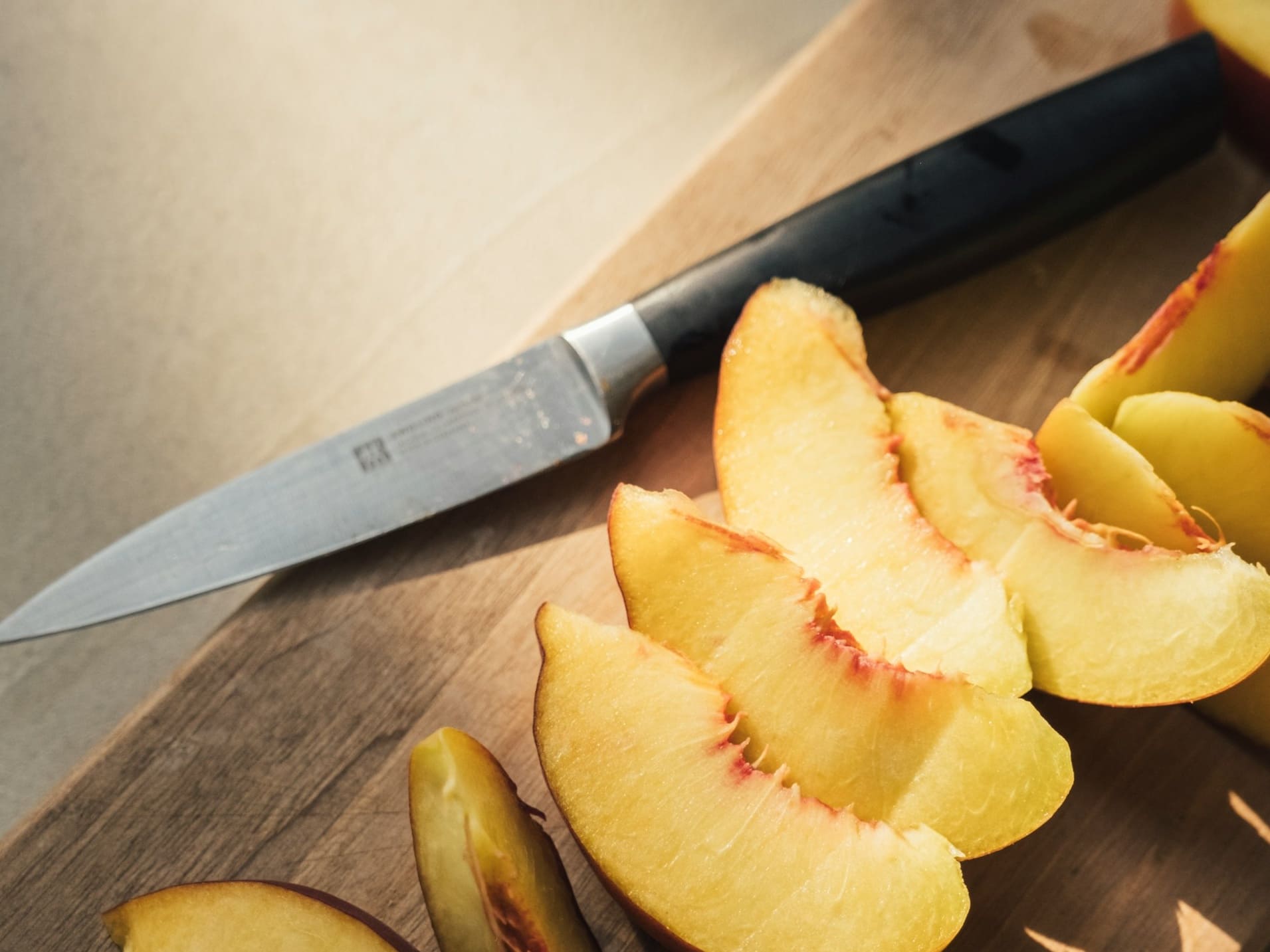
Apples and Pears: Treat Them Before Storage
Apples and pears are among the most obvious candidates for an anti-browning treatment.
After washing and cutting:
- Treat the cut surfaces with your chosen anti-browning method.
- Drain off unnecessary liquid.
- Transfer to a covered container.
- Refrigerate.
If you’re packing apple slices for lunch, treating them soon after cutting is much more effective than waiting until they’ve already turned brown.
Bananas: Timing Works Better Than Storage Tricks
Bananas are poor candidates for long advance preparation.
They brown and soften quickly once sliced.
If you’re making fruit salad ahead, prepare the more durable fruits first and add banana closer to serving.
This avoids trying to solve a storage problem that can be more easily solved by cutting later.
Berries: Focus on Moisture, Not Browning
Strawberries, blueberries, raspberries, and similar fruits don’t need the same anti-browning strategy as apples.
Instead, concentrate on:
- Removing spoiled or damaged berries
- Avoiding unnecessary moisture
- Refrigerating appropriately
- Using clean storage containers
FDA lists strawberries among perishable produce that should be kept refrigerated at 40°F or below. (U.S. Food and Drug Administration)
For strawberries that you’ve cut, keep them covered and refrigerated.
Melons: Wash the Rind First
Melon deserves special attention because the rind isn’t usually eaten.
Wash the outside before cutting.
For firm produce such as melons, FDA recommends scrubbing with a clean produce brush under running water. (U.S. Food and Drug Administration)
After cutting, transfer the pieces to a clean covered container and refrigerate them promptly.
What About Avocado?
Avocado’s exposed flesh browns quickly.
A small amount of lemon or lime juice can help slow surface discoloration, while reducing exposure to air can also help maintain appearance.
For a cut avocado half, keep the exposed surface covered and refrigerated.
For diced avocado in a fruit or savory salad, it’s often better to add it relatively close to serving if appearance is important.
Can You Make Fruit Salad the Night Before?
Yes—but choose the fruit strategically.
Better candidates for advance preparation
- Grapes
- Pineapple
- Melon
- Mango
- Many berries
Can work with anti-browning treatment
- Apples
- Pears
Usually better added closer to serving
- Bananas
- Very ripe, delicate fruit
- Avocado, depending on the dish
A fruit salad prepared for the next day should remain covered and refrigerated.
If substantial liquid accumulates before serving, gently drain the excess rather than leaving the fruit swimming in juice.