The Crisping Technique Changes With the Food
You shouldn’t treat chicken, potatoes, vegetables, and breaded foods exactly the same.
| Food | Main Priority | Helpful Technique |
|---|---|---|
| Potatoes | Surface moisture | Dry well + direct pan contact |
| Chicken wings | Skin moisture | Pat dry + rack when useful |
| Vegetables | Escaping steam | Space pieces apart |
| Breaded foods | Dry coating | Light oil + airflow |
| Frozen foods | Correct cooking method | Follow package directions |
| Reheated crispy foods | Avoiding trapped moisture | Reheat uncovered |
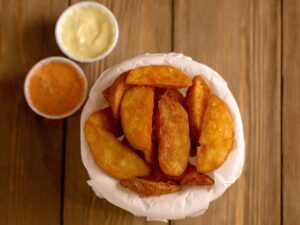
Potatoes
Focus on:
drying + spacing + sufficient heat + pan contact
Cutting the pieces to similar sizes also helps prevent smaller pieces from burning while larger ones remain undercooked.
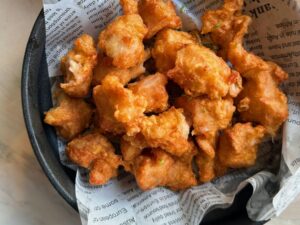
Chicken Wings
Focus on:
dry skin + airflow + adequate cooking
A wire rack can be particularly helpful here.
Vegetables
Focus on:
dry surfaces + enough room
Crowded vegetables release water as they cook. If that moisture becomes trapped around neighboring pieces, you’ll get more steaming and less browning.
Breaded Foods
Panko breadcrumbs can create a coarse, crunchy exterior.
An even coating and a light application of oil can help the breading brown in the oven.
Frozen Foods
Don’t automatically apply homemade-food rules to packaged frozen products.
Start with the manufacturer’s cooking directions because the product may already contain oil, breading, or other ingredients designed for a specific preparation method.
Why Is My Oven Food Still Not Crispy?
Instead of immediately changing the recipe, diagnose the result.
Soft and pale
Possible causes: Low heat, wet surface, insufficient cooking time.
Check whether the oven was fully preheated and whether the food was dry before cooking.
Brown but soft
Possible causes: Trapped moisture or overcrowding.
Use more space between pieces and avoid stacking.
Greasy rather than crisp
Possible cause: Excess oil.
Try a thinner, more even coating.
Crispy on top but soft underneath
Possible causes: Moisture collecting underneath or lack of bottom browning.
Depending on the food, flipping it, using a hot metal sheet, or cooking on a wire rack may help.
Some pieces burn while others stay soft
Possible causes: Uneven sizing or overcrowding.
Cut pieces more consistently and spread them evenly across the pan.
Oven vs. Air Fryer: Which Gets Food Crispier?
An air fryer and an oven use similar basic ideas: hot air cooks the food while moisture escapes and the exterior browns.
An air fryer can be particularly effective for small batches because its compact cooking chamber and strong air circulation expose food to rapidly moving hot air.
An oven has a different advantage: capacity.
If you’re roasting a large quantity of vegetables, potatoes, or multiple portions, a full-size oven may be more practical.
For an oven, you can compensate by paying extra attention to spacing, pan choice, moisture, and—in suitable recipes—a convection/fan setting.
How to Keep Crispy Food Crispy After It Leaves the Oven
Don’t undo all your work during the final five minutes.
Avoid immediately:
- Stacking crispy pieces
- Sealing them in a container while steaming hot
- Covering them tightly
- Leaving breaded food sitting in accumulated moisture
When appropriate, transfer food to a wire rack so steam can escape from underneath.
Serve as soon as practical. Crisp textures naturally soften as hot food releases moisture and sits.
The easiest oven-crisping formula to remember is:
DRY → SPACE → LIGHTLY OIL → HIGH HEAT → BROWN → KEEP STEAM AWAY
Different foods still require different temperatures and cooking methods, but if your oven potatoes, vegetables, wings, or breaded foods keep coming out soft, those six checkpoints are the first places to look.