
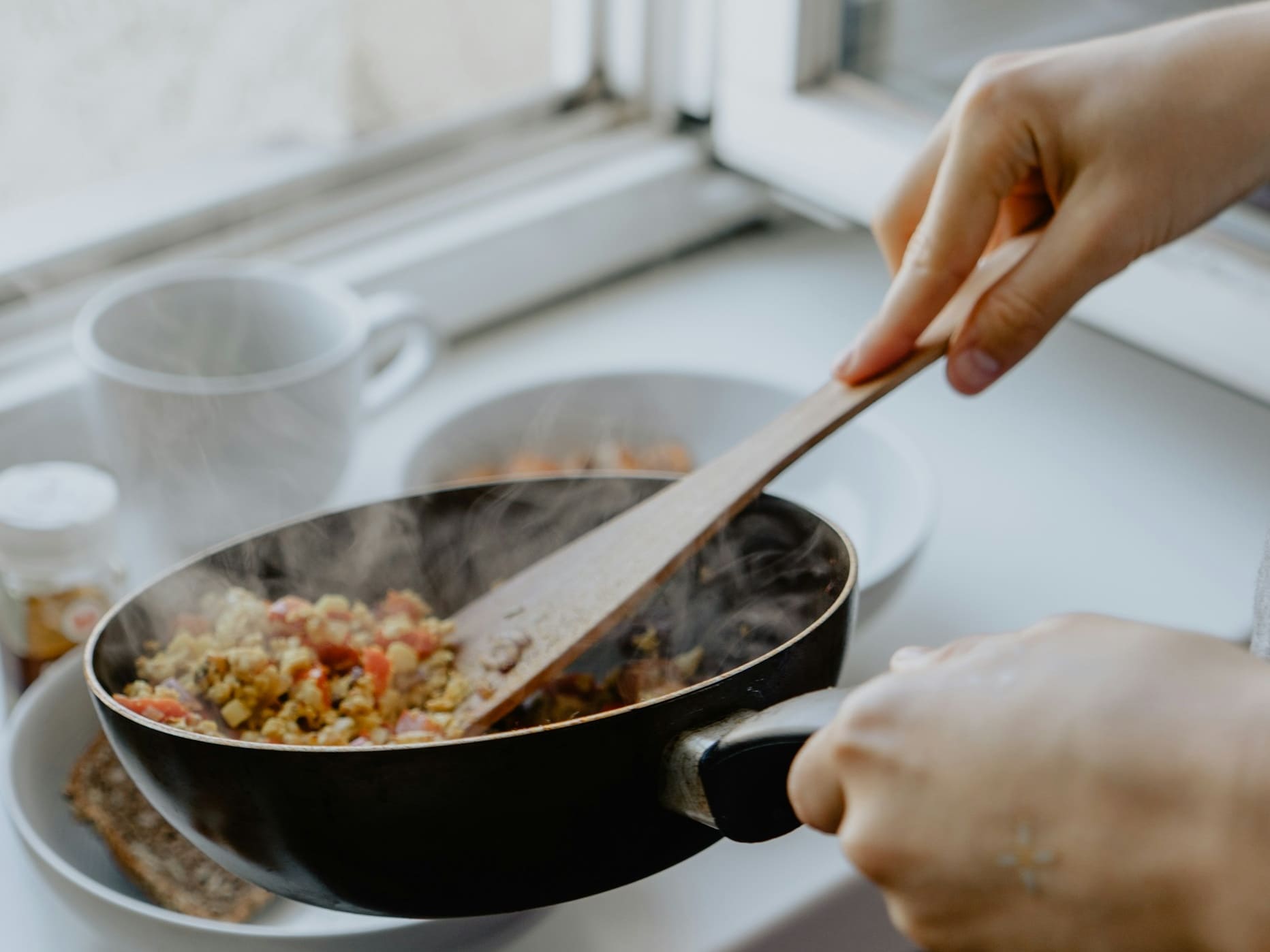
5. Build a Flavor Base With Aromatics
Garlic and onion aren’t just ingredients to throw into every recipe automatically.
How you cook them changes their flavor.
| Aromatic | Preparation | General Effect |
|---|---|---|
| Onion | Lightly sautéed | Softer, savory-sweet flavor |
| Onion | Deeply browned/caramelized | Much deeper sweetness |
| Garlic | Gently sautéed | Mellow aromatic flavor |
| Garlic | Raw | Sharper flavor |
| Garlic | Roasted | Soft, mellow character |
| Ginger | Fresh | Bright, warm aroma |
Timing matters too.
Onions often need longer cooking than minced garlic. If you add both at exactly the same time and cook them for an extended period, the garlic may brown excessively before the onions reach the texture you want.
Cook ingredients according to how long they actually need.
6. Use Spices for Aroma, Not Just Heat
Spices don’t exist solely to make food spicy.
They can provide:
- Warmth
- Earthiness
- Sweetness
- Smokiness
- Aroma
- Color
Paprika can work well with chicken and potatoes. Cumin pairs naturally with many bean dishes and roasted vegetables. Chili flakes can add heat to pasta or soup.
Some spices can also benefit from brief, careful heating in fat or gentle toasting, depending on the spice and recipe. This can make their aroma more noticeable.
Be careful: ground spices can burn quickly.
The goal is to release aroma, not turn the spices black.
7. Use Fresh Herbs at the Right Time
Fresh and dried herbs aren’t always used the same way.
Many sturdy dried herbs can cook with a dish and contribute flavor throughout the process.
Delicate fresh herbs often work particularly well near the end.
Try finishing food with:
- Parsley
- Cilantro
- Basil
- Dill
- Mint
- Chives
Fresh herbs can provide color, aroma, and contrast, particularly against rich dishes.
Think of them as part of the flavor—not just decoration.
8. Control the Heat Instead of Cooking Everything on High
High heat isn’t automatically better cooking.
Different jobs require different temperature ranges.
Higher heat
Useful when you need rapid browning or searing and the food and cookware are appropriate for it.
Medium heat
Useful for many everyday sautéing tasks where you need more control.
Lower heat
Useful for gentle cooking, simmering, and sauces that shouldn’t boil aggressively.
The important skill is changing the heat during cooking.
If onions are browning too quickly before becoming tender, reduce it.
If mushrooms are releasing water and refusing to brown, consider whether the pan is overcrowded or the heat is insufficient.
Don’t treat the burner knob as something you set once and never touch again.
9. Use Stock When It Actually Adds Something
Water is neutral.
Sometimes that’s exactly what you want. Other times, stock or broth can contribute additional savory flavor.
It can work particularly well in:
- Rice
- Soups
- Stews
- Sauces
- Gravy
- Risotto
But don’t automatically replace water with stock in every recipe.
Commercial stocks can already contain significant seasoning, so taste before adding additional salt.
For simple rice, for example, stock plus onion, garlic, herbs, or a small amount of butter can create a much more flavorful base than relying on a heavily seasoned sauce afterward.