Doneness and Food Safety Aren’t the Same Thing
This distinction makes meat cooking much easier to understand.
Doneness describes qualities such as:
- Texture
- Juiciness
- Browning
- Interior appearance
- Personal preference
Food safety concerns whether:
The food has received an appropriate time-temperature treatment, with the government home-cooking guidance above expressed as minimum internal temperatures.
You can use appearance and texture to decide whether you like how something is cooked.
Use an appropriate thermometer and validated guidance to determine whether it meets the relevant safe minimum temperature.
What Does the 3-Minute Rest Mean?
The three-minute rest in the USDA guidance applies to applicable whole cuts such as beef, pork, lamb, and veal after they reach 145°F (63°C).
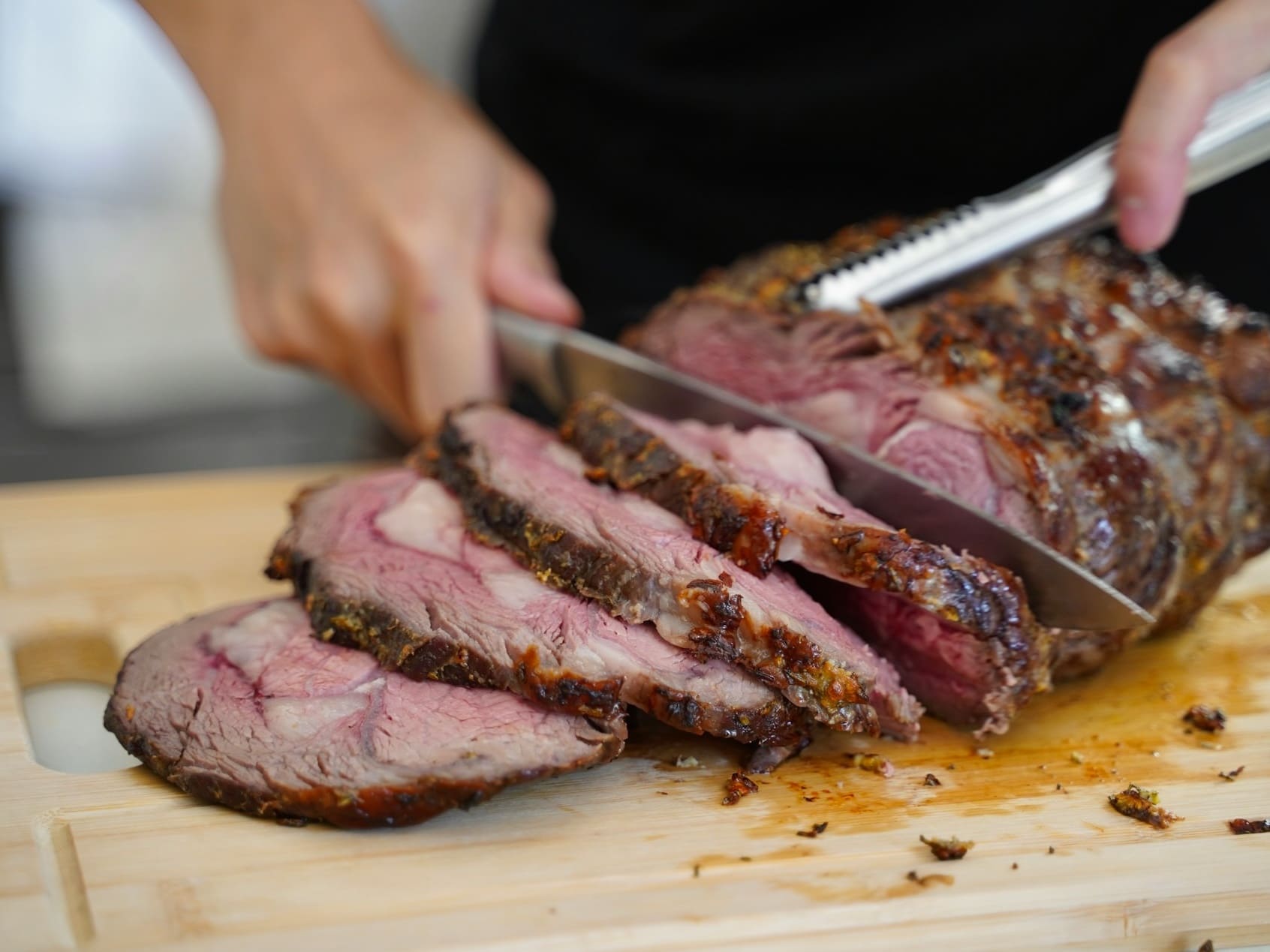
During that period, leave the meat intact rather than immediately carving or eating it.
FoodSafety.gov explains that rest time is part of the safety guidance for certain meats. (FoodSafety.gov)
That is different from resting meat solely for culinary reasons.
When a safe-temperature chart specifies a rest, treat the rest as part of the instruction.
Six Mistakes That Make Doneness Harder to Judge
| Mistake | Why It’s a Problem | Better Approach |
|---|---|---|
| Judging only by color | Color doesn’t confirm temperature | Use a thermometer |
| Following time alone | Thickness and equipment vary | Use time to estimate when to check |
| Measuring beside a bone | Can give an unrepresentative reading | Measure an appropriate thick section |
| Checking only one convenient spot on a large item | Temperature may vary | Check multiple appropriate locations |
| Cutting meat open repeatedly | Still doesn’t confirm temperature | Measure internally |
| Reusing a raw-meat plate | Can contaminate cooked food | Use a clean plate |
A Simple System to Remember
You don’t need to memorize dozens of visual tests.
For the meats covered here, remember:
145 + 3 → applicable whole cuts
160 → ground beef, pork, lamb and veal
165 → poultry
Then verify the exact category whenever you’re uncertain, especially for foods not covered by that shortcut.
The official FoodSafety.gov chart also includes guidance for seafood, ham, casseroles, eggs, leftovers, and other foods. (FoodSafety.gov)
Quick Meat Doneness Checklist
Before serving, ask:
Did I check the thickest appropriate part?
Did I avoid bone, fat, and gristle when taking the reading?
Did the food reach the correct safe minimum for its category?
If a three-minute rest is required, did I give it that rest?
Did I keep cooked food away from plates and utensils contaminated by raw meat?
If you’re trying to improve your cooking, a food thermometer is one of the simplest tools you can add to your routine. Instead of cooking chicken until you’re certain it looks done or leaving pork on the heat until every trace of pink disappears, you can measure what actually matters, follow the appropriate safety guidance, and then focus on the texture and flavor you want. (Ask USDA)