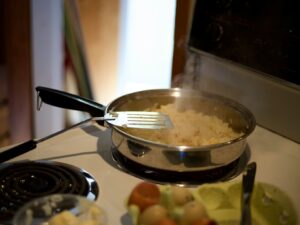
Use the Cook-Once, Eat-Differently Method
One of the easiest ways to reduce weekday cooking is to reuse a prepared ingredient without repeating the entire meal.
For example:
Cook chicken once
Meal 1: Chicken + roasted vegetables
Meal 2: Chicken wrap
Meal 3: Chicken rice bowl
Or:
Cook rice once
Meal 1: Chicken and rice
Meal 2: Rice bowl
Meal 3: Fried rice
Or:
Prepare vegetables once
Meal 1: Roasted vegetable side
Meal 2: Vegetable omelet
Meal 3: Pasta with vegetables
The ingredient repeats.
The meal doesn’t have to.
How to Plan Without Buying Too Much Food
Meal planning can backfire if your plan encourages you to buy an enormous amount of fresh food that you never have time to use.
Before putting something into your cart, ask:
Which meal is this for?
If you don’t know, consider whether you actually need it.
A few other strategies help:
Use ingredients more than once
If you’re buying spinach for pasta, plan to use the remainder in omelets, wraps, or another meal.
Keep frozen vegetables available
They can rescue a meal when you’ve run out of fresh vegetables or your plans change.
Use pantry staples strategically
Rice, pasta, canned beans, canned tomatoes, tuna, and similar staples can form the base of quick meals.
Plan around what you already own
The cheapest ingredient at the supermarket isn’t necessarily a better deal than food that’s already sitting in your kitchen.
How to Use Leftovers Without Eating the Same Dinner Again
Leftovers become much more useful when you think of them as ingredients rather than repeated meals.
| Leftover | Next Meal |
|---|---|
| Chicken | Wrap or rice bowl |
| Rice | Fried rice |
| Roasted vegetables | Omelet or pasta |
| Ground meat | Tacos or pasta |
| Tomato sauce | Pizza or another pasta |
| Beans | Burrito bowl or wrap |
For food safety, refrigerate perishable leftovers promptly. USDA guidance generally recommends using most cooked refrigerated leftovers within 3–4 days.
What to Do When the Meal Plan Falls Apart
It will.
You get home late. Someone doesn’t want the planned meal. You forget an ingredient. Plans change.
That’s why a good meal plan needs an emergency option.
Keep two or three dinners available that require little thought.
For example:
Emergency Meal 1: Eggs + toast + fruit
Emergency Meal 2: Pasta + tomato sauce + frozen vegetables
Emergency Meal 3: Quesadillas + vegetables
Emergency Meal 4: Tuna wraps
If Wednesday’s planned dinner doesn’t happen, move it to Thursday.
Your meal plan is a tool, not a schedule you have failed because you changed one meal.
Four Meal-Planning Mistakes That Make the Week Harder
1. Planning seven ambitious dinners
You probably don’t need seven full recipes.
Start with three or four planned dinners and let leftovers, simple meals, and flexible nights fill the gaps.
2. Ignoring your calendar
Match the easiest dinners with the hardest days.
Don’t plan based solely on what sounds good while you’re sitting comfortably on Sunday.
3. Buying too many unrelated ingredients
Choose meals that share ingredients.
This simplifies both shopping and cooking.
4. Making the plan too rigid
Leave room for leftovers and unexpected changes.
Moving Tuesday’s dinner to Wednesday isn’t a failed meal plan.
Your 15-Minute Weekly Meal-Planning Routine
Once you’ve practiced the system, your planning session can follow the same order every week:
1. Check your calendar.
Identify busy evenings.
2. Check the refrigerator, freezer, and pantry.
Find ingredients that need using.
3. Pick 3–5 dinners.
Match easy dinners with busy nights.
4. Look for ingredient overlap.
Reuse chicken, vegetables, rice, sauces, or other ingredients.
5. Add simple breakfasts and lunches.
Repetition is completely fine.
6. Schedule leftovers or a flexible night.
Don’t fill every space.
7. Build one categorized grocery list.
Subtract everything you already own.
8. Prep only what will genuinely save time.
That’s enough.
You don’t need a color-coded spreadsheet, seven elaborate dinners, or an entire Sunday spent filling containers. Start with three dinners, one flexible night, a few repeatable breakfasts and lunches, and one grocery list.
Once that becomes easy, adjust the system around how your household actually eats.