
Wood vs. Plastic: Which Should You Choose?
For many shoppers, this is the comparison that actually matters.
| If You Prioritize… | Consider |
|---|---|
| Substantial everyday work surface | Wood |
| Lightweight handling | Plastic |
| Simple cleanup | Plastic |
| Traditional appearance | Wood |
| Dedicated raw-meat board | Plastic can be convenient |
| Minimal maintenance | Plastic |
| Keeping a board permanently on the counter | Wood can work well |
You don’t necessarily have to choose between them.
A practical two-board kitchen can use:
Board 1: A larger wooden board for general preparation.
Board 2: A separate, easy-to-clean board for raw meat, poultry, and seafood.
USDA specifically recommends, when possible, using one board for fresh produce and another for raw meat, poultry, and seafood to help prevent cross-contamination. (Ask USDA)
How Big Should Your Cutting Board Be?
Ignore the idea that there’s one perfect dimension.
Instead, imagine the foods you prepare most frequently.
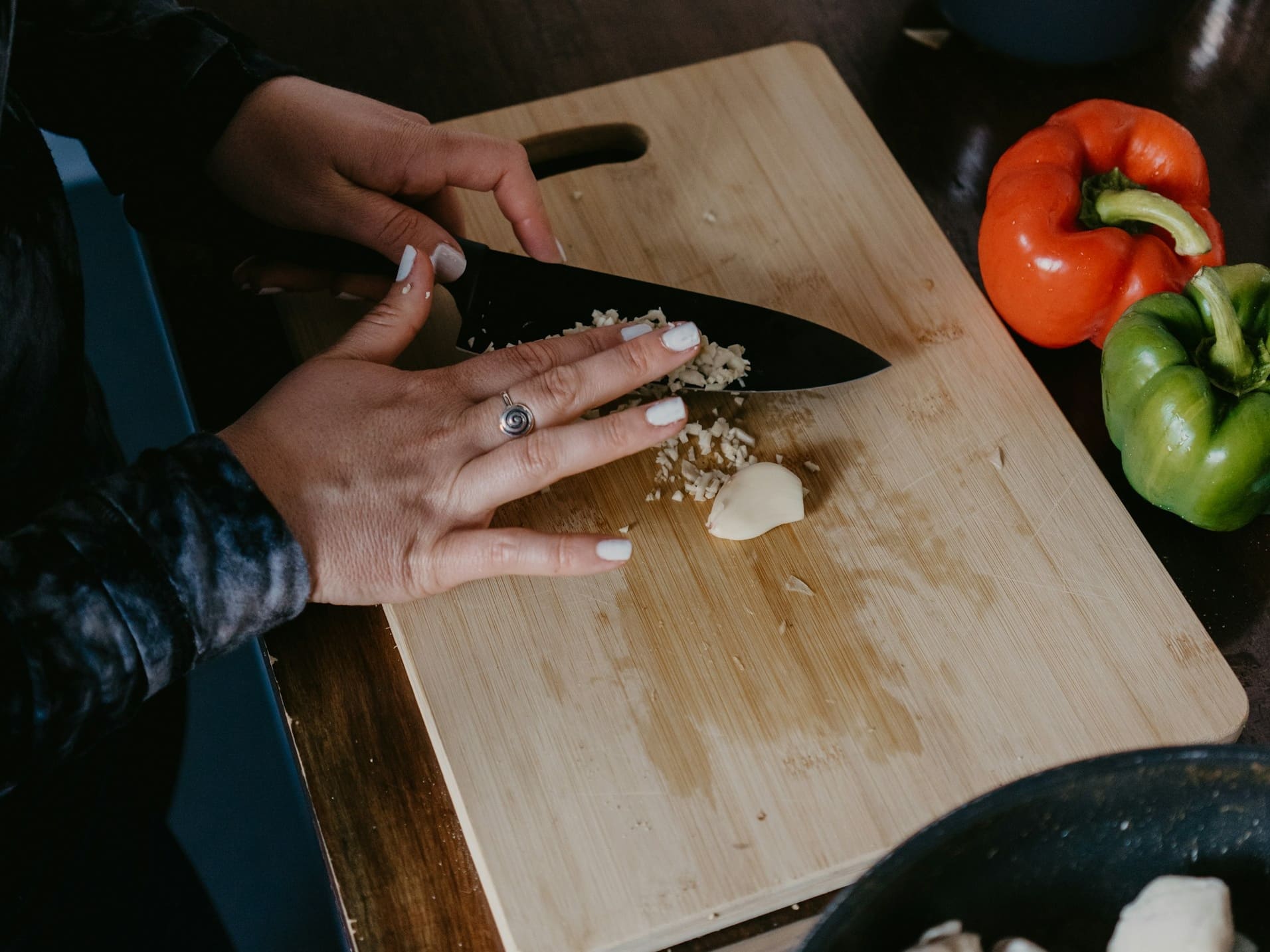
Small board
Useful for:
- A lemon or lime
- Garlic
- Herbs
- Small amounts of fruit
- Quick garnishes
A small board is convenient, but it can become frustrating when chopped ingredients constantly fall over the edges.
Medium board
This is usually the most versatile category.
It gives you enough room for everyday vegetables, fruit, sandwiches, and many routine preparation jobs without becoming difficult to store.
Large board
Useful when you’re regularly:
- Preparing several vegetables at once
- Working with large ingredients
- Batch cooking
- Breaking down larger pieces of food
- Keeping chopped ingredients separated on the board
The limitation is practical: make sure the board actually fits your counter, sink, and storage space.
A huge cutting board isn’t useful if washing it becomes a daily struggle.
Thickness Matters Too
Thickness affects more than appearance.
A thicker, heavier board can feel more stable and substantial during chopping.
A thin board may be lighter, easier to lift, and easier to store.
Before buying a very heavy board, think about how you’ll clean it. If you’ll need to carry it to a small sink several times a day, weight suddenly matters much more.
Stability Should Be a Buying Priority
Your board shouldn’t slide around while you’re using a knife.
Place it on your counter and check whether it sits flat without rocking.
Features such as rubberized edges or feet may improve stability on some boards.
Also inspect boards for serious warping. A board that no longer sits properly on the counter can become frustrating and unstable during food preparation.