
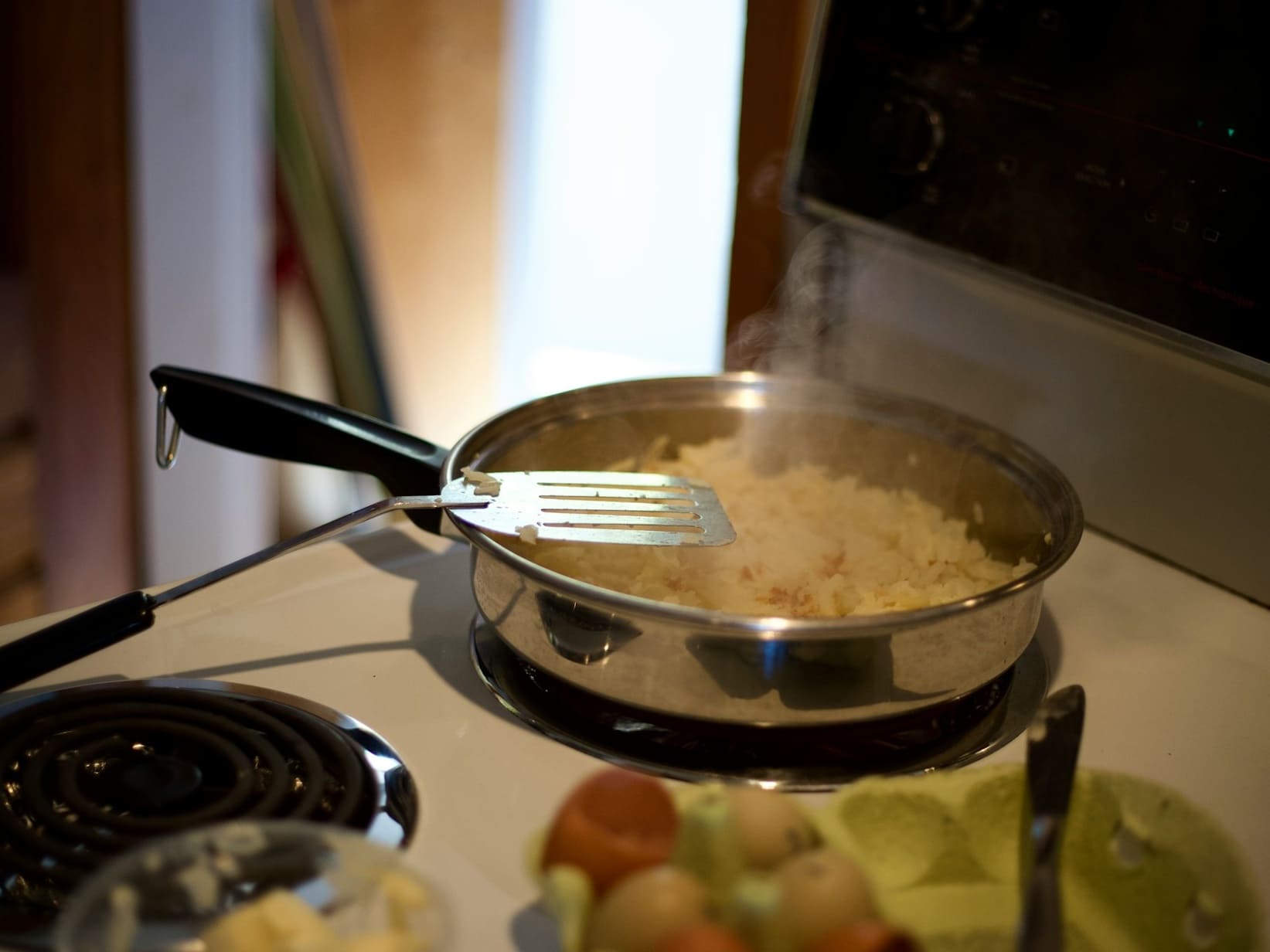
Why Is My Rice Mushy?
Mushy rice often points to one or more of these problems:
Too much water
If you consistently get overly wet rice using the same variety, check your measurements and the package’s recommended ratio.
Too much cooking
Leaving rice on the heat long after it has absorbed its water can damage the texture.
Excessive stirring
Repeated stirring can disturb the grains and release more starch.
For ordinary fluffy stovetop rice, you don’t need to continuously stir it like risotto.
Why Is My Rice Still Hard?
If the grains are still hard but the saucepan is dry, they may not have absorbed enough water.
Add a small amount of water, cover the saucepan again, and continue cooking gently.
Don’t pour in another full cup immediately. It’s easier to add a little more water than recover rice that has become waterlogged.
If the same problem happens every time with the same rice, your usual water ratio or cooking time may need adjustment.
Why Is My Rice Wet After Cooking?
First determine whether the rice is actually undercooked or simply has a little excess liquid.
If the grains are tender but there’s still water in the pan, briefly cooking uncovered over very low heat can help some excess moisture evaporate.
Watch carefully to prevent the bottom from burning.
What If the Bottom of the Rice Burns?
Don’t scrape the scorched layer into the rest of the rice.
Instead, gently transfer the usable rice from the top into another container, stopping before you reach the burned portion.
For your next batch, check:
- Whether the heat was too high
- Whether the pan was too thin
- Whether there was enough water
- Whether the rice cooked for too long
How to Make Rice Fluffy
For separated, fluffy rice, concentrate on technique rather than adding extra ingredients.
Measure accurately
Don’t estimate the water.
Use the appropriate ratio
The amount needed for jasmine rice may not be right for brown rice.
Reduce the heat after boiling
Once the pan boils, switch to gentle heat.
Keep the lid closed
Let the trapped steam do its job.
Don’t stir repeatedly
Leave the grains relatively undisturbed.
Rest before fluffing
Those final covered minutes are part of the cooking process, not wasted time.