
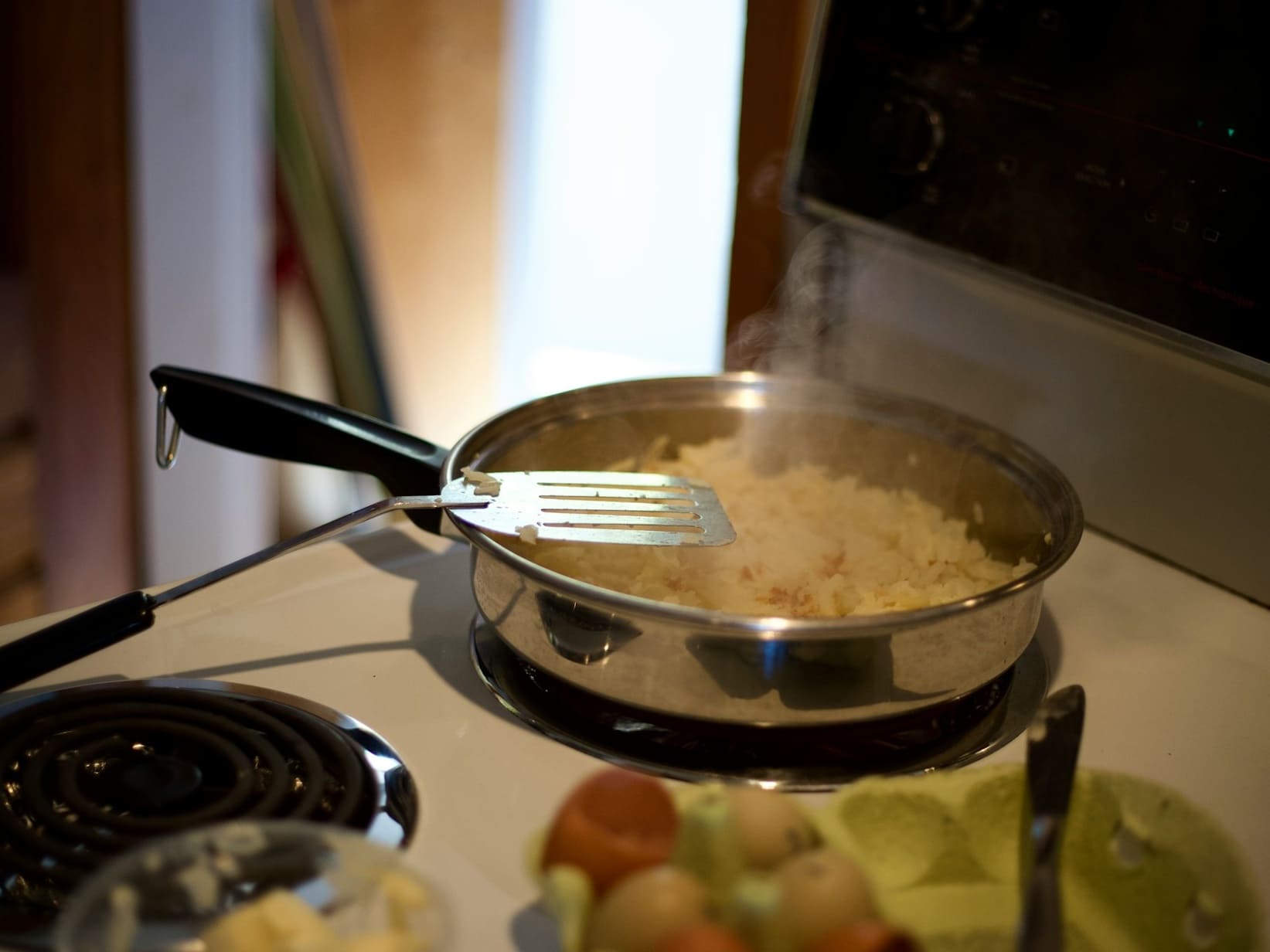
How the Method Changes for Different Types of Rice
Long-Grain White Rice
A useful starting point is:
1 cup rice + 1½ cups water
Cooking commonly takes around 15–20 minutes, followed by resting.
When properly cooked, long-grain rice can have relatively distinct grains rather than a very sticky texture.
Basmati Rice
Basmati is prized for its long, separate grains.
Rinsing is particularly useful when your goal is fluffy, distinct rice.
A common starting point is:
1 cup basmati + 1½ cups water
Check your package because specific products may recommend a different ratio or preparation method.
Jasmine Rice
Jasmine rice naturally has a softer, somewhat more cohesive texture than some other long-grain varieties.
A useful starting point is:
1 cup jasmine rice + 1¼ cups water
Cooking may take approximately 12–15 minutes.
Don’t assume that slightly softer or more clinging grains automatically mean you’ve made a mistake.
Brown Rice
Brown rice requires a different approach from white rice.
A common starting point is:
1 cup brown rice + 2 cups water
It can require approximately 40–50 minutes to cook.
Its finished texture is also naturally firmer and chewier than ordinary white rice.
Because brown-rice products vary, package instructions are especially useful here.
Stovetop vs. Rice Cooker
Both methods work—the better option depends on how you cook.
| Stovetop | Rice Cooker |
|---|---|
| Direct control over heat | More automated |
| No special appliance needed | Convenient for frequent rice cooking |
| Easy for occasional batches | Usually switches modes automatically |
| Requires some timing | Requires less active attention |
For a rice cooker, measure and rinse the rice as appropriate, then add the amount of water recommended for your rice and appliance.
Use the appropriate setting and let the rice rest briefly after the cooking cycle before fluffing.
Don’t automatically use a stovetop water ratio in every rice cooker. Your appliance instructions should take priority.
Easy Ways to Add Flavor to Rice
Once you can consistently cook plain rice, you can start changing the flavor.
Depending on the meal, try:
- Butter
- Olive oil
- Garlic
- Fresh herbs
- Turmeric
- Cumin
- Black pepper
- Lemon or lime
- An appropriate broth or stock
Change one or two elements first rather than adding every seasoning in your cabinet.
That makes it easier to understand which flavors work with your meal.
How to Store Cooked Rice Safely
Rice requires sensible leftover handling just like other cooked foods.
Refrigerate cooked rice promptly in a clean, covered container and keep your refrigerator at 40°F (4°C) or below.
Avoid leaving cooked rice sitting at room temperature for long periods, and don’t repeatedly cool and reheat the same batch.
When reheating leftovers, heat the rice thoroughly.
Quick Stovetop Rice Recipe
Rice: 1 cup long-grain white rice
Water: 1½ cups
Salt: ½ teaspoon
Butter or oil: 1 teaspoon, optional
Cooking time: Approximately 15–20 minutes
Resting time: 5–10 minutes
Instructions
- Measure 1 cup of rice.
- Rinse under cool water when appropriate for the rice you’re using.
- Add the rice, 1½ cups water, salt, and optional butter or oil to a saucepan.
- Bring to a boil.
- Reduce the heat to low and cover tightly.
- Cook for approximately 15–20 minutes without repeatedly lifting the lid.
- Once the rice is tender and the water has been absorbed, remove it from the heat.
- Rest covered for 5–10 minutes.
- Fluff gently with a fork and serve.
The most reliable way to improve your rice isn’t searching for one ratio that works for every bag. Identify the rice first, follow its recommended water ratio, control the heat, keep the steam inside the pan, and give the cooked grains time to rest before fluffing. Once those habits become routine, getting consistent rice becomes much easier.
Related Recipes
 Balanced Meal Ideas: How to Build a Healthy, Satisfying Plate
 Tender Beef Recipes: How to Cook Tender Beef Without Drying It Out
 Different Types of Cookware Explained: How to Choose the Right Pots and Pans for Your Kitchen
 How to Keep Your Kitchen Clean While Cooking: 15 Practical Kitchen Cleaning Tips