Cleaning and Sanitizing Aren’t Exactly the Same
These terms are often used interchangeably in casual conversation, but they serve different purposes.
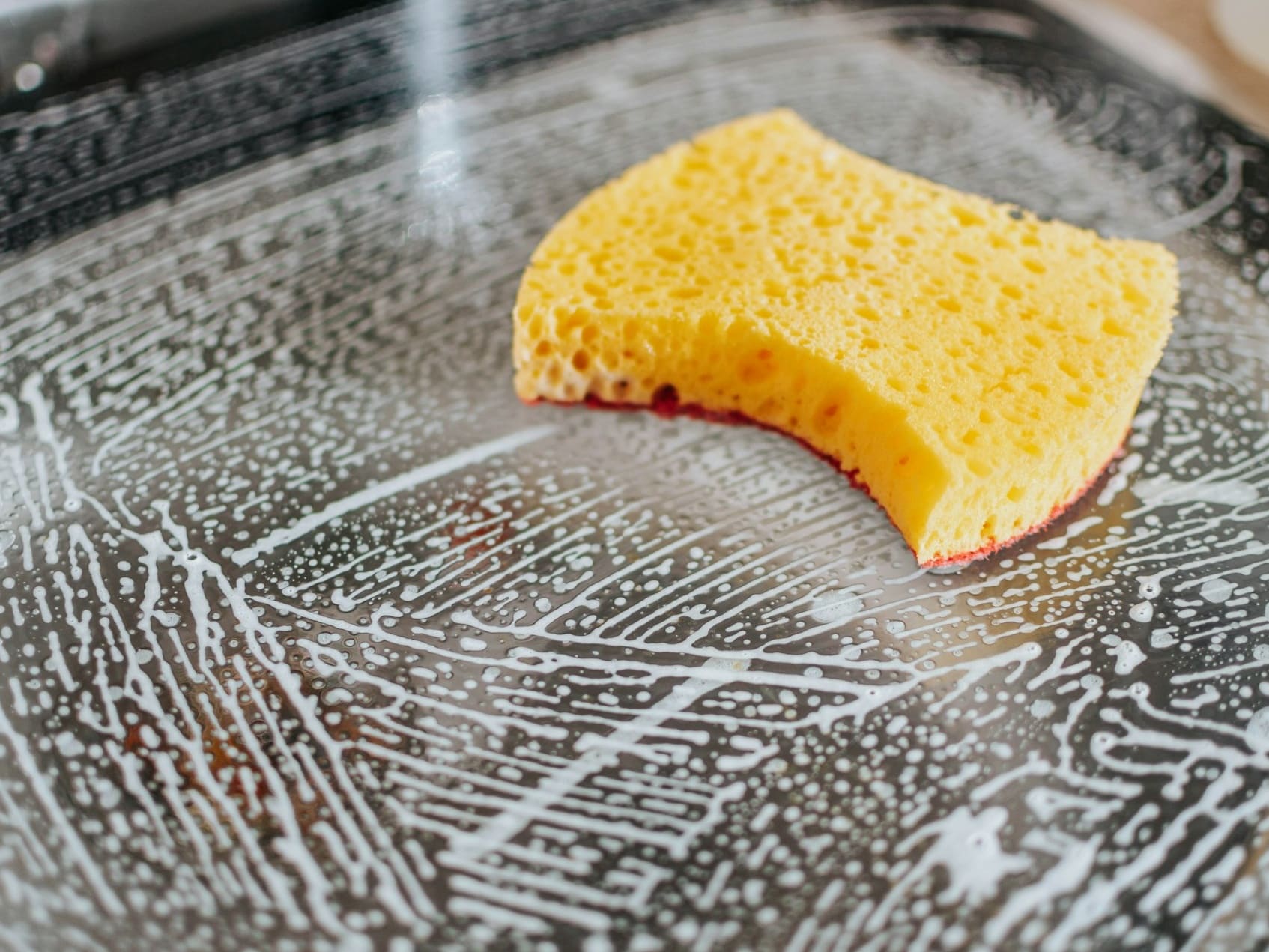
Cleaning removes food, grease, dirt, and other material from a surface.
Sanitizing is an additional food-safety step intended to reduce microorganisms on an already cleaned surface.
This distinction becomes particularly relevant when a surface has been contaminated by raw animal foods.
Follow the instructions for whatever kitchen sanitizer or cleaning product you’re using, including whether a surface needs rinsing afterward and how long the product must remain on the surface.
And never improvise chemical combinations.
Don’t Mix Cleaning Chemicals
More cleaning product doesn’t automatically mean more cleaning power.
Household cleaning chemicals can be hazardous when mixed. Follow product labels and use each cleaner only as directed.
This is one area where “DIY chemistry” doesn’t belong in the kitchen.
If you’re uncertain whether two products can safely be used together, don’t combine them.
A Better Workflow for Raw Chicken Dinners
Meals involving raw poultry are a good example of how organization and food safety can work together.
Before handling chicken
Prepare vegetables and other ready-to-eat ingredients first when practical.
While handling chicken
Keep the chicken and its juices contained and separate from ready-to-eat food.
Immediately afterward
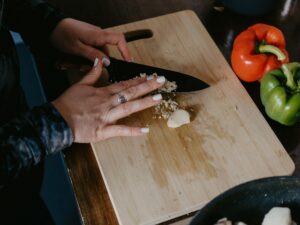
Wash your hands and appropriately clean the board, knife, dishes, and surfaces that contacted the raw poultry.
While chicken cooks
Clean equipment that is no longer needed and clear the prep area.
When chicken is ready
Use clean utensils and a clean serving plate.
This creates a clear boundary between the raw-food stage and the cooked-food stage.
One-Pot Meals Can Reduce Cleanup—But Don’t Force Everything Into One Pot
One-pot pasta, sheet-pan dinners, soups, and similar recipes can substantially reduce the number of dishes you create.
But “one pot” isn’t automatically better.
Choose it when the recipe genuinely works that way.
Trying to eliminate one extra pan at the expense of overcrowding, poor cooking, or unsafe raw/cooked-food handling isn’t worth it.
The useful principle is:
FEWER NECESSARY DISHES—not FEWEST POSSIBLE DISHES.
Your Counter Doesn’t Need a Cleaning-Supply Collection
For everyday clean-as-you-cook routines, a small set of appropriate supplies is usually more practical than covering another counter with bottles.
| Item | Useful For |
|---|---|
| Dish soap | Dishes and appropriate washable equipment |
| Sponge or suitable scrubber | Routine washing |
| Clean cloth | Appropriate surface wiping |
| Kitchen towels | Drying tasks |
| Scrap bowl | Keeping prep waste contained |
| Splatter screen | Controlling suitable stovetop splashes |
| Appropriate surface cleaner/sanitizer | Surface care according to label directions |
Store chemicals away from food and use them according to their labels.
Five Habits That Make Cleanup Harder
| Habit | Better Approach |
|---|---|
| Letting every tool pile into the sink | Deal with finished tools during downtime |
| Leaving ingredients on the counter | Put each one away when finished |
| Letting scraps cover the cutting board | Use a scrap bowl |
| Waiting for spills to dry | Clean promptly when safe |
| Using one towel for everything | Separate towel/cloth jobs and replace dirty ones |
The 30-Second Kitchen Check
Whenever a recipe gives you a short pause, don’t automatically reach for your phone.
Look around and ask:
Is there something I can put away?
Is there a finished tool I can wash or load?
Is there packaging I can discard?
Is there a safe spill I can wipe?
Is the cutting board still needed?
Is anything contaminated by raw food that needs attention?
Sometimes the answer will be no—and you can simply wait for the next cooking step.
But repeating this check throughout a recipe prevents ten tiny jobs from becoming one exhausting cleanup afterward.
The easiest rhythm to remember is:
CLEAR → PREP → COOK → CLEAN DURING DOWNTIME → SEPARATE RAW FROM READY-TO-EAT → RESET
Once those actions become part of the cooking process itself, “cleaning the kitchen” stops being one giant job waiting for you after dinner.