
9. Choose the Right Sharpening Method
Several methods are available.
Whetstone
A whetstone offers substantial control over the sharpening process.
The trade-off is that proper technique takes practice.
If you’re new to stones, don’t guess at an angle based on a random number you found online. Different knives can be designed with different edge geometries.
Follow guidance appropriate to your knife and sharpening system.
Manual Sharpener
Manual pull-through systems can be convenient, but they aren’t automatically appropriate for every knife.
Make sure the sharpener is compatible with the blade you’re using.
Electric Sharpener
Electric systems prioritize convenience, but again, compatibility matters.
Follow the manufacturer’s instructions rather than repeatedly running the knife through the machine.
Professional Sharpening
Professional service can make sense when:
- The knife is valuable.
- You’re uncomfortable sharpening it yourself.
- The edge is damaged.
- The knife requires specialized maintenance.
- You don’t want to invest time learning whetstone technique.
10. Store Kitchen Knives So the Edges Are Protected
Don’t throw an unprotected chef’s knife into a drawer with spoons, peelers, and other utensils.
The blade can repeatedly contact other objects, and someone reaching into the drawer can accidentally contact the cutting edge.
Better storage options include:
- Knife block
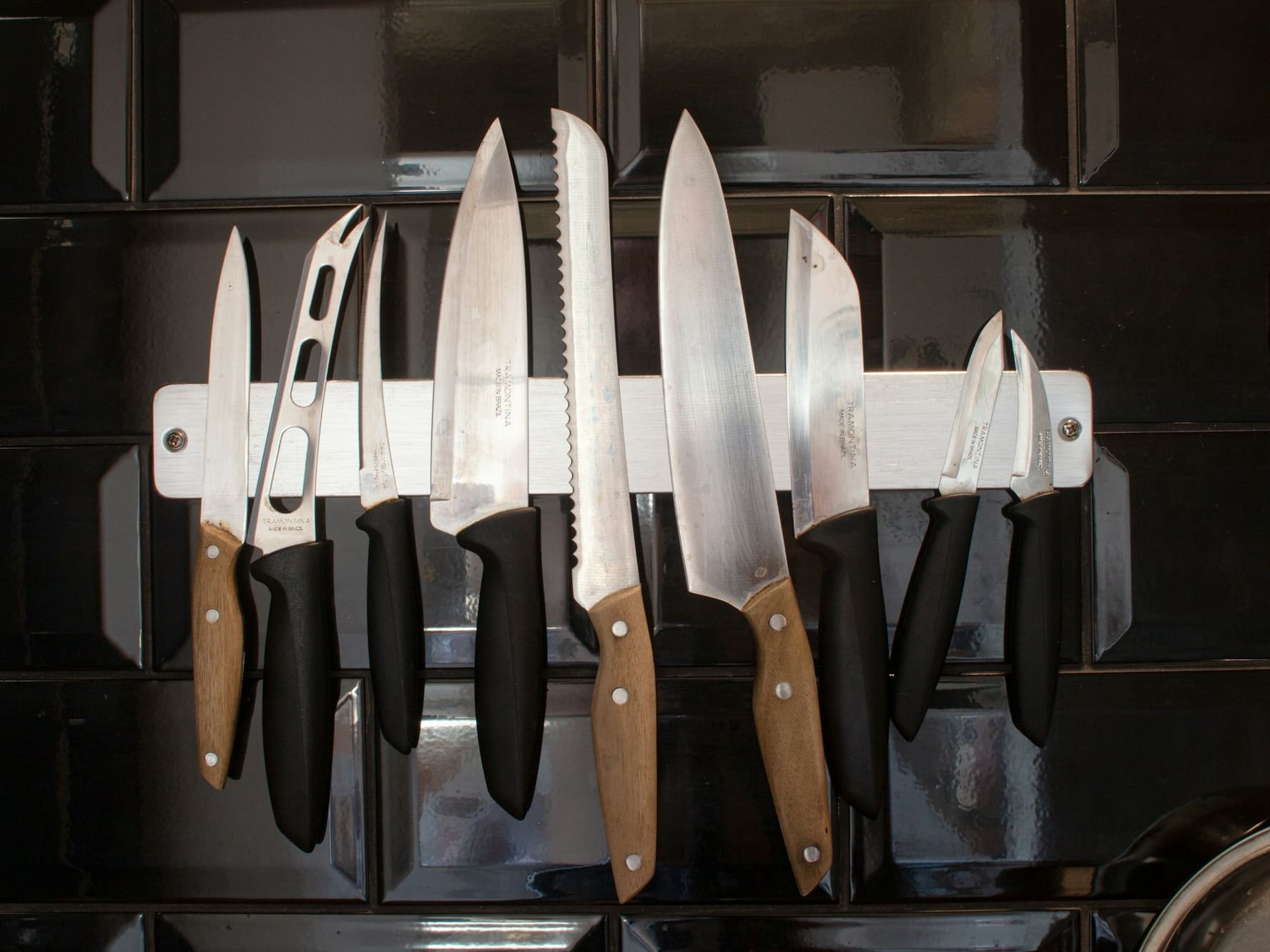
- Magnetic knife holder
- Dedicated in-drawer knife organizer
- Individual blade guards
- Knife roll for appropriate storage or transport
The best option depends on your kitchen.
The important requirement is that the cutting edge isn’t repeatedly colliding with other utensils and isn’t exposed where someone can accidentally grab it.
Knife Block vs. Magnetic Strip vs. Drawer Organizer
| Storage Method | Advantages | What to Check |
|---|---|---|
| Knife block | Compact, dedicated storage | Keep slots clean and dry |
| Magnetic holder | Easy access, frees counter space | Secure installation and careful placement/removal |
| Drawer organizer | Keeps knives off the counter | Blades should remain separated |
| Blade guards | Flexible and inexpensive | Guard should fit the blade correctly |
| Knife roll | Useful for transport | Designed primarily for protected storage/transport |
Don’t choose storage based only on appearance. Consider how safely you can place and remove the knife without striking or rubbing its edge.
11. Never Use a Kitchen Knife as a General-Purpose Tool
A chef’s knife isn’t a screwdriver, pry bar, can opener, or workshop tool.
Avoid using it to:
- Pry objects apart
- Open cans
- Twist lids
- Cut inappropriate hard materials
- Scrape hard surfaces with the edge
- Perform tasks the knife wasn’t designed to handle
Lateral twisting and prying are particularly inappropriate uses for a thin cutting blade.
Use the right tool for the job.
12. Give Carbon-Steel Knives Extra Attention
Carbon-steel knives can require more careful moisture management than many stainless-steel knives.
Don’t leave a carbon-steel blade:
- Wet in the sink
- Covered in food residue
- Exposed to acidic ingredients longer than necessary
Clean and dry it promptly.
Some carbon-steel knives naturally develop a patina over time. A patina is not necessarily the same thing as damaging rust.
If you own a specialized carbon-steel knife, follow the maker’s care instructions because finish, steel, and handle requirements can differ.
13. Stainless Steel Still Needs Care
A stainless-steel knife is generally more resistant to corrosion, but it isn’t maintenance-free.
You should still:
- Clean it promptly.
- Dry it after washing.
- Store it properly.
- Use an appropriate cutting board.
- Maintain the edge.
Treat “stainless” as corrosion-resistant, not “impossible to stain.”