
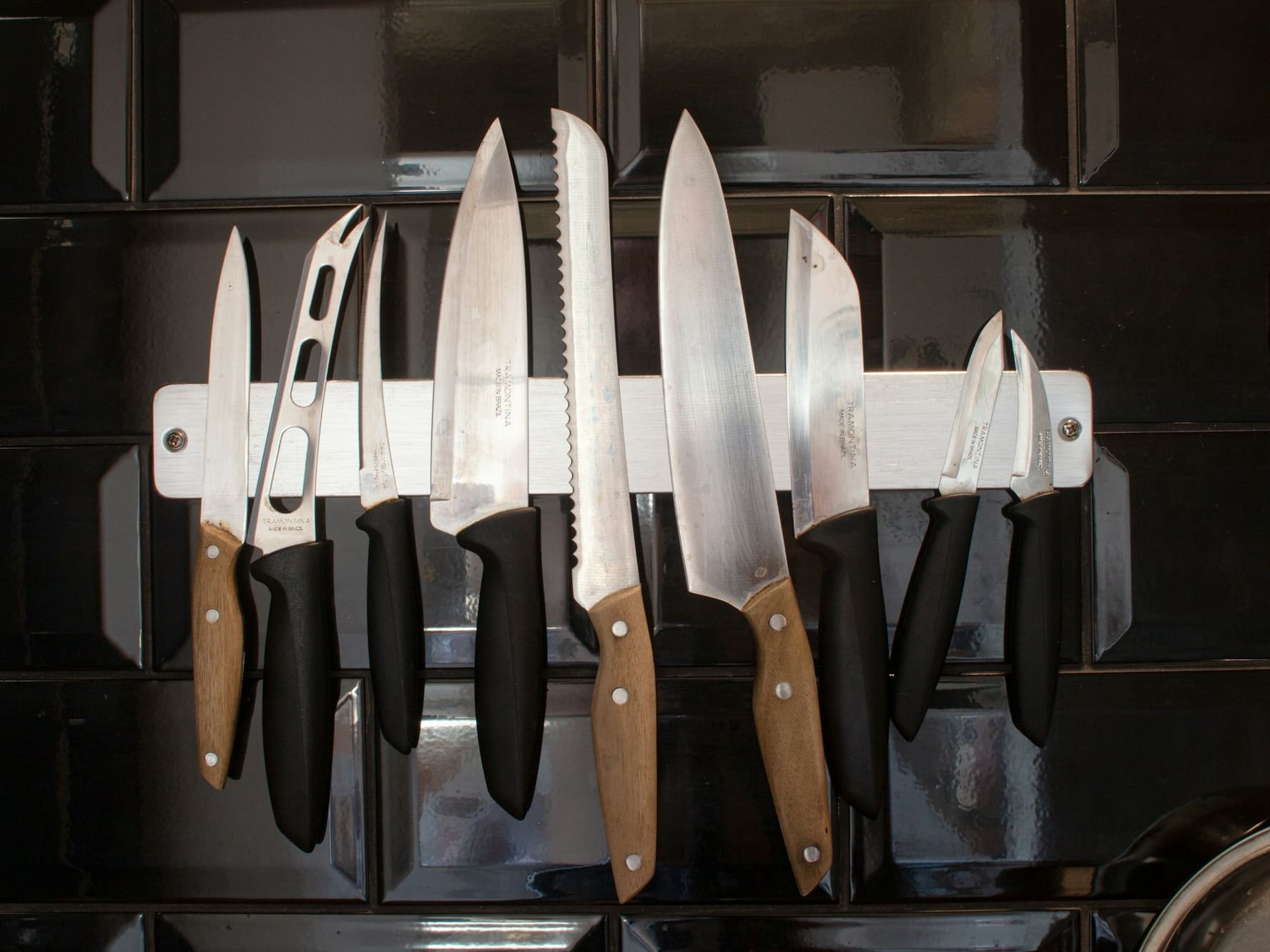
How to Care for Different Kitchen Knives
Chef’s Knife
Because it often does most of the kitchen work, a chef’s knife benefits greatly from consistent maintenance.
Prioritize:
Clean → dry → appropriate board → edge maintenance → protected storage
Paring Knife
The same basic rules apply.
Its smaller size doesn’t mean it should be tossed unprotected into a drawer.
Bread Knife
Serrated knives require different sharpening techniques from ordinary straight-edged knives.
Don’t automatically run a serrated bread knife through a sharpener intended for standard double-bevel straight edges.
Follow manufacturer guidance or use an appropriate professional service when sharpening becomes necessary.
Specialty Japanese-Style Knives
Don’t assume the maintenance method for a typical Western chef’s knife automatically applies.
Check:
- Steel type
- Edge geometry
- Manufacturer sharpening instructions
- Recommended honing method
- Handle-care instructions
This is one situation where knife-specific guidance is more useful than a universal maintenance schedule.
What to Do After Cutting Acidic or Salty Foods
Foods such as citrus, tomatoes, and salty ingredients can be worth extra attention, particularly with reactive carbon-steel blades.
You don’t need a complicated process.
Simply:
- Finish cutting.
- Clean the blade promptly.
- Rinse appropriately.
- Dry thoroughly.
- Return the knife to protected storage.
Don’t leave food residue sitting on the blade unnecessarily.
A 30-Second Knife Care Routine
Good knife maintenance shouldn’t feel like another household project.
After every use
1. Wash it.
Remove food residue promptly.
2. Rinse it.
Remove soap and remaining debris.
3. Dry it.
Don’t leave the blade wet.
4. Store it.
Protect the edge from other utensils.
Regularly
Inspect the knife for:
- Reduced cutting performance
- Edge damage
- Corrosion or staining
- Handle problems
Use an appropriate honing method when the knife and edge call for it.
When cutting performance declines
Determine whether normal edge maintenance helps.
If not, sharpen it appropriately or use a professional sharpening service.
Knife Care Mistakes Worth Breaking
| Habit | Better Approach |
|---|---|
| Leaving knives in the sink | Wash them promptly |
| Air-drying a wet knife | Towel-dry before storage |
| Cutting on glass or stone | Use wood or suitable plastic |
| Scraping with the sharp edge | Use the spine or a scraper |
| Throwing knives loose in a drawer | Use protected storage |
| Using a knife to pry something | Use the correct tool |
| Ignoring a dull edge | Maintain or sharpen it |
| Sharpening every knife identically | Follow knife-specific guidance |
| Assuming stainless can’t corrode | Keep it clean and dry |
A Simple Knife-Care Checklist
You don’t need to sharpen a knife every day or buy a cabinet full of maintenance equipment.
For most home kitchens, concentrate on five habits:
CLEAN — Wash food residue from the knife promptly.
DRY — Don’t store a wet blade.
CUT — Use a knife-friendly cutting surface.
MAINTAIN — Hone or sharpen appropriately when the edge needs attention.
PROTECT — Store the knife so its edge doesn’t collide with other utensils.
Those habits address most of the everyday wear a kitchen knife experiences. More specialized knives may require additional care, but the foundation remains the same: keep the blade clean and dry, don’t abuse the cutting edge, and follow the manufacturer’s guidance when the knife’s steel or geometry calls for a particular maintenance method.
Related Recipes
 Different Types of Cookware Explained: How to Choose the Right Pots and Pans for Your Kitchen
 Choosing a Cutting Board: How to Choose the Right One for Your Kitchen
 Essential Kitchen Tools Every Beginner Needs: A Practical Starter Guide
 How to Keep Your Kitchen Clean While Cooking: 15 Practical Kitchen Cleaning Tips